Alphabet Inc. made financial history this week, reporting a quarterly net income that transcended the eleven-figure barrier to reach a staggering $112.1 billion. This performance marks the first time the Google parent company—and perhaps any corporation in history—has generated a 12-figure profit in a single three-month span. While the figures suggest an unprecedented era of prosperity for the Mountain View-based giant, a closer examination of the earnings report reveals a complex tapestry of operational success, visionary venture capital gains, and a controversial "circular" financial ecosystem that has left some investors cautious despite the record-breaking numbers.
Main Facts: A Quarter of Unprecedented Scale
The headline figures from Alphabet’s second-quarter earnings report are, by any traditional metric, astronomical. The company’s bottom line grew by 298% year-over-year, culminating in $112.1 billion in net income. To put this into perspective, Alphabet’s profit in just ninety days exceeded the total annual revenue of 459 companies in the Fortune 500.
While Alphabet’s core business remains robust, the composition of this profit is distinct from previous years. The company’s total revenue for the quarter rose a healthy 24% to $119.8 billion. However, the vast majority of the net income surge—specifically $99 billion—was categorized as "other income." This figure represents "unrealized and realized" gains from Alphabet’s massive investment portfolio, rather than day-to-day search advertising or hardware sales.
Key Financial Indicators:
- Net Income: $112.1 billion (up 298% YoY).
- Total Revenue: $119.8 billion (up 24% YoY).
- Google Cloud Growth: 82% year-over-year.
- Earnings Per Share (EPS): $9.11 (with $6.26 attributed to investment gains).
- Capital Expenditures (CapEx): Revised upward to a range of $195 billion to $205 billion for 2026.
Chronology: From Search Engine to Venture Powerhouse
The road to a $112 billion profit began not in the search bar, but in the strategic pivot toward Artificial Intelligence and aerospace investments over the last several years.
The SpaceX Ascent
Alphabet’s relationship with SpaceX dates back years, but the second quarter of 2026 marked a pivotal moment. By the end of 2025, Alphabet held approximately a 6% stake in Elon Musk’s aerospace firm. In early June 2026, SpaceX transitioned to a public entity at a valuation of $1.77 trillion. This was a monumental leap from its $400 billion valuation as a private company just a year prior. The "marking to market" of this investment provided a significant portion of the paper gains realized in this quarter’s report.
The Anthropic Partnership
Perhaps even more critical to Alphabet’s current strategy is its relationship with Anthropic, the AI safety and research company.
- April 2023: Alphabet made its initial foray into Anthropic with a $300 million investment.
- 2024–2025: Alphabet increased its stake through successive rounds, eventually reaching a $13.3 billion investment with commitments for up to $30 billion more.
- Q2 2026: Anthropic’s private-market valuation soared from $350 billion to $965 billion.
This meteoric rise in Anthropic’s value, driven by the release of advanced models like Claude Opus 4, allowed Alphabet to book tens of billions in paper profits, directly inflating the net income figure.
Supporting Data: The Cloud and the Capital
While the investment portfolio provided the "wow" factor, the Google Cloud division provided the operational narrative. Google Cloud reached an 82% growth clip, a figure that far outpaces its primary competitors, Microsoft Azure and Amazon Web Services (AWS), in terms of growth rate.
The Power of Five Reactors
The synergy between Alphabet’s investments and its operations is quantified in its energy and infrastructure commitments. As part of its partnership, Anthropic has committed to purchasing at least five gigawatts of computing capacity from Google Cloud.
- Energy Equivalent: 5GW is roughly the output of five nuclear reactors.
- Usage Scale: This is enough electricity to power approximately four million homes.
This massive consumption of cloud resources by an Alphabet-backed entity is a primary driver of the 82% growth seen in the Cloud segment. However, this growth comes at a cost. Alphabet has significantly increased its planned capital expenditures for 2026, raising the forecast from an initial $180–$190 billion to a staggering $195–$205 billion. This spending is directed toward building the data centers and acquiring the specialized chips (TPUs and GPUs) required to sustain such massive AI workloads.
Official Responses: Confidence Amidst Market Volatility
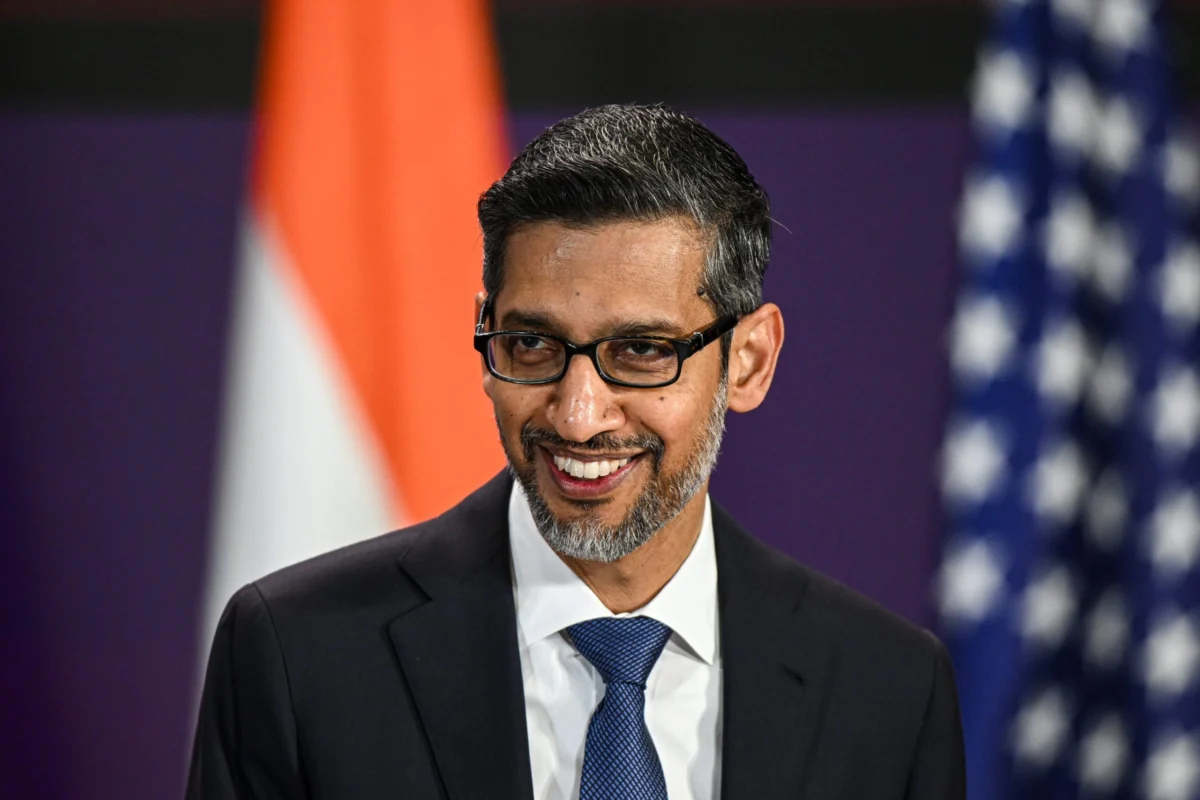
Alphabet CEO Sundar Pichai remained steadfast in his defense of the company’s aggressive spending and investment strategy. During the earnings call, Pichai characterized the results as definitive proof that the company’s "full stack approach to AI is delivering real, measurable value." He emphasized that the integration of AI across Google’s ecosystem—from search to YouTube to Cloud—is creating a virtuous cycle of innovation.
However, the market’s reaction was less enthusiastic. Alphabet shares fell 3% in after-hours trading following the announcement. Investors expressed concern over two primary factors:
- CapEx Intensity: The nearly $200 billion earmarked for spending raised fears about margin compression if AI revenue does not scale as quickly as the infrastructure costs.
- Competitive Pressure: Despite the profit, analysts pointed to fierce competition facing the Gemini family of AI models from OpenAI, Meta, and various open-source challengers.
Tax and accounting experts have also weighed in on the nature of these profits. Robert Willens, a prominent tax and accounting consultant, noted the unusual nature of Alphabet’s influence over its own earnings. "It’s interesting that they’re able to control or influence the value of one of their own assets," Willens told Fortune, referring to how Alphabet’s capital injections and infrastructure support help drive the very valuations that Alphabet then books as profit.
Implications: The Circularity Paradox and the Future of AI
The most significant implication of Alphabet’s Q2 report is the emergence of what analysts call "circularity concerns." This phenomenon creates a feedback loop that may distort the true health of the business.
The Loop Explained
The "circular" nature of the Alphabet-Anthropic relationship functions as follows:
- Investment: Alphabet invests billions into Anthropic.
- Valuation: This massive capital injection (and the prestige associated with it) helps push Anthropic’s valuation higher.
- Revenue: Anthropic uses that same capital to buy computing power from Google Cloud.
- Earnings: Alphabet books the Cloud payments as operational revenue and simultaneously books the increase in Anthropic’s valuation as net income.
While this is legally and accounting-wise permissible under GAAP (Generally Accepted Accounting Principles), it raises questions about the sustainability of such growth. If the venture capital market cools or if AI valuations normalize, the "other income" that provided $99 billion this quarter could easily evaporate or even turn into a loss in future filings.
Regulatory Scrutiny
This 12-figure profit is also likely to attract the attention of antitrust regulators. Alphabet is already under intense scrutiny in the U.S. and Europe regarding its dominance in search and advertising. Reporting a $112 billion profit—even if much of it is on paper—provides ammunition for those arguing that the company’s scale and influence over the AI ecosystem have reached monopolistic proportions.
Conclusion
Alphabet’s second quarter of 2026 will be remembered as a landmark moment in corporate finance. It demonstrated the sheer power of a "Big Tech" company acting as a sovereign-wealth-scale investor. However, the 3% dip in stock price serves as a reminder that Wall Street values the quality of earnings as much as the quantity.
For Alphabet to maintain its momentum, it must eventually move beyond "paper gains" from SpaceX and Anthropic and prove that its massive $200 billion infrastructure bets can generate consistent, organic cash flow. Until then, the world’s first 12-figure quarterly profit remains a fascinating, if slightly precarious, milestone in the AI gold rush.