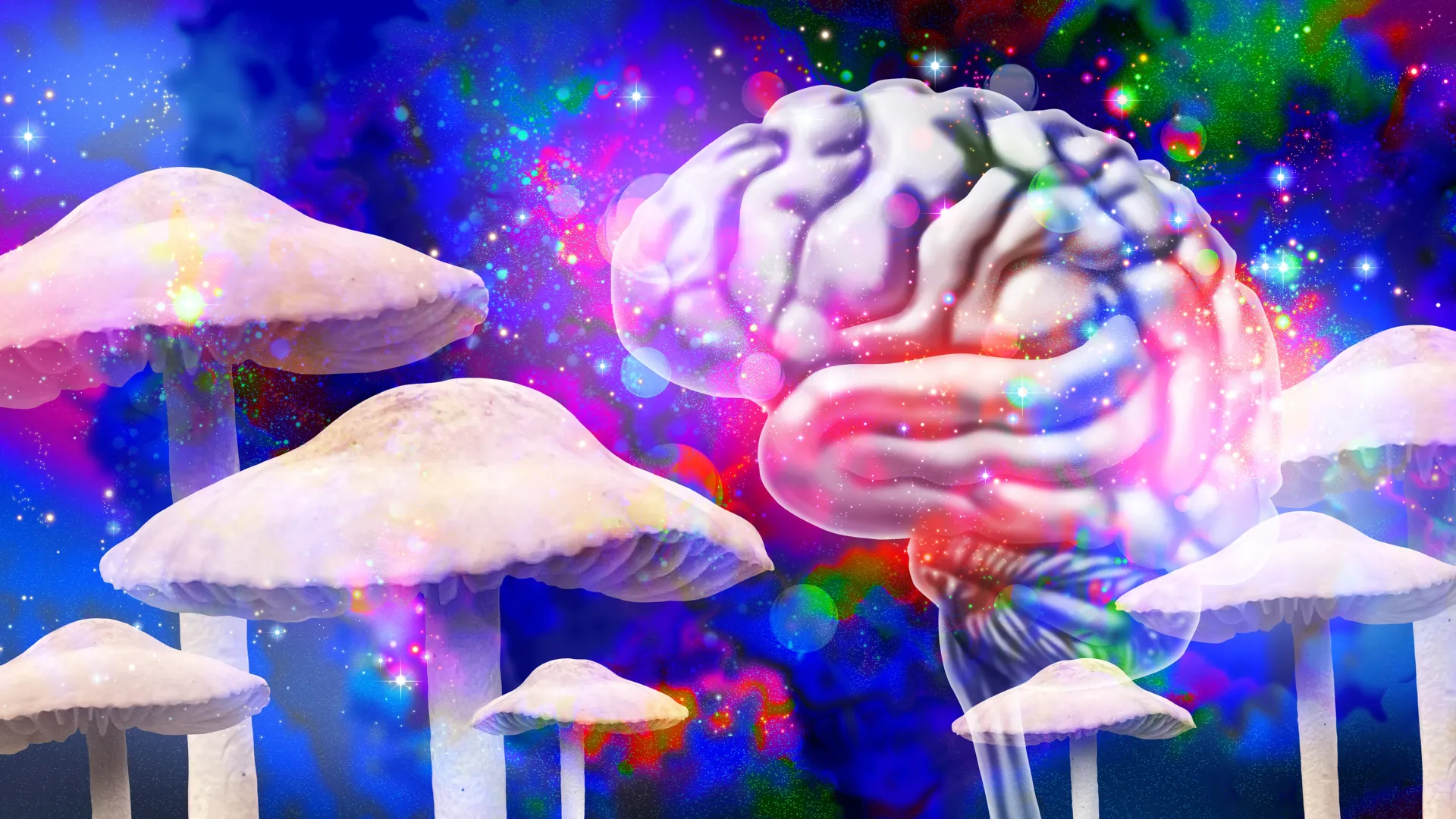
In a landmark study that bridges the gap between ancient ritual and modern neuroscience, researchers from UC San Francisco and Imperial College London have uncovered compelling evidence that a single dose of psilocybin—the active compound found in "magic mushrooms"—can induce measurable, long-term alterations in brain structure and function.
Published in the journal Nature Communications, the study moves beyond mere anecdotal accounts of the "psychedelic experience," providing a rigorous, data-driven look at how this substance interacts with the neural architecture. By observing healthy volunteers before, during, and one month after their experience, scientists have identified a physiological mechanism that may explain why psilocybin shows such profound promise in treating depression, anxiety, and addiction.
The Architecture of Insight: Understanding Brain Entropy
At the heart of the research is the concept of "brain entropy." In neuroscience, entropy describes the variety, unpredictability, and complexity of neural activity. Under normal, waking conditions, the human brain often falls into "entrenched" patterns—repetitive, rigid cycles of thought that can become problematic for those suffering from mental health conditions.
The study found that psilocybin temporarily disrupts these rigid patterns, pushing the brain into a state of heightened entropy. During this "psychedelic" window, the brain generates a much broader range of information processing, essentially breaking the status quo of habitual thinking.
"Psychedelic means ‘psyche-revealing,’ or making the psyche visible," explains senior author Robin Carhart-Harris, PhD, the Ralph Metzner Distinguished Professor of Neurology at UCSF. "Our data shows that such experiences of psychological insight relate to an entropic quality of brain activity and how both are involved in causing subsequent improvements in mental health. It suggests that the trip—and its correlates in the brain—is a key component of how psychedelic therapy works."
Chronology of a Scientific Journey
To ensure the highest level of clinical precision, the research team recruited 28 healthy volunteers—individuals who had never previously consumed a psychedelic substance. This clean slate allowed the researchers to isolate the effects of the compound without the interference of pre-existing mental health conditions or long-term psychedelic use.
Phase One: The Baseline and the Placebo
The study began with a baseline assessment of each participant’s brain activity, connectivity, and cognitive performance. To establish a rigorous control, the participants were first administered a 1 mg dose of psilocybin—a sub-perceptual amount that served as a placebo. During this phase, researchers monitored the participants using electroencephalography (EEG), recording electrical signals from the scalp to track neural activity.
For the following weeks, the participants underwent a series of psychological assessments measuring well-being and cognitive function, alongside advanced imaging techniques, including functional MRI (fMRI) and diffusion tensor imaging (DTI) to map neural connectivity.
Phase Two: The Peak Experience
One month after the initial placebo dose, the participants returned to receive a full 25 mg dose of psilocybin, a quantity sufficient to induce a powerful, transformative psychedelic experience. Throughout the duration of this "trip," EEG recordings were captured in real-time, providing a high-resolution look at the brain in a state of hyper-entropy.
Following this high-dose experience, the team repeated the identical battery of imaging and psychological assessments at two-week and one-month intervals. This longitudinal design allowed for a direct, intra-individual comparison between the placebo state and the full psychedelic experience.
Supporting Data: From Neural Tracts to Cognitive Flexibility
The imaging results provided by the study were nothing short of startling. When the researchers analyzed the DTI scans one month after the high-dose session, they observed that the neural tracts—the white matter pathways that act as the brain’s "highways"—showed increased density and integrity.
A Reversal of Aging
In most adults, neural tracts tend to become more diffuse and less efficient as a natural byproduct of aging. The psilocybin intervention, however, appeared to promote a pattern that is the direct inverse of this age-related decline. While the researchers caution that further study is required to fully interpret these structural findings, they represent a previously unseen, potentially restorative impact of a pharmacological intervention on the brain’s physical architecture.
Cognitive Flexibility
Beyond structural changes, the study measured tangible improvements in cognitive flexibility—the brain’s ability to adapt to changing information and pivot between different tasks. Participants who had received the 25 mg dose demonstrated superior performance on cognitive flexibility tests one month later compared to their baseline and placebo performance.
This aligns with the participants’ qualitative reports. When surveyed, 27 out of 28 volunteers described the experience as the "single most" unusual state of consciousness they had ever encountered. The remaining participant ranked it within their top five.
Official Responses and Theoretical Synthesis
The research team, led by Carhart-Harris and first author Taylor Lyons, PhD, of Imperial College London, posits that the "psychedelic experience" is not merely a side effect of the drug, but rather a functional requirement for its therapeutic success.
"Psilocybin seems to loosen up stereotyped patterns of brain activity and give people the ability to revise entrenched patterns of thought," said Dr. Lyons. "The fact that these changes track with insight and improved well-being is especially exciting."
The study established a clear statistical correlation: the greater the increase in brain entropy during the peak of the trip, the higher the degree of psychological insight reported the following day. This insight, in turn, predicted higher scores on well-being metrics—such as optimism and resilience—measured one month later. The researchers concluded that the act of gaining insight during the experience acts as the primary catalyst for long-term psychological growth.
Clinical Implications: The Future of Mental Health
The findings from this study open a new chapter in the treatment of psychiatric disorders. For years, clinicians have struggled with the limitations of SSRIs and other conventional medications, which often serve to suppress symptoms rather than address the root causes of entrenched psychological patterns.
Refining Treatment Protocols
The identification of brain entropy as a measurable biomarker offers a new target for personalized medicine. Clinicians may eventually be able to calibrate dosages based on an individual’s neural response, identifying the "sweet spot" of entropy—enough to facilitate a breakthrough in thinking, but not so much that the experience becomes overwhelming or traumatic.
"We already knew psilocybin could be helpful for treating mental illness," noted Carhart-Harris. "But now we have a much better understanding of how."
A New Understanding of "Cure"
By proving that the "trip" itself is a key component of the therapeutic mechanism, the study reinforces the importance of the "set and setting" model of psychedelic therapy. It suggests that the brain is not merely being "fixed" by a chemical, but is instead being granted a window of neuroplasticity in which the patient can actively revise their own narrative and thought patterns.
As the medical community continues to explore the integration of psychedelics into standard practice, this study provides the objective, physiological bedrock needed to justify such treatments. The integration of high-entropy states into clinical therapy could provide a path forward for patients who have found little relief elsewhere, offering not just a temporary reprieve from symptoms, but a structural opportunity for the brain to learn new, healthier ways of being.
Study Authors: The research was led by Dr. Robin Carhart-Harris and Dr. Taylor Lyons, with contributions from Manesh Girn, PhD, Hannes Kettner, and Adam Gazzaley, MD, PhD.
Funding: This work was supported by philanthropic donations to the Centre for Psychedelic Research at Imperial College London, the Alex Mosley Charitable Trust, the Beckley Foundation, and the Ralph Metzner Distinguished Professorship at UCSF.