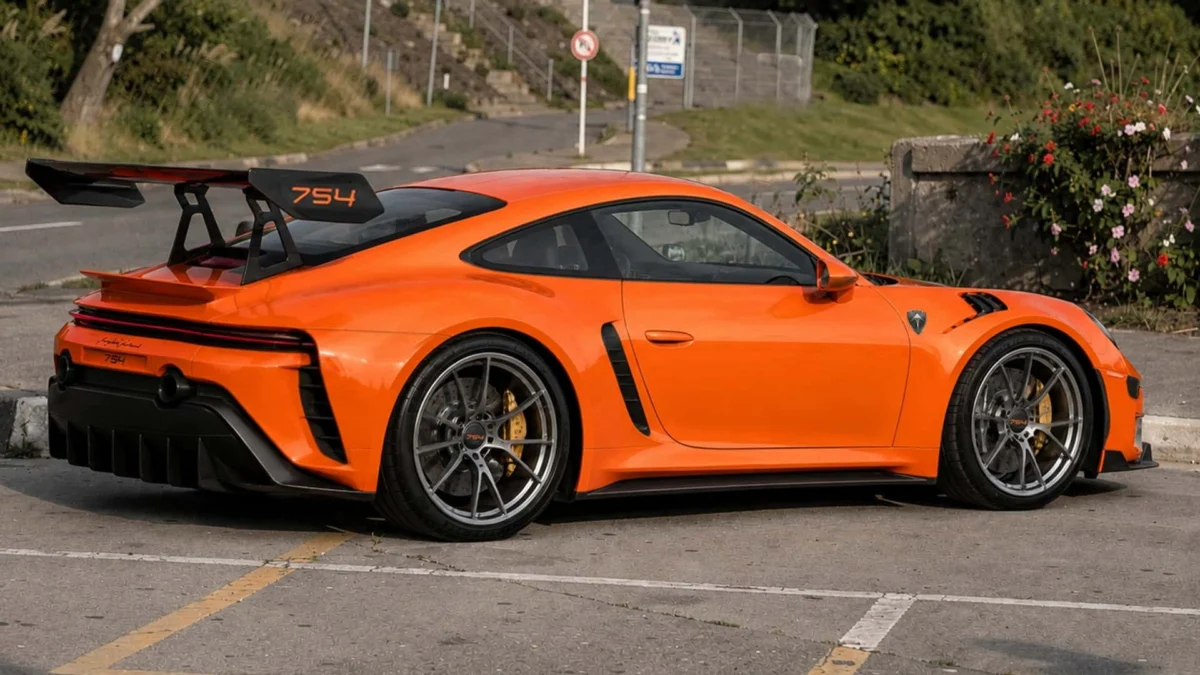
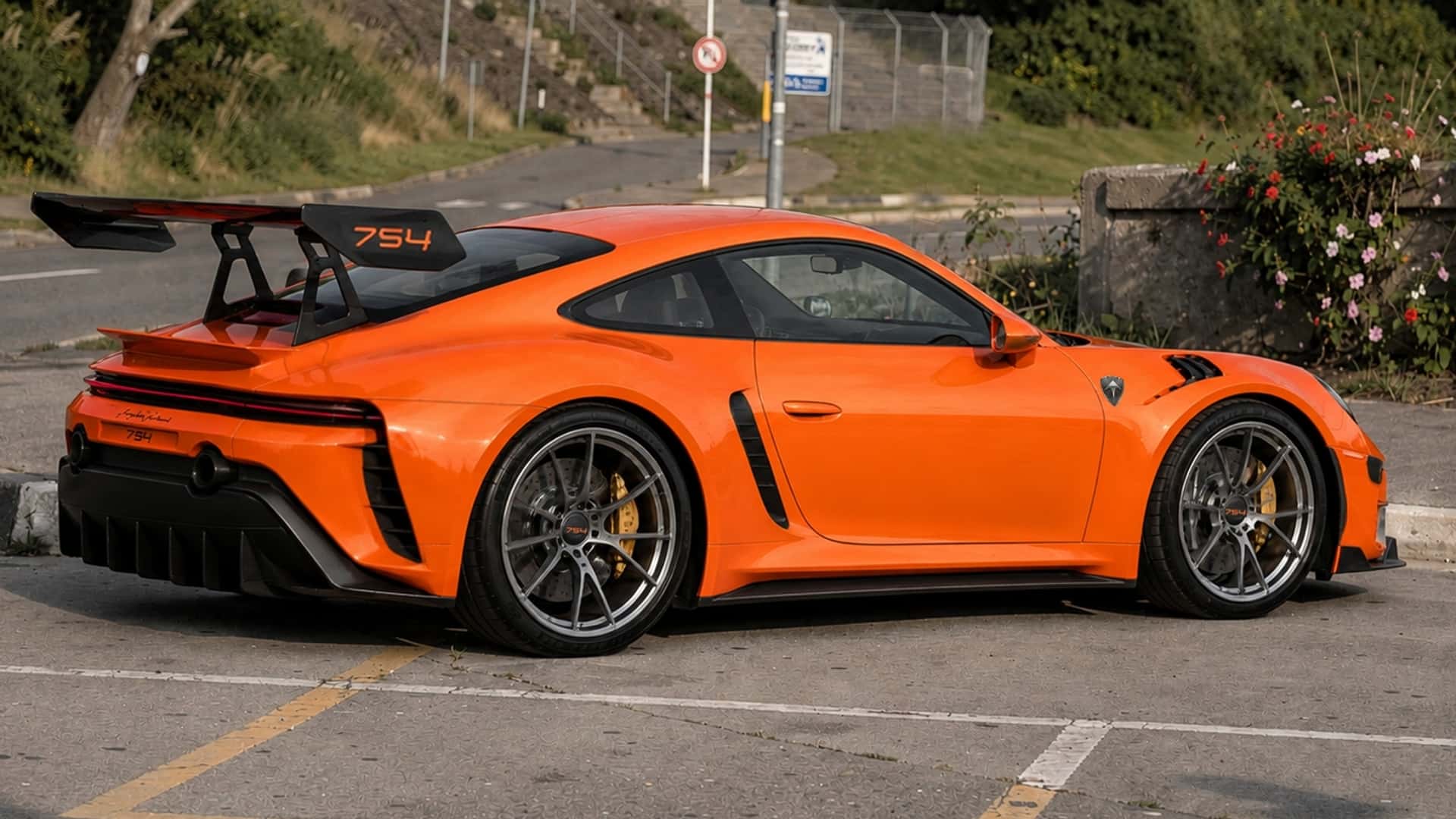
In the rarified atmosphere of high-end automotive coachbuilding, the challenge is rarely just about power; it is about identity. Angelelli Automobili, an Italian boutique manufacturer known for its obsession with advanced materials and high-performance engineering, has officially pulled back the curtain on its latest venture: Project 754. With a strictly limited production run of just 50 units and a staggering performance ceiling of up to 800 horsepower, the vehicle represents a bold attempt to redefine the potential of an iconic platform.
While the automotive world is no stranger to specialized tuners and bespoke creators, Project 754 arrives with a distinct philosophy. It is not a "tuning job" in the traditional sense, but rather a holistic reimagining of a proven technical architecture, aimed at those who find mass-produced exotics too common and traditional modifications too superficial.
The Foundation: An Independent Interpretation
At the heart of the Project 754 lies the chassis and drivetrain architecture of the Porsche 911 (specifically the 991 and 992 generations). However, it is vital to note that Angelelli Automobili operates entirely independently. There is no industrial partnership, commercial contract, or technical endorsement from Porsche.
This separation is crucial to the brand’s identity. By utilizing the 911’s robust technical bones as a "starting point," Angelelli claims to have stripped away the compromises inherent in mass-market manufacturing. What remains is a canvas upon which the company applies bespoke aerodynamics, extensive carbon-fiber bodywork, and a radical rethink of the vehicle’s mechanical balance. The goal is to provide a visceral, analog, and highly personalized experience that the original manufacturers, bound by global regulatory and comfort requirements, cannot provide.
Two Philosophies: The R and The M
The most striking aspect of the Project 754 is the bifurcation of the model into two distinct driving experiences: the 754 R and the 754 M. This is not merely a trim-level difference; it is a fundamental shift in the car’s center of gravity and handling dynamics.
The 754 R: The Traditionalist’s Powerhouse
The 754 R remains faithful to the classic rear-engine layout that has defined high-performance sports cars for decades. By keeping the engine mass positioned over or behind the rear axle, the 754 R prioritizes longitudinal traction and raw, brutal acceleration. It is designed for the driver who relishes the classic "pendulum" feel of a high-powered rear-engine car, offering a driving character that is demanding, aggressive, and rewarding for the seasoned pilot.
The 754 M: The Precision Instrument
Conversely, the 754 M introduces a mid-engine configuration. By shifting the power plant forward, Angelelli shifts the car’s weight distribution toward the geometric center. This layout is engineered for handling precision, flatter cornering, and superior stability at the absolute limits of adhesion. For the customer, the choice between R and M represents a choice between two entirely different philosophies of speed: the "point and shoot" aggression of the rear-engine layout or the balanced, surgical agility of the mid-engine setup.
Engineering the Future: Generative Design and Metal 3D Printing
Project 754 is not just about power; it is an exercise in material science. Angelelli Automobili has leaned heavily into the "Industry 4.0" toolkit to shave weight and increase structural rigidity.
The company employs proprietary generative design software—algorithms that mimic natural structural growth patterns—to determine exactly where material is necessary and where it is redundant. This data is then fed into industrial-grade metal 3D printers, which manufacture titanium and high-strength alloy components. These parts are significantly lighter than their cast or machined counterparts, yet they often exceed original specifications for torsional stiffness.
This "weight-saving strategy" is vital because it allows the car to handle its 700 to 800 hp output with greater ease. By keeping the curb weight significantly lower than a standard production vehicle, the power-to-weight ratio is pushed into territory typically occupied by hypercars costing three times as much.
The Chronology of Development
The path to Project 754 began behind closed doors several years ago, as Angelelli Automobili transitioned from a consultancy firm for high-performance technologies to a standalone vehicle manufacturer.
- Phase 1 (Conception): Initial studies focused on the limitations of modern sports cars. The team identified that while engines were becoming more powerful, the "soul" of the driving experience was being diluted by driver aids and weight-bloat.
- Phase 2 (Prototyping): Using 991 and 992 Porsche platforms as testbeds, engineers began stripping the cars to their bare chassis. This allowed for the testing of mid-engine conversions and custom suspension geometries.
- Phase 3 (Material Innovation): The integration of generative design and 3D printing was tested across hundreds of hours of simulation. This phase was critical in ensuring that the lightweight, 3D-printed parts could withstand the thermal and mechanical stresses of an 800-hp drivetrain.
- Phase 4 (Finalization): With the announcement of the 50-unit production run (25 of each variant), the project has moved into the final stages of customization and order fulfillment. Each of the 50 owners will be invited to participate in the build process, selecting everything from the specific carbon-fiber weave to the exact tuning of the damper curves.
Implications for the Coachbuilding Market
The emergence of projects like the Angelelli 754 signals a broader trend in the automotive industry. As cars become increasingly digitized and standardized, there is a burgeoning market for "neo-coachbuilding." Collectors are no longer satisfied with limited editions from major manufacturers, which are often just cosmetic packages. They are seeking mechanical re-engineering—cars that offer a unique narrative and a level of performance that transcends the factory output.
However, this market carries risks. By modifying the underlying architecture of a vehicle, companies like Angelelli face immense challenges in homologation, reliability, and resale value. Unlike a factory-backed Porsche, an Angelelli 754 is a bespoke entity; its value is tied strictly to the reputation of the builder and the quality of the engineering.
For Angelelli, the challenge will be long-term support. A car with 3D-printed, custom-engineered components requires a specialized maintenance infrastructure. The company has promised that each of the 50 units will be "built to the exact specifications of its owner," implying a level of concierge-style service that will be as important as the car’s 0–60 mph time.
A Final Verdict: The "Motor1" Perspective
The world certainly does not need another 911-based supercar. The market is saturated with "outlaw" builders and tuners promising to turn the Zuffenhausen icon into something faster, louder, and sharper. Yet, there is an undeniable allure to the Project 754. By offering two distinct engine placements and utilizing cutting-edge additive manufacturing, Angelelli is not just modifying a car; they are exploring the limits of what a boutique firm can achieve with modern tools.
If Angelelli Automobili can successfully deliver a driving experience that feels truly cohesive—rather than a collection of parts—then Project 754 will be more than just a footnote in the history of modified Porsches. It will stand as a testament to the fact that, in an era of mass-produced electrification and autonomous driving, there is still a place for the bespoke, the mechanical, and the unapologetically fast.
For the 50 individuals who secure a build slot, the Project 754 represents a rare opportunity: the chance to own a machine that is as much a piece of digital-era sculpture as it is a high-performance track weapon. Whether it truly reinvents the sports car or simply refines it, one thing is certain: it will be one of the most talked-about machines to emerge from the Italian boutique scene in years.