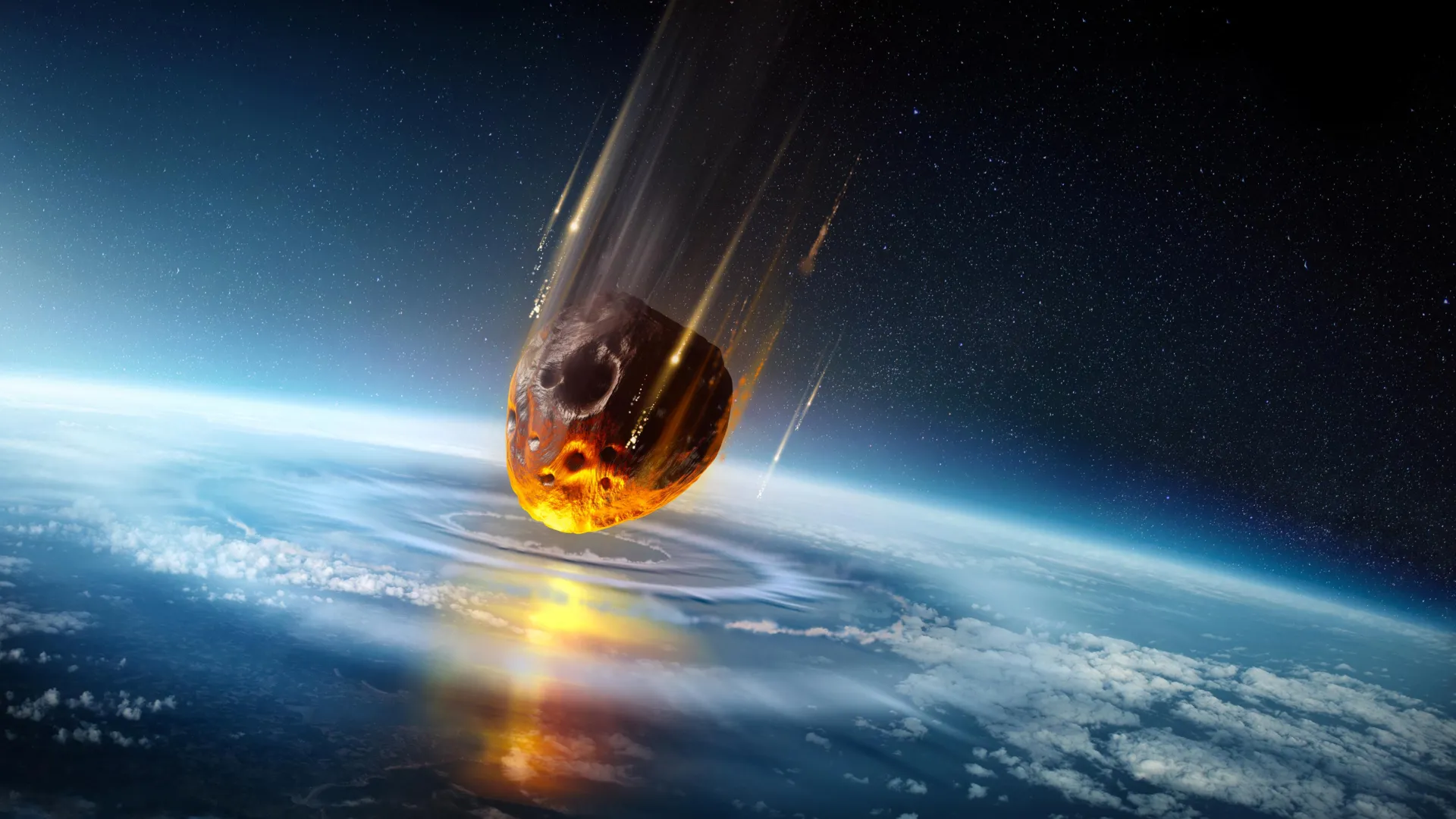
Sixty-six million years ago, the Earth was a vastly different place. The Cretaceous period was drawing to a close, a time when gargantuan reptiles dominated the terrestrial landscapes and marine ecosystems thrived in warm, shallow seas. In a single, violent afternoon, the trajectory of life on our planet was irrevocably altered. A massive asteroid, traveling at hypersonic speeds, slammed into the Yucatán Peninsula, triggering a global cataclysm that extinguished 75 percent of all species, including every non-avian dinosaur.
For decades, the nature of the "projectile" that caused this extinction has been a subject of intense scientific inquiry. Now, a groundbreaking study involving an international consortium of researchers from the University of British Columbia (UBC), the Institut de Physique du Globe de Paris, and institutions in Brussels and Vienna, has provided a definitive identification. According to their findings, published in the journal Science Advances, the culprit was not a common asteroid, but a rare type of celestial body known as a CO chondrite—a carbonaceous meteorite that represents some of the most primitive, untouched material from the dawn of our solar system.
The Chemistry of Catastrophe: Nickel Isotopes Reveal the Impactor
Determining the origin of a rock that vaporized 66 million years ago is, by any measure, a monumental scientific challenge. When the Chicxulub impactor struck the Earth, the energy released was equivalent to billions of atomic bombs. The projectile itself did not simply bury itself in the crust; it disintegrated, melting and vaporizing into an aerosol of rock and metal that circled the globe.
"This is challenging work," explains Dr. Philippe Claeys, a professor at Vrije Universiteit Brussel and a visiting researcher at UBC’s Pacific Centre for Isotopic and Geochemical Research. "Only a minute fraction of the projectile is preserved in the planet’s Cretaceous-Paleogene (KT) clay layer because the entire meteorite vaporized upon impact."
To overcome this, the research team employed highly precise nickel isotope measurements. By analyzing samples of the thin, global layer of clay deposited in the immediate aftermath of the impact, scientists were able to isolate the chemical "fingerprint" of the original object. Nickel, which exists in specific isotopic ratios in different types of space rocks, acted as a diagnostic tool, allowing researchers to exclude common iron-rich meteorites and narrow the identity of the impactor down to a specific class of carbonaceous chondrite.
Chronology of a Global Extinction
The events of 66 million years ago unfolded with terrifying speed. The sequence of destruction is now understood with greater clarity:
- The Approach: A 10 to 15-kilometer-wide (roughly six to nine miles) CO chondrite traveled through the outer reaches of the Solar System before being nudged into an Earth-crossing orbit.
- The Impact: Traveling at approximately 64,000 kilometers per hour, the object slammed into the Yucatán Peninsula. The kinetic energy released created the Chicxulub crater, a structure spanning 150 kilometers in diameter.
- The Immediate Aftermath: The impact generated massive tsunamis, thermal radiation that ignited wildfires across continents, and a "megaton" earthquake.
- The Atmospheric Collapse: The most lethal phase followed as pulverized rock, fine debris, and dust were ejected into the upper atmosphere. This material shrouded the Earth, blocking out sunlight and plummeting the planet into a "nuclear winter" that lasted for years.
- The Great Dying: As temperatures dropped and photosynthesis ceased, the global food chain collapsed. The non-avian dinosaurs, dependent on vast amounts of biomass, were among the first to perish, leading to the loss of three-quarters of all terrestrial and marine life.
Supporting Data: Why CO Chondrites Matter
Carbonaceous chondrites, particularly those of the Ornans (CO) class, are exotic entities. They account for a mere five percent of the meteorites that have been recovered on Earth. Unlike the common stony-iron or metallic meteorites that fill museum displays, CO chondrites are pristine remnants of the protoplanetary disk.
"Carbonaceous chondrites of the Ornans class are definitely not like the typical meteors you find in museum collections," notes Dr. Claeys. "A CO contains much less volatile elements—like carbon, zinc, water, and particularly sulfur—than other classes of meteorites we’ve discovered so far on Earth."
This discovery has forced a significant pivot in the scientific community’s understanding of the extinction mechanism. Previously, many experts believed that the sulfur vaporized from the meteorite itself contributed significantly to the global cooling by creating sulfuric acid aerosols. However, because CO chondrites are naturally low in sulfur, the researchers argue that the meteorite’s own chemical composition was not the primary driver of the cooling effect.
Instead, the evidence suggests that the dominant factor was the sheer volume of pulverized terrestrial rock—fine debris blasted into the atmosphere from the impact site itself. This "impact winter" effect, caused by the pulverization of the carbonate and sulfate-rich rocks of the Yucatán Peninsula, likely played a far more critical role in the mass extinction than the chemical contribution of the meteorite.
Official Responses and Scientific Consensus
The academic community has received the findings with significant interest, as the study resolves a long-standing debate regarding the "smoking gun" of the Cretaceous-Paleogene extinction. By narrowing the identity of the impactor, scientists are now better equipped to model the climate effects of such an event.
Dr. Claeys emphasizes that this finding does not weaken the established theory of an impact-driven extinction, but rather refines the mechanics of the event. "It doesn’t alter our theory of what caused the extinction event," he states, "but it makes it less likely that sulfur contained in the impactor was the smoking gun. The fine debris thrown into the atmosphere would have been the primary factor."
The international nature of the team—drawing on expertise from Paris, Brussels, Vienna, and Vancouver—highlights the collaborative effort required to extract such granular data from the geological record. Their work underscores the importance of isotopic geochemistry in reconstructing the deep history of our planet.
Implications: The Role of Cosmic Chance
The identification of a CO chondrite as the perpetrator of the Chicxulub impact carries profound philosophical and scientific weight. These objects originate from the far reaches of the Solar System, potentially from the outer asteroid belt near Jupiter or even more distant, icy regions.
"Being impacted by such a rare, distant projectile really underscores how unlucky the dinosaurs were," Dr. Claeys reflects.
If the Earth had been struck by a more common type of asteroid, the environmental fallout might have been different, potentially allowing for a different evolutionary outcome. The rarity of the object suggests that the extinction of the dinosaurs was a "black swan" event—a confluence of unlikely factors that included not just the timing of the impact, but the specific composition of the object itself.
Furthermore, the study highlights the inherent vulnerability of Earth to celestial bombardment. As scientists continue to catalog "Near-Earth Objects," the study of the Chicxulub impact provides a vital baseline for assessing the potential impacts of future arrivals. While the probability of a repeat of the Chicxulub event is statistically low on human timescales, the geologic record serves as a stark reminder of the planet’s place within a dynamic, often violent, solar system.
A New Chapter in Paleontology and Astrophysics
The synthesis of isotopic data and geological evidence has provided a clearer window into the end of the Cretaceous. As research continues, the focus will likely shift toward further characterizing the impact site and understanding the exact atmospheric processes that unfolded in the minutes and hours following the collision.
The story of the CO chondrite that struck the Yucatán Peninsula is not merely a tale of a long-dead asteroid; it is a testament to the power of modern science to reconstruct the most violent moments of our planet’s history. By identifying the weapon that cleared the stage for the rise of mammals, humanity has gained a deeper appreciation for the fragile, often random, nature of evolutionary history.