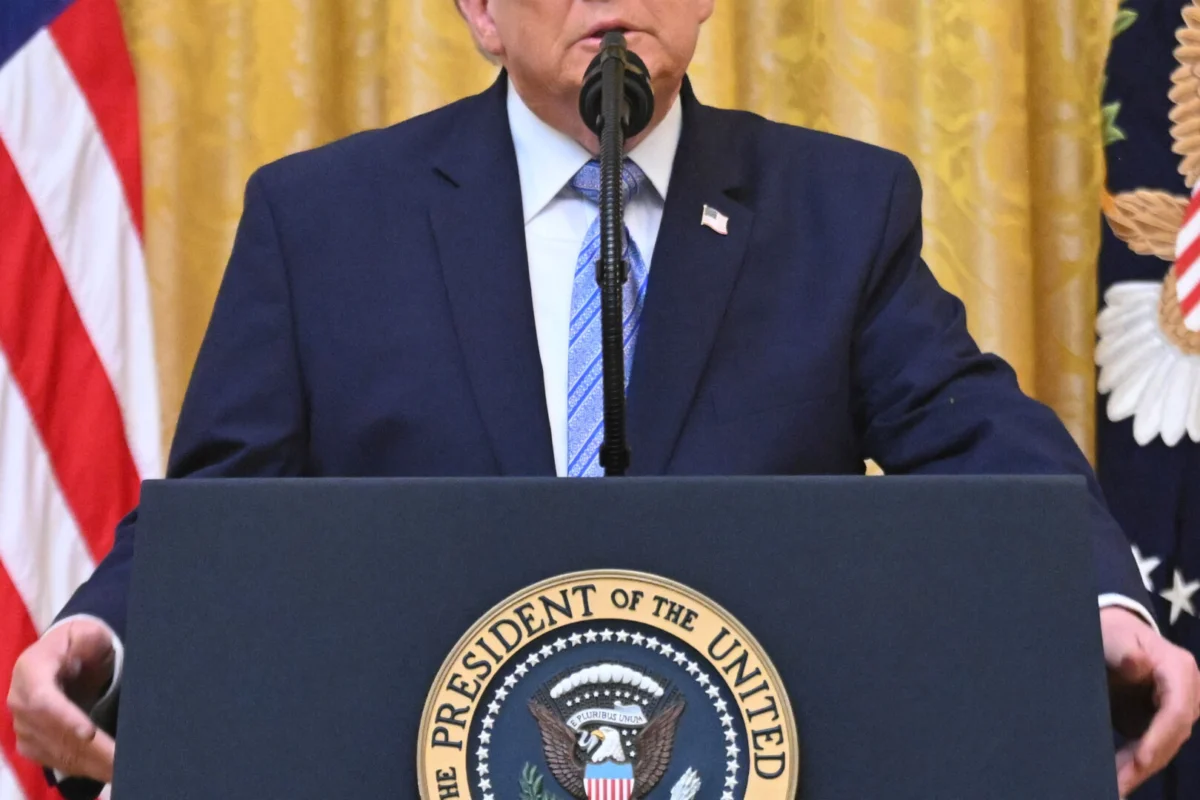
WASHINGTON D.C. – July 17, 2026 – In a highly anticipated primetime address from the East Room of the White House on Thursday night, President Donald Trump once again centered his remarks on the pervasive theme of voter fraud, casting a long shadow over the integrity of America’s electoral processes just months before the crucial 2026 midterm elections. The address, delivered on July 16th, marked the latest in a relentless campaign stretching back decades, where the President has repeatedly asserted widespread irregularities and illicit activities at every level of the nation’s voting system.
According to an exhaustive analysis by Factba.se, a data intelligence platform tracking public statements, President Trump has made thousands of assertions regarding voter fraud. These claims span local, state, national, and even international contexts, encompassing his public speeches, interviews, social media posts, and various other statements recorded since 1988. This unprecedented volume of unsubstantiated allegations continues to fuel debate, deepen political polarization, and raise significant concerns about public confidence in democratic institutions.
The President’s address on Thursday night, which reportedly focused on the need for "election security" and "fairness," comes at a particularly sensitive juncture. With the 2026 midterms looming, the rhetoric surrounding election integrity is poised to shape political discourse, voter engagement, and potentially the outcomes of races across the country. Critics argue that such persistent, unproven claims erode the very foundations of democratic governance, while supporters contend they are necessary to safeguard future elections from alleged malfeasance.
The Factba.se database, which meticulously logs every public utterance by President Trump, reveals a consistent pattern of questioning electoral outcomes and processes, regardless of the election’s specific context or the conclusive evidence provided by election officials and courts. This ongoing narrative, meticulously documented over decades, forms the core of a political strategy that has profoundly impacted American politics and public perception.
A Persistent Narrative: The Main Facts
President Donald Trump’s assertions about voter fraud are not a recent phenomenon but represent a deeply entrenched and frequently reiterated theme throughout his public life. The July 16, 2026 primetime address served as a stark reminder of his unwavering commitment to this narrative, even as evidence to support such widespread claims remains elusive. The core of the issue lies in the sheer volume and scope of these allegations, which Factba.se quantifies in the thousands, covering every imaginable facet of the electoral system.
These claims typically allege various forms of malfeasance, including:
- Illegal Voting: Assertions that non-citizens, deceased individuals, or felons ineligible to vote are casting ballots.
- Ballot Manipulation: Claims of ballot harvesting, stuffing, or alterations, particularly concerning mail-in ballots.
- Voting Machine Irregularities: Allegations that electronic voting machines or software are rigged, susceptible to hacking, or deliberately programmed to switch votes.
- Procedural Failures: Charges of lax voter registration protocols, inadequate signature verification, or improper ballot counting.
- International Interference: Broader claims of foreign entities influencing or manipulating U.S. elections beyond traditional intelligence operations.
The repeated nature of these allegations, particularly their intensification around significant electoral events, has created a climate of suspicion for a segment of the electorate. Despite comprehensive reviews by state and federal election officials, bipartisan commissions, and numerous court rulings, no widespread, systemic fraud capable of altering election results has ever been substantiated. The President’s latest remarks underscore a continuing effort to keep these concerns at the forefront of national conversation, particularly as the 2026 midterm elections draw nearer. The impact on voter confidence and the operational challenges faced by election administrators remain significant concerns for observers across the political spectrum.
A Chronology of Claims: From 1988 to 2026
President Trump’s engagement with the concept of voter fraud has evolved significantly over nearly four decades, escalating dramatically in prominence and intensity during his political career.
Early Mentions (Pre-2016)
While the Factba.se analysis begins in 1988, President Trump’s earlier public statements rarely focused on systemic voter fraud. His initial forays into political commentary and potential presidential runs in the late 1980s and early 2000s were more focused on economic policy, foreign affairs, or his own business acumen. However, the seeds of skepticism about institutional integrity were occasionally sown, albeit not specifically targeted at elections. It was only closer to his serious political aspirations that election mechanics began to enter his discourse.
The 2016 Presidential Campaign and Election
The 2016 election cycle marked a turning point. As a candidate, Donald Trump frequently warned of a "rigged system" and suggested the election would be fraudulent if he did not win. These claims were often made at rallies and on social media, creating a preemptive narrative of potential malfeasance. After his victory, paradoxically, he continued to assert that millions of illegal votes had been cast, preventing him from winning the popular vote, despite the Electoral College victory. This established a pattern: claims of fraud could persist regardless of the outcome, serving to both delegitimize opponents and bolster his own mandate.
During the Presidency (2017-2020)
Throughout his first term, President Trump maintained his focus on voter fraud. In 2017, he established the Presidential Advisory Commission on Election Integrity, co-chaired by then-Vice President Mike Pence and Kansas Secretary of State Kris Kobach. The commission was tasked with investigating alleged voter fraud nationwide. However, it faced widespread resistance from states unwilling to provide sensitive voter data, and ultimately disbanded in January 2018 without producing any evidence of widespread voter fraud. Despite the commission’s failure to substantiate his claims, President Trump continued to advocate for stricter voting laws and greater scrutiny of voter rolls.
The 2020 Presidential Election and Its Aftermath
The 2020 election represents the zenith of President Trump’s voter fraud claims. Before, during, and after Election Day, he repeatedly asserted that the election was being "stolen" from him through various fraudulent means, particularly focusing on mail-in ballots which saw unprecedented use due to the COVID-19 pandemic. Specific allegations targeted battleground states like Pennsylvania, Georgia, Arizona, Michigan, and Wisconsin. His campaign filed dozens of lawsuits challenging results, alleging irregularities, and demanding recounts or audits. Nearly all of these lawsuits were rejected by state and federal courts, often due to a lack of credible evidence.
The "Stop the Steal" movement, fueled by these claims, culminated in the January 6, 2021, attack on the U.S. Capitol, an event directly linked to the belief among many of his supporters that the election had been unlawfully manipulated. Even after leaving office, President Trump continued to reiterate his belief that the 2020 election was fraudulent, making it a central tenet of his post-presidency political identity.
Post-Presidency and Leading to 2026
Following his departure from the White House, President Trump’s focus on election integrity did not wane. He continued to influence Republican primary races by endorsing candidates who echoed his claims about the 2020 election and pledged to enact stricter voting laws. The 2022 midterms saw many "election deniers" run for office, with varying degrees of success, further embedding the narrative within the Republican Party.
By 2024, as President Trump pursued another presidential bid, his rhetoric intensified, projecting the alleged fraud of 2020 onto future elections. He consistently warned that upcoming elections would also be susceptible to the same vulnerabilities unless significant changes were made. His supporters, deeply influenced by this consistent messaging, often express deep distrust in electoral outcomes that do not favor his chosen candidates.
The July 16, 2026, address thus fits squarely into this long-standing chronological pattern. As the 2026 midterm elections approach, President Trump’s decision to dedicate a primetime address to voter fraud indicates a strategic effort to mobilize his base, shape the electoral narrative, and potentially pre-emptively challenge unfavorable results. His consistent focus since 2016 has cemented this issue as a defining feature of his political movement, making it a recurring and often contentious topic in American political life.
Supporting Data: Evidence vs. Allegation
The sheer volume of President Trump’s assertions regarding voter fraud stands in stark contrast to the dearth of credible, widespread evidence to support them. The Factba.se analysis, which counts "thousands of assertions," underscores the consistency and frequency of these claims across various platforms and over several decades. However, governmental investigations, academic studies, and judicial reviews have consistently found that systemic voter fraud is exceedingly rare and has not occurred at a scale capable of influencing national elections.
Factba.se Methodology
Factba.se collects and archives President Trump’s public statements from an extensive array of sources. This includes transcripts of official speeches, press conferences, rally remarks, interviews with various media outlets, and all posts across social media platforms. The meticulous nature of this data collection allows for quantitative analysis of recurring themes, such as voter fraud. The finding that he has made "thousands of assertions" highlights not just the presence of this narrative but its overwhelming dominance within his public discourse. This robust dataset provides the empirical basis for understanding the scale of his messaging on the topic.
Governmental and Official Investigations
Numerous official bodies have investigated claims of widespread voter fraud, particularly in the aftermath of the 2020 election:
- U.S. Department of Justice (DOJ): Under both Republican and Democratic administrations, the DOJ has found no evidence of widespread voter fraud that would have altered the outcome of a federal election. Then-Attorney General William Barr, a Trump appointee, stated in December 2020 that the DOJ had not found evidence of fraud "on a scale that could have effected a different outcome in the election."
- Cybersecurity and Infrastructure Security Agency (CISA): In a joint statement with the Election Infrastructure Government Coordinating Council and the Election Infrastructure Sector Coordinating Executive Committee, CISA declared the 2020 election "the most secure in American history." This statement, issued by federal and state election security experts, directly contradicted claims of systemic manipulation.
- State-Level Audits and Reviews: Many states, including those targeted by President Trump’s claims (e.g., Arizona, Georgia), conducted extensive audits, recounts, and forensic analyses of their election results. These reviews, often bipartisan and meticulous, consistently affirmed the integrity of the results. For example, Georgia’s hand recount and subsequent machine audit confirmed President Biden’s victory. The "forensic audit" in Maricopa County, Arizona, initiated by state Republicans, ultimately found no evidence of widespread fraud and even slightly increased Biden’s vote count.
- State Election Officials: Republican and Democratic election officials at the state and local levels across the country have repeatedly affirmed the security and integrity of their electoral processes. Many have publicly refuted specific allegations of fraud, often providing detailed explanations of security protocols and verification measures.
Academic Studies and Expert Consensus
Independent academic research and analyses by non-partisan organizations consistently demonstrate that voter fraud is exceedingly rare. Studies by organizations like the Brennan Center for Justice, the Bipartisan Policy Center, and numerous university researchers have documented that instances of fraud, when they occur, are typically isolated, involve small numbers of votes, and are quickly detected and prosecuted. There is no evidence of the systematic, coordinated fraud that President Trump frequently alleges. Experts in election administration, political science, and law overwhelmingly agree that the U.S. electoral system, while not perfect, is robustly designed to prevent and detect fraud.
Judicial Rulings
Perhaps the most compelling "supporting data" for the integrity of the elections comes from the judiciary. Following the 2020 election, President Trump’s campaign and its allies filed over 60 lawsuits in state and federal courts across the country. These lawsuits alleged various forms of fraud and sought to overturn election results. Nearly all were dismissed, often by judges appointed by President Trump or other Republicans, for lack of credible evidence. Judges repeatedly found that the plaintiffs failed to provide specific facts or legal arguments to substantiate their claims, often relying instead on affidavits containing speculation or hearsay. The U.S. Supreme Court, including its conservative majority, also declined to hear cases challenging the election results, signaling a lack of legal merit in the arguments presented.
In summary, while President Trump has indeed made "thousands of assertions" about voter fraud, the supporting data from official investigations, academic studies, and judicial reviews overwhelmingly contradicts the notion of widespread, systemic fraud capable of altering election outcomes. This persistent gap between allegation and evidence remains a central tension in the national discourse surrounding election integrity.
Official Responses: A Divided Landscape
The torrent of voter fraud claims from President Trump has elicited a complex and often polarized array of responses from various stakeholders, reflecting deep divisions within the political landscape and broader society.
The Democratic Party and Voter Rights Advocates
Democrats and voting rights organizations have consistently and vociferously condemned President Trump’s claims, characterizing them as a dangerous assault on American democracy. They argue that the allegations undermine public confidence in elections, disenfranchise voters, and provide a pretext for enacting restrictive voting laws. Their response typically involves:
- Defending Election Integrity: Highlighting the robust security measures in place, the professionalism of election workers, and the lack of evidence for widespread fraud.
- Promoting Voter Access: Advocating for policies that expand voting rights, such as automatic voter registration, same-day registration, and expanded early voting and mail-in ballot options, often framing these as counter-measures to efforts to suppress votes.
- Fact-Checking and Counter-Narratives: Actively working to debunk false claims through public education campaigns and direct engagement with media.
- Legal Challenges: Opposing new state laws that restrict voting access, arguing they are based on unsubstantiated fraud concerns and disproportionately impact minority voters.
The Republican Party: A Fractured Front
The Republican Party’s response has been more complex and often fractured, reflecting the immense influence President Trump holds over a significant portion of the party’s base.
- Supporters of Trump’s Claims: A substantial segment of the Republican Party, including many members of Congress, state legislators, and candidates, have either openly embraced or tacitly supported President Trump’s claims. These individuals often echo the rhetoric of a "stolen election" and advocate for more stringent voting laws, sometimes pushing for audits and investigations even after official results are certified. Their support is often driven by a desire to appeal to the party’s base and avoid political retribution from the former President.
- Pushback from Within: A smaller but vocal group of Republicans has publicly challenged President Trump’s claims, often at significant personal and political cost. Examples include Georgia Secretary of State Brad Raffensperger, who resisted pressure to "find" votes in 2020; Arizona House Speaker Rusty Bowers, who refused to overturn his state’s election results; and prominent national figures like former Rep. Liz Cheney and Sen. Mitt Romney, who have consistently denounced the rhetoric as harmful to democracy. These individuals often emphasize adherence to the rule of law and the constitutional principles of free and fair elections.
- Broader Party Strategy: The Republican Party at large has struggled to reconcile these two factions. While some leaders have tried to pivot to future election integrity reforms without fully endorsing past fraud claims, the deep-seated belief in election malfeasance among many Republican voters means the issue remains a powerful mobilizing force and a difficult topic for the party to navigate coherently.
Election Officials (Bipartisan)
Election officials, from state secretaries of state to county clerks and local poll workers, represent the frontline of election administration. Their response to President Trump’s claims has been largely unified in its defense of the integrity of the electoral process:
- Affirming Security Protocols: They consistently emphasize the multi-layered security measures, audits, and bipartisan oversight inherent in election systems.
- Addressing Specific Allegations: Many officials have taken pains to publicly explain how specific fraud allegations are factually incorrect or based on misunderstandings of election procedures.
- Condemning Harassment: Election officials, many of whom have faced unprecedented threats and harassment, have called for an end to baseless accusations that endanger their safety and undermine their crucial work.
- Advocating for Resources: They frequently highlight the need for adequate funding and resources to properly administer elections and adapt to evolving challenges.
Media and Independent Fact-Checkers
The media landscape has been significantly impacted, with news organizations and independent fact-checkers dedicating substantial resources to verifying or debunking President Trump’s claims. This has led to:
- Intensive Fact-Checking: Rigorous scrutiny of specific allegations, often involving detailed investigations and consultations with election experts.
- Challenges of Disinformation: Navigating the spread of misinformation and disinformation, particularly on social media, which often outpaces traditional fact-checking efforts.
- Ethical Debates: Discussions within journalism about how to cover unsubstantiated claims without amplifying them or inadvertently giving them undue legitimacy.
International Community
Globally, President Trump’s repeated claims of voter fraud and the subsequent challenges to democratic norms have raised concerns among international allies and observers. Many democratic nations view the stability and integrity of U.S. elections as foundational to global democratic health, and the sustained questioning of electoral outcomes has been seen by some as a concerning sign of democratic backsliding.
In essence, official responses to President Trump’s voter fraud claims paint a picture of a nation deeply divided, with fundamental disagreements not only over political outcomes but over the very mechanisms and trustworthiness of its democratic processes.
Implications: The Long Shadow on American Democracy
The persistent propagation of voter fraud claims by President Donald Trump, culminating in his recent July 16, 2026, address, carries profound and far-reaching implications for American democracy, particularly as the nation heads into the 2026 midterm elections. These implications touch upon public trust, voter behavior, legislative priorities, and the very stability of the political system.
Erosion of Public Trust in Democratic Institutions
Perhaps the most significant implication is the sustained erosion of public trust in democratic institutions, especially elections. When a former president, who remains a powerful political figure, repeatedly asserts that elections are rigged or stolen without substantial evidence, a significant portion of the populace may come to believe it. This skepticism can lead to:
- Decreased Legitimacy: For many, election outcomes become illegitimate if they do not align with preferred candidates, regardless of official certifications.
- Cynicism about Governance: Beyond elections, this distrust can extend to other governmental bodies, the judiciary, and the media, making effective governance and collective action more challenging.
- Heightened Partisan Suspicion: Each election becomes less about policy choices and more about whether the system itself is fair, deepening partisan divides and making compromise difficult.
Impact on Voter Behavior and Participation
The narrative of voter fraud can influence participation in several ways:
- Voter Suppression: If voters believe the system is rigged, some may become apathetic and choose not to vote, feeling their ballot won’t count.
- Voter Mobilization (Counter-Intuitively): Conversely, the claims can also mobilize voters who believe they must vote to "overcome" the alleged fraud or to "protect" the system. This often creates a highly motivated, but also highly suspicious, electorate.
- Changes in Voting Methods: Fear of fraud in certain voting methods (e.g., mail-in ballots) can push voters towards others (e.g., in-person voting), potentially causing logistical challenges for election administrators.
Threats to Election Workers and Processes
The baseless claims have had a tangible and dangerous impact on the individuals who administer elections:
- Harassment and Threats: Election workers, from state secretaries to local poll volunteers, have faced unprecedented levels of harassment, abuse, and death threats, often fueled by specific, false allegations.
- Staffing Shortages: The hostile environment and increased scrutiny may deter individuals from entering or remaining in election administration roles, leading to potential staffing shortages and loss of institutional knowledge.
- Increased Costs: Election offices must divert resources to security, legal defense, and public education campaigns, taking away from core administrative functions.
Legislative Changes and Policy Debates
President Trump’s claims have spurred significant legislative activity at the state level:
- Restrictive Voting Laws: Many states, particularly those controlled by Republicans, have passed or proposed new laws ostensibly aimed at "election integrity." These laws often include stricter voter ID requirements, limitations on mail-in voting, purges of voter rolls, and reduced early voting periods. Critics argue these measures are designed to suppress turnout, particularly among minority voters, and are a direct response to unsubstantiated fraud claims.
- Federal vs. State Control: The debate has also reignited discussions about the balance of power between federal and state governments in overseeing elections, with calls for federal standards on voting access often clashing with states’ rights arguments.
Political Polarization and Instability
The consistent focus on election fraud has exacerbated political polarization:
- Deepening Divisions: It creates a fundamental divide between those who trust the electoral system and those who do not, making it harder for the nation to find common ground on any issue.
- Challenges to Peaceful Transfer of Power: The events of January 6, 2021, demonstrated the extreme danger posed by widespread belief in a "stolen election," challenging the bedrock principle of the peaceful transfer of power. The continued rhetoric keeps this threat alive.
- Foreign Adversary Exploitation: External actors seeking to destabilize American democracy can exploit these divisions by amplifying disinformation and sowing further distrust.
Implications for the 2026 Midterm Elections
The immediate context of President Trump’s July 16, 2026, address is the looming midterm elections. His comments are likely to have several specific implications:
- Campaign Messaging: Republican candidates, particularly those endorsed by President Trump, are likely to prominently feature "election integrity" in their campaigns, advocating for the very legislative changes that critics label as voter suppression.
- Voter Turnout Dynamics: The rhetoric could energize President Trump’s base, motivating them to vote to "secure" the election. At the same time, it could alienate swing voters or Democrats who are fatigued by the constant questioning of results.
- Post-Election Challenges: Regardless of the outcomes, it is highly probable that any close races, particularly those where a Trump-backed candidate loses, will be met with renewed claims of fraud and legal challenges, potentially prolonging the certification process and generating further political instability.
- Democratic Fret: As hinted in the original article’s link, Democrats are likely "fretting" over these claims because they perceive them as a direct threat to fair elections, a means to justify restrictive voting laws, and a strategy to undermine potential victories. They will likely redouble efforts to educate voters on election security and mobilize against perceived attempts at voter suppression.
In conclusion, President Trump’s thousands of assertions regarding voter fraud, reiterated forcefully in his recent primetime address, represent far more than just political rhetoric. They are a sustained campaign with tangible consequences, shaping legislative agendas, influencing public opinion, and continuously testing the resilience of American democratic institutions. As the 2026 midterms approach, the shadow of these claims will undoubtedly loom large, challenging the fundamental trust required for a healthy democracy to function.