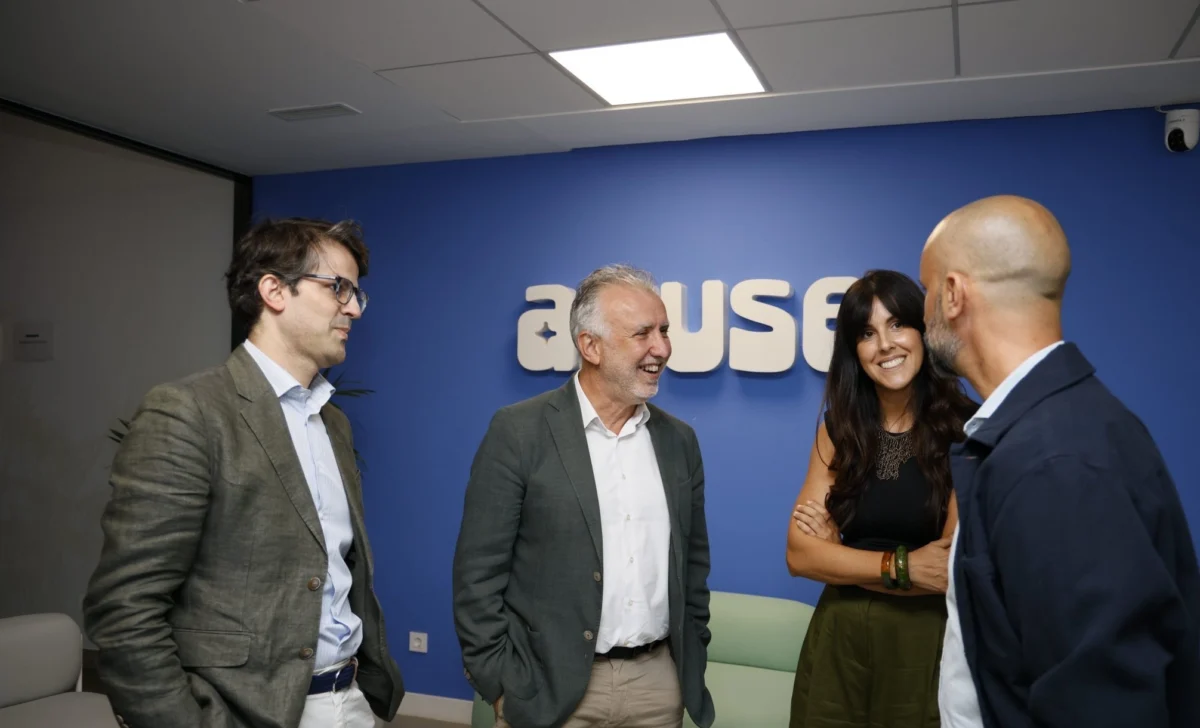
In a bold move to solidify Spain’s position as a premier global destination for high-end animation and digital content, the Spanish government has announced a strategic investment of €6.4 million ($7.3 million) into the newly established Las Palmas-based studio, Amuse Labs. This infusion of capital, facilitated through the state-backed technology investment vehicle SETT (Sociedad Española de Transformación Tecnológica), marks a significant milestone in the nation’s “Spain Audiovisual Hub” strategy, aimed at transforming the Canary Islands into an epicenter for intellectual property (IP) development and international distribution.
The investment is not merely a localized injection of funds; it represents a broader, long-term commitment to integrating Spain into the elite tiers of the global children’s entertainment market. By leveraging public and private capital, the initiative seeks to bridge the gap between creative storytelling and industrial-scale technological output.
The Financial Architecture of the Deal
The structure of the Amuse Labs agreement is a blueprint for future public-private partnerships in the European creative sector. By bringing together a total of $15.1 million in combined capital, the project provides Amuse Labs with the necessary financial leverage to move beyond traditional service-work models.
Under the terms of the agreement, SETT will secure a 48% equity stake in Amuse Labs, signaling the government’s confidence in the studio’s business model. Amuse Studios will serve as the company’s second-largest shareholder. This capitalization is expected to underpin a series of animation projects valued at approximately $22.9 million, granting the studio the "financial muscle" required to operate across the entire value chain—from initial concept and scriptwriting to global distribution, licensing, and merchandising.
This shift toward ownership is critical. For years, many Spanish studios functioned primarily as service providers for larger international players. Amuse Labs, however, is positioning itself as an IP-first entity. By retaining the rights to its productions, the studio ensures that it captures long-term revenue streams from toys, publishing, and international streaming syndication, rather than relying solely on upfront production fees.
Chronology of an Emerging Powerhouse
The rise of the Canary Islands as an animation hub has been a calculated, multi-year process. The following timeline illustrates the momentum currently defining the region:
- Foundation Phase: The Canary Islands utilize the Canary Islands Special Zone (ZEC) to foster a business-friendly environment with one of Europe’s most competitive tax regimes.
- The Spain Audiovisual Hub Launch: As part of a national recovery effort, the Spanish government formalizes the "Spain Audiovisual Hub" plan, dedicating billions to digitalization and content creation.
- Recent Accelerations (Late 2024): Within the last two months alone, the government has injected nearly $46 million into the archipelago’s audiovisual sector.
- Strategic Partnerships: Following the backing of the Las Palmas-based animation giant Anima Kitchent—supported by a $28.8 million investment alongside the global VFX leader DNEG—the government expanded its reach to include collaborative ventures with international players, such as the partnership with South Africa’s Known Associates Group.
- Amuse Labs Integration: The current $15.1 million deal marks the latest, most definitive step in turning the archipelago into a self-sustaining ecosystem for children’s IP.
Supporting Data: Economic and Industrial Impact
The economic impact of the Amuse Labs investment is projected to ripple across the Spanish economy, creating both direct and indirect employment opportunities. The company’s growth plan is expected to create 40 direct, highly skilled jobs within the studio, while simultaneously fostering an estimated 150 indirect positions. These roles span the breadth of the production pipeline, including specialized animation, post-production, sound engineering, legal services, and international distribution.
The studio’s technological roadmap is equally ambitious. Amuse Labs intends to overhaul its 2D and CGI pipelines by integrating proprietary AI tools. These tools are designed to streamline repetitive tasks—such as localization and production management—allowing creative teams to focus on storytelling.
Furthermore, the target market for these products is aggressively global. Amuse Labs has outlined an expansion strategy that focuses on the high-value markets of North America, the European Union, the U.K., and Asia. By engaging with toy manufacturers and major publishing houses at the earliest stages of development, the studio aims to build franchises that can thrive in a multi-platform environment, from traditional linear broadcast to interactive digital experiences.
Official Perspectives: Aligning Policy with Creativity
The government’s enthusiasm for this venture was articulated clearly by Ángel Víctor Torres, Spain’s Minister for Territorial Policy and Democratic Memory. “Spain is strengthening its leadership in audiovisual production, with the Canary Islands as a strategic engine,” Torres stated during the announcement.
The sentiment reflects a broader governmental policy shift led by the Ministry for Digital Transformation and Public Administration. SETT, the investment vehicle behind this deal, is tasked with identifying and backing industries that are not only technologically advanced but also capable of projecting Spanish influence abroad.
By investing in Amuse Labs, the government is effectively de-risking the entry of new, high-growth companies into the global market. This state-backed support serves as a signal of stability to private investors, proving that the Spanish government is committed to providing the infrastructure—both financial and regulatory—required to sustain long-term growth in the creative industries.
Implications: A New Era for European Animation
The implications of this investment are significant for both the European Union and the global animation market.
1. Decentralization of Production
For decades, the European animation sector was heavily concentrated in traditional hubs like Paris, London, and Berlin. The success of the Canary Islands proves that, with the right combination of tax incentives (ZEC), government investment, and infrastructure, peripheral regions can become global centers of excellence. This decentralization is essential for the sustainability of the European cultural sector.
2. The Move Toward IP Autonomy
By prioritizing companies that own their IP, Spain is changing the nature of its audiovisual exports. Instead of being a "factory" for foreign streamers, Spanish companies are becoming the owners of the intellectual property that drives those platforms. This increases the long-term valuation of Spanish creative businesses and keeps the economic benefits of global hits within the country.
3. Technological Integration
The integration of AI and high-end CGI into the Amuse Labs workflow represents a modern approach to the traditional craft of animation. By automating the technical overhead, Spanish studios can compete on equal footing with studios in North America and Asia, where production costs are often higher or labor markets more saturated.
4. A Model for Public-Private Synergy
The deal provides a working template for other European nations. By utilizing a state-backed investment arm (SETT) to act as an anchor investor, the government provides the credibility required to attract private capital. This model mitigates the high risks associated with startup animation studios and allows for a more aggressive scaling strategy than would be possible through organic growth alone.
Conclusion
As Amuse Labs begins its operations in Las Palmas de Gran Canaria, it does so with the full weight of the Spanish government behind it. The $7.3 million investment is more than a line item on a budget; it is a declaration of intent.
The Canary Islands, long known for their tourism and natural beauty, are successfully rebranding themselves as a nexus of digital innovation and cultural production. As these studios begin to release their first wave of internationally-oriented content, the global animation market will likely see a significant shift in influence. For Spain, the goal is clear: to ensure that the next generation of children’s franchises—the characters, stories, and worlds that captivate global audiences—are conceived, built, and owned in the heart of the Atlantic.