For nearly four decades, a quiet patch of forest in central Massachusetts has served as the frontline in a scientific battle to understand the Earth’s most complex carbon reservoir: the ground beneath our feet. A landmark study, representing the world’s longest-running soil warming experiment, has delivered a sobering conclusion that challenges the fundamental assumptions of climate science.
The research indicates that the "stable" carbon stores sequestered deep within forest soils—long thought to be resistant to the whims of a warming planet—are beginning to decompose. As temperatures climb, these ancient reservoirs are leaking carbon dioxide back into the atmosphere, threatening to accelerate the very climate change that triggered their release.
The Harvard Forest Chronicles: A Legacy of Inquiry
The experiment, spearheaded by Jerry Melillo, a Distinguished Scientist at the Marine Biological Laboratory, is a testament to the power of longitudinal scientific inquiry. Begun 37 years ago, the study sought to answer a question that was then largely theoretical: What happens to the soil ecosystem when the climate warms significantly?
To simulate the future, researchers at the Harvard Forest established a series of heated plots. Using underground heating cables, they maintained the soil at a temperature 5°C (9°F) higher than the surrounding ambient ground, 24 hours a day, 365 days a year. When the experiment commenced nearly four decades ago, this 5°C threshold represented the upper-end projection for global warming. Today, as climate models grow increasingly precise, that figure remains a vital benchmark for understanding the sensitivity of forest ecosystems.
The Role of the Microbial Engine
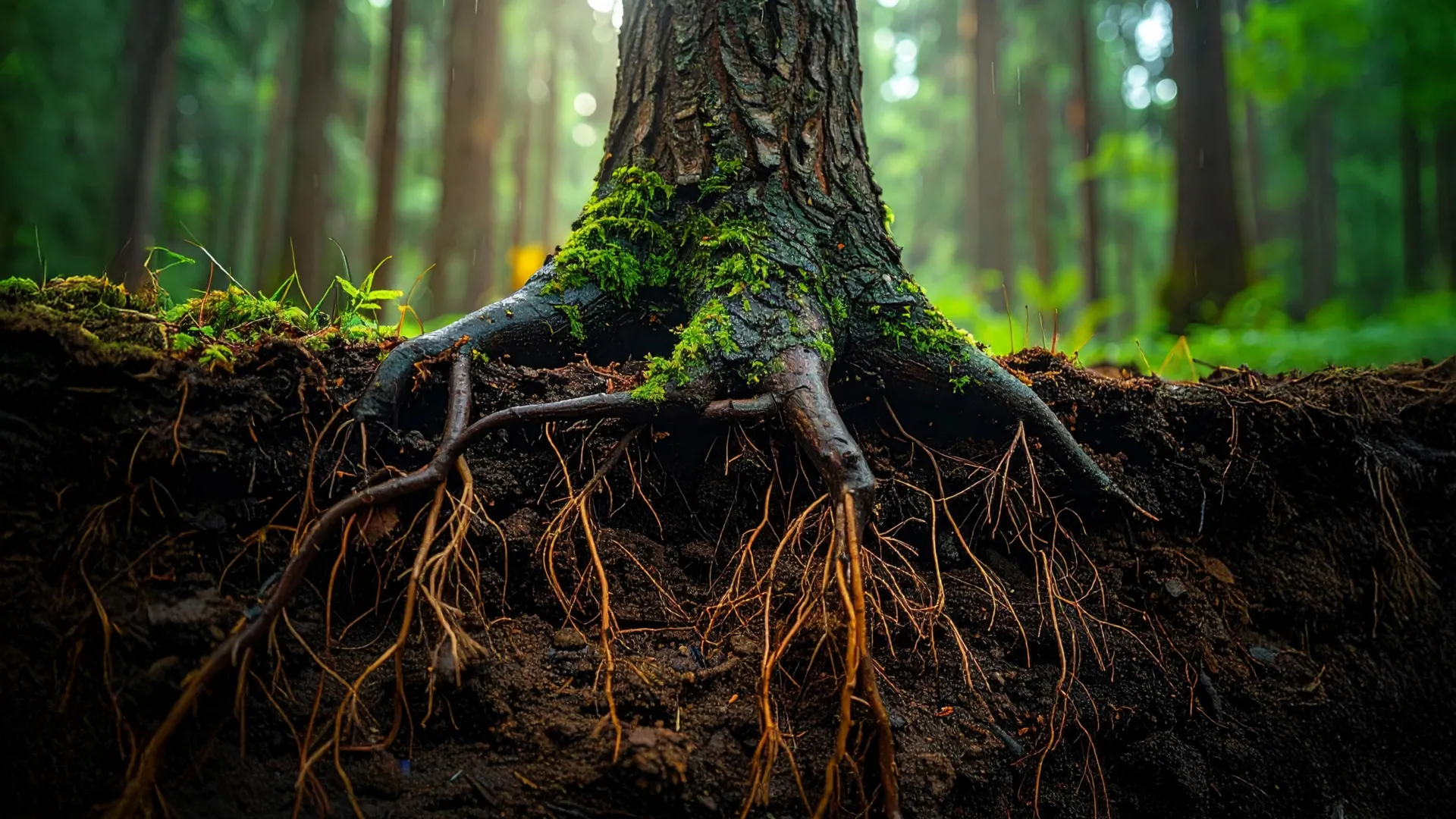
The core of the issue lies in the invisible world of soil microbes. These organisms are the ecosystem’s primary decomposers, breaking down organic matter and recycling nutrients vital for plant life. However, they are also highly sensitive to temperature.
"Microbes are critical components of soil ecosystems," Melillo explains. "They act as the engines of decomposition. As warming reshapes these microbial communities, it fundamentally alters their metabolic rates. What we are witnessing is not just a temporary spike in activity, but a long-term reconfiguration of how these communities interact with the carbon locked in the soil."
Chronology of a Climate Discovery
The trajectory of this 37-year study provides a rare, high-resolution view of environmental change.
The Early Years (1987–2000): Initial observations confirmed that soil warming accelerated the decomposition of "labile" carbon—the easy-to-digest organic matter like fresh leaves and roots. During this phase, CO2 emissions from the soil increased significantly, consistent with early climate models.
The Middle Period (2000–2015): As the experiment progressed, scientists noted a cyclical pattern. There were periods where the rate of CO2 release seemed to plateau, leading some to hypothesize that the soil might eventually reach a new equilibrium where the "easy" carbon was depleted and the remaining stores were immune to further warming.
The Fourth Decade (2015–Present): The most startling revelation occurred within the last few years. Researchers observed that the soil’s "stable" carbon—the complex, deep-seated organic matter previously thought to be chemically protected from decomposition—began to break down. This finding shattered the long-held assumption that deep soil carbon was effectively "locked away" from the atmosphere.
Supporting Data: The Mechanics of Decomposition
The breakdown of stable soil carbon is not merely a localized phenomenon; it is a critical finding for global carbon cycle mathematics. Soil contains significantly more carbon than the atmosphere and all terrestrial vegetation combined. If even a small percentage of this stable pool becomes mobile, the atmospheric consequences could be profound.
The Feedback Loop
The research identifies a dangerous "feedback loop." As the planet warms, the metabolic activity of soil microbes increases, causing the release of CO2. This additional CO2 contributes to the greenhouse effect, leading to further atmospheric warming, which in turn stimulates more microbial activity.
This mechanism suggests that forest soils may be a much more significant source of atmospheric carbon than previously accounted for in global climate models. If the "stable" fraction of soil carbon is, in fact, vulnerable, then the Earth’s natural ability to act as a carbon sink is significantly weaker than current climate projections suggest.
Statistical Context
Global average temperatures have already risen by approximately 1.1°C to 1.4°C since the pre-industrial era. While 5°C represents a high-end scenario, the trend lines observed in the Harvard Forest study suggest that even moderate warming is sufficient to destabilize carbon stores that have remained dormant for centuries, if not millennia.
Official Perspectives and Scientific Consensus
The scientific community has reacted to these findings with a mix of urgency and analytical rigor. Experts in soil ecology emphasize that the Harvard Forest data provides the "ground truth" necessary to calibrate global models.
"For years, our models have relied on the assumption that deep soil carbon is stable," says one independent climate modeler. "Melillo’s data forces us to revise those assumptions. It shows that there is a time-lag between the onset of warming and the breakdown of stable carbon, but once that threshold is crossed, the process is continuous and difficult to arrest."
Jerry Melillo is careful to note that while the news is concerning, it does not imply a hopeless future. "The pace and severity of this feedback are heavily dependent on our actions today," he asserts. "If we dramatically cut CO2 emissions from fossil fuel burning, or reduce global deforestation, the projected increase in soil temperatures will be lower, and we may be able to mitigate some of the most severe releases from these deeper carbon stores."
Implications for Global Climate Policy
The implications of this research are twofold: they demand a refinement of our climate models and a recalibration of our climate goals.
1. Refined Climate Modeling
Current climate models, such as those used by the IPCC, often struggle to simulate the complexities of soil carbon dynamics. By incorporating the newly identified process of stable soil carbon decomposition, researchers can develop more accurate predictions of the Earth’s "carbon budget." This will allow policymakers to better understand how much carbon can be emitted before hitting critical tipping points.
2. The Urgency of Mitigation
If forest soils are indeed a hidden source of carbon emissions, the "carbon budget" available to humanity is even tighter than we thought. Every ton of CO2 we reduce today not only lowers atmospheric concentrations directly but also reduces the secondary, delayed emissions from warming soils.
The study highlights that soil protection must be integrated into climate policy. Sustainable forest management, which keeps soils cool and protected from excessive disturbance, is now not just an ecological goal but a vital climate mitigation strategy.
Conclusion: A Call for Long-Term Vigilance
The 37-year experiment at Harvard Forest is a humbling reminder that nature’s response to climate change is rarely linear. As we continue to push the planet into uncharted climatic territory, we are uncovering "sleeping giants"—processes that have been dormant for geological epochs but are now being awakened by human activity.
The breakdown of stable soil carbon represents a significant, previously underestimated variable in the climate equation. As we move forward, the task for the scientific community is to translate these findings into actionable policy. For the public and policymakers alike, the lesson is clear: the ground beneath us is not a passive bystander in the climate crisis; it is an active, and increasingly volatile, participant.
By prioritizing the reduction of greenhouse gas emissions, we can prevent the most catastrophic scenarios of soil carbon release. However, the window for intervention is closing. The forest soil at Harvard, with its decades of data, provides a clear warning: the Earth is responding to our actions in ways that are both complex and cumulative. It is time our policies reflected the full, long-term scope of that reality.