More than three years after the explosive debut of ChatGPT brought generative artificial intelligence into the global cultural mainstream, OpenAI is signaling a major pivot. No longer content with dominating the productivity workflows of individual professionals and developers, the San Francisco-based AI giant is looking to integrate its technology into the heart of the home.
In a strategic move that reflects the evolving maturity of the AI sector, OpenAI has begun the search for a dedicated product manager tasked with building tailored experiences for families, caregivers, and older adults. This development marks a transition from viewing AI as a solitary assistant to conceptualizing it as a shared, multi-generational household utility.
The Strategic Pivot: Building for the Household
The job posting for a product manager in San Francisco explicitly seeks an individual with experience in "trust-sensitive" consumer environments. The role is tasked with designing products that cater to the unique needs of parents, children, and the elderly.
Industry analysts suggest this is a watershed moment for the company. Ben Bajarin, CEO of the technology consultancy Creative Strategies, notes that OpenAI is mirroring the historical trajectory of Silicon Valley titans like Apple, Google, and Meta.
"This is similar to the path those companies followed as their platforms became embedded in the fabric of everyday life," Bajarin explained. "However, the stakes are significantly higher here. AI isn’t just mediating content or managing devices; it is an active, conversational agent that shapes how users think, learn, and interact with information."
Chronology of Adoption: A Shifting Demographic
The impetus for this hiring push is grounded in undeniable data. ChatGPT’s user base, once heavily skewed toward early adopters and young professionals, is aging and broadening.
- The Early Days (2022–2023): ChatGPT was initially characterized by a young, tech-savvy demographic, particularly those aged 18 to 24.
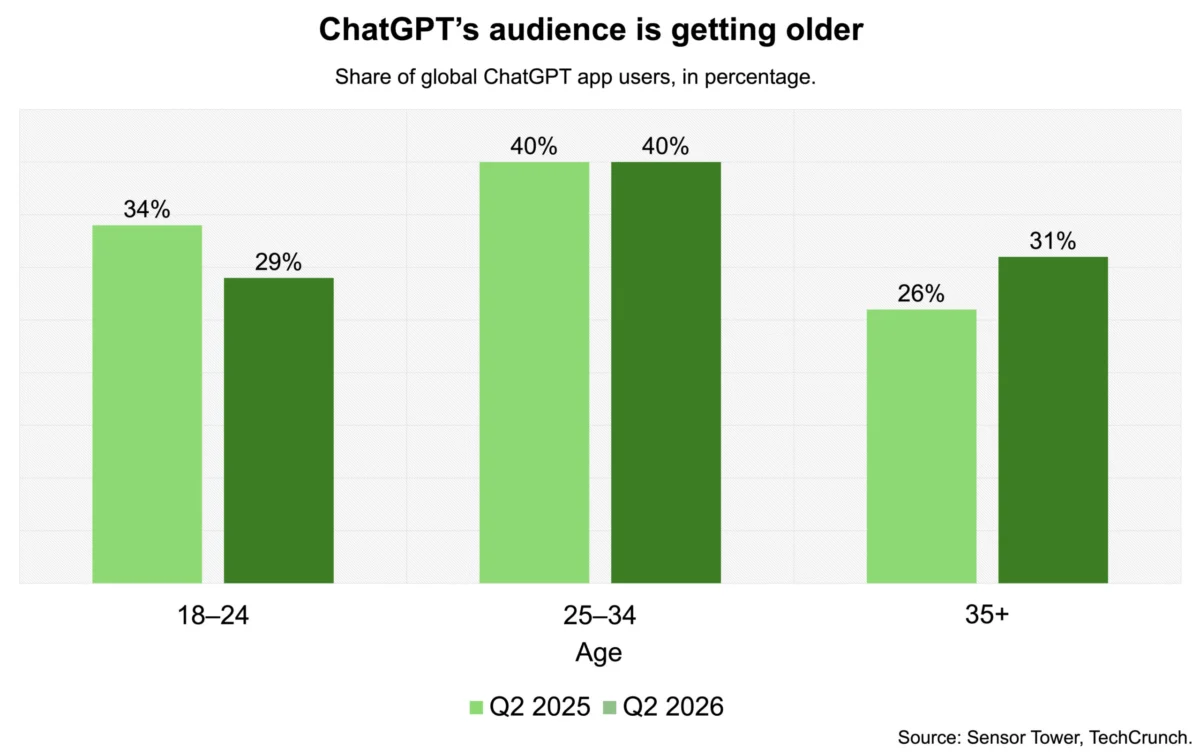
- Mid-2024 Transition: Market intelligence firm Sensor Tower reports a cooling of interest among the youngest cohorts. The share of ChatGPT users aged 18–24 has dropped from 34% a year ago to 29% in the second quarter of this year.
- The Rise of the Older User: Simultaneously, the demographic of users aged 35 and older has surged, rising from 26% to 31% over the same period. In the United States, nearly one in four parents now reports using ChatGPT, a substantial increase from 16% in the previous year.
This demographic shift suggests that AI is moving from the college dorm room to the kitchen table, becoming a tool for household management, educational assistance, and even intergenerational communication.
Supporting Data: The Generative AI Generation Gap
The push for a family-centric product strategy is also fueled by a growing realization that parents are often disconnected from their children’s AI habits. Research recently published by the Family Online Safety Institute (FOSI) highlights a significant perception gap.
In a survey of over 4,000 families across the United States and Australia, 38% of children reported using generative AI in the past week, while only 27% of their parents believed their children were doing so. This 11-percentage-point discrepancy underscores the urgent need for tools that provide parental visibility and age-appropriate guardrails.
When comparing competitive landscape data from Sensor Tower, the battle for the "family household" is clearly underway:
- Google’s Gemini: Currently leads in parental penetration at 32% of U.S. smartphone users who are parents.
- OpenAI’s ChatGPT: Holds the second position at 24%.
- Anthropic’s Claude and Microsoft’s Copilot: Trail significantly, with 4% and 2% penetration respectively among parents.
While ChatGPT is not the leader in parental reach yet, it is growing faster among the 45-and-older demographic than any of its competitors, signaling that OpenAI’s brand equity is successfully traversing age gaps.

Official Responses and the "Safety by Redesign" Imperative
OpenAI has remained largely silent on the specifics of the new role, declining requests for comment. However, the company’s recent trajectory suggests that the "family strategy" is an attempt to address mounting public and legal pressures.
The company has faced a wave of litigation from families alleging that ChatGPT played a role in incidents of psychological harm, including cases involving self-harm. In response, OpenAI has implemented a suite of reactive safety measures:
- Parental Controls: Introduction of specific settings for teen accounts.
- Sensitive Routing: A system that detects signs of distress in a conversation and routes those prompts to more advanced reasoning models designed to provide empathetic, safe responses.
- Trusted Contacts: An optional feature that allows users to designate a family member or caregiver to be alerted in the event of a suspected mental health crisis.
Stephen Balkam, CEO of FOSI, characterizes these efforts as "safety by redesign." He argues that the industry spent years ignoring the specific developmental needs of minors, treating them essentially as adults. "The initial products were released without kids in mind," Balkam noted. "This is a much-needed reaction to the reality that these tools are now ubiquitous in children’s lives."
Future Implications: What to Expect from "Family AI"
As OpenAI integrates this new product focus, industry experts expect the company to move beyond simple chatbots and toward a comprehensive "family ecosystem."
1. Multi-User Profiles and Permissions
Just as streaming services offer profiles for different ages, OpenAI is expected to roll out child-safe interfaces that limit access to certain types of content or sensitive topics, while ensuring that the AI’s tone remains age-appropriate.
2. The "Shared Household" Paradigm
Bajarin anticipates that companies will soon offer "Family Plans" that include shared household memory features. This would allow an AI to remember family schedules, grocery lists, or educational goals, essentially acting as a centralized digital assistant for the entire household.
3. AI as a Digital Tutor
OpenAI has already begun testing the waters of educational integration. Through workshops with organizations like the San Antonio Spurs Community Impact group and the Positive Coaching Alliance, the company has signaled an interest in how AI can facilitate learning, sports coaching, and mentorship. Expect to see AI tools designed to help with homework in ways that encourage critical thinking rather than simple answer-generation.
4. Regulatory Scrutiny
The shift toward family-oriented products will inevitably invite more regulatory oversight. Policymakers are increasingly concerned about data privacy for minors, the potential for AI-driven radicalization, and the psychological impact of parasocial relationships with AI agents. By proactively hiring for these roles, OpenAI is likely attempting to get ahead of potential legislation, demonstrating that they are building "by design" rather than by accident.
Conclusion: A New Frontier for Generative Tech
The move to hire a dedicated product manager for families is more than just a recruitment effort; it is a declaration of intent. OpenAI is acknowledging that for generative AI to become as essential as the smartphone or the internet, it must be safe, useful, and accessible for every member of the household.
The challenge for the company will be balancing the open-ended nature of a Large Language Model with the strict guardrails required for family-friendly interaction. If they succeed, they could set the standard for how the next generation interacts with the sum of human knowledge. If they fail to bridge the gap between innovation and safety, they risk further alienation of the very parents and caregivers who represent their next major growth demographic.
For now, the industry is watching closely. As the "family" becomes the new primary market, the companies that can prove their AI is a beneficial, safe companion will be the ones that define the digital experience of the next decade.