Across the United States, a quiet but fierce battle is being waged over the physical footprint of the digital revolution. As artificial intelligence continues its aggressive expansion, the insatiable demand for computing power has birthed a new breed of industrial giant: the massive, energy-hungry data center. While tech corporations promise these facilities will serve as engines of economic revitalization and job creation, a growing coalition of residents, environmentalists, and local activists is pushing back. From the rust-belt corridors of Philadelphia to the suburbs of Denver, Americans are increasingly viewing these facilities not as hubs of innovation, but as immediate threats to their local air quality, water security, and public health.
The Human Cost of Industrialization: The Philadelphia Case Study
For activists like Shawmar Pitts, the debate over data centers is not an abstract exercise in infrastructure planning; it is a matter of survival. A lifelong resident of the Grays Ferry neighborhood in Southwest Philadelphia, Pitts grew up in the shadow of the Philadelphia Energy Solutions (PES) oil refinery, a site that was once the largest of its kind on the East Coast.
For years, the refinery was a silent neighbor, emitting pollutants that residents would later link to chronic health crises. It wasn’t until 2018, when he encountered the environmental justice group Philly Thrive, that the dots began to connect. “I read the information they had on the table about how living near the refinery affects you,” Pitts recalled. “I’m looking at all the sicknesses on this paper, and I’m like, ‘My mother has this, my sister has that, my next-door neighbor suffers from this’—every house, someone has something on that list. From that point, I was all the way in.”
The refinery eventually shuttered following a catastrophic explosion in 2019, but the trauma remains. Today, as Philadelphia officials scout potential sites for data centers—including one in the very same Grays Ferry neighborhood—residents are bracing for a new wave of industrial impact. The fear is that the "economic growth" promised by the tech sector will be built on the same systemic neglect that poisoned their air and water for decades.

A Chronology of Resistance: From Local Rallies to Legislative Moratoriums
The movement against data centers has evolved from localized community meetings into a nationwide policy trend. The timeline of this pushback highlights the escalating tension between the tech industry’s growth requirements and community sovereignty.
- 2018–2019: Grassroots organizing in Philadelphia, led by Philly Thrive, shifts public consciousness regarding the long-term health effects of industrial sites in urban neighborhoods.
- 2020: The death of residents in industrial-adjacent neighborhoods, such as the husband of Philly Thrive board president Sonya Sanders, highlights the human cost of unregulated industrial development.
- 2023–2024: National awareness of the energy consumption of AI models spikes. Data centers are identified as primary drivers of regional grid stress.
- July 2026: New York Governor Kathy Hochul issues an executive order pausing all new data center permits, citing concerns over utility bills, water supply, and noise pollution.
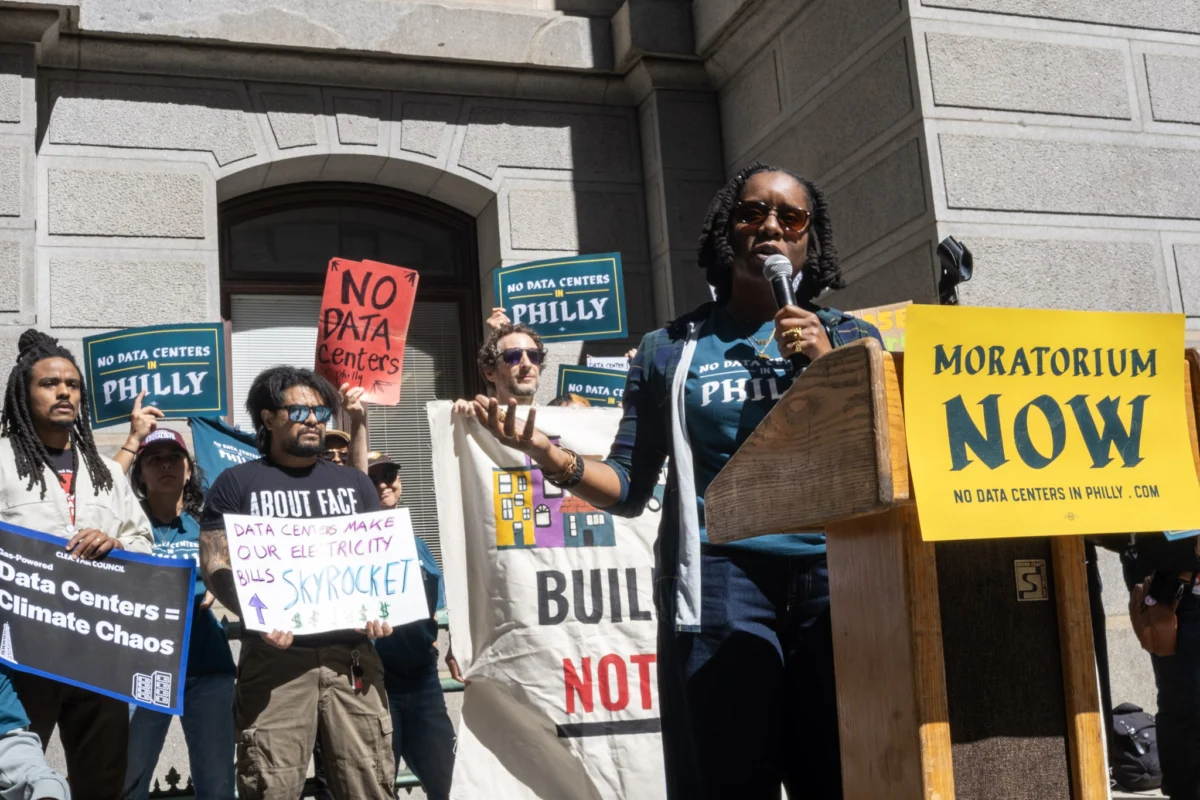
- September 2026: The "No Data Centers in Philly" campaign kicks off with a rally at City Hall, signaling the formalization of the movement in Pennsylvania.
Similar moratoriums have cropped up in quick succession across the country. Municipalities such as Denver, Indianapolis, Asheville, Charlotte, and Reno have all implemented temporary pauses on data center construction. In each instance, the objective is the same: to buy time for city officials to study the long-term environmental and social impacts that tech companies often gloss over in their initial pitches.
Supporting Data: The Environmental Toll of the AI Race
The skepticism surrounding data centers is rooted in hard data. The scale of the "AI Gold Rush" is creating an energy crisis of unprecedented proportions. According to recent projections from BloombergNEF, U.S. data centers are on track to consume more natural gas by 2035 than the combined annual consumption of Germany and Japan. This estimate is nearly double the figure projected just nine months ago, reflecting the exponential acceleration of AI development.
The Pollution Equation
While natural gas is often marketed as a "cleaner" bridge fuel, it is far from harmless. The combustion of one cubic foot of natural gas releases approximately 60 grams of carbon dioxide. The aggregate demand for data centers is expected to generate an additional 1 million metric tons of greenhouse gas emissions daily. This figure represents roughly 12% of all current U.S. greenhouse gas emissions.

The medical implications are equally grim. A 2021 study by researchers at Harvard University found that fossil fuel air pollution is responsible for one in five deaths worldwide. As data centers lean on diesel generators during periods of grid stress—a practice already being sanctioned in some regions to prevent blackouts—the threat to local air quality becomes immediate. As attorney Annie Fox of the Clean Air Council noted at the recent Philadelphia rally, "Fossil fuel-hungry data centers will worsen climate change, making those heatwaves more frequent and severe," creating a vicious feedback loop of energy consumption and environmental degradation.
Official Responses and the Governance Gap
The tension between state-level moratoriums and corporate lobbying is growing. In New York, Governor Hochul’s stance has become the gold standard for the anti-data center movement, focusing on the principle of consent: "These data centers can only be built, should only be built in places that want them."
However, tech companies argue that these moratoriums stifle economic competitiveness. They point to the tax revenue, high-paying IT jobs, and infrastructure upgrades (such as improved fiber-optic networks) that follow these projects. Yet, as Sonya Sanders pointed out at the City Hall rally, the community perspective is one of deep suspicion. For those who have lived through the closure of factories or refineries, the promise of jobs often rings hollow when compared to the tangible risk of noise pollution, massive water consumption, and the depletion of local electricity resources.
Implications: The Future of Infrastructure and Civic Engagement
The movement to regulate data centers signifies a shift in how American cities view the "New Economy." For decades, cities competed for industrial investment with little regard for the local environmental or social cost. Today, that dynamic is fracturing.

1. The Right to Infrastructure Sovereignty
The rise of moratoriums suggests that cities are no longer willing to trade their long-term health for short-term corporate investment. There is an increasing demand for "Infrastructure Sovereignty," where the local population has a veto over large-scale, resource-heavy projects that alter the character of their neighborhoods.
2. Surveillance and Privacy Concerns
Beyond the environmental toll, there is a growing, if less quantified, anxiety about the purpose of these centers. As resident Donna Greenberg expressed, there is a fear of "surveillance and the fact that they’re going to have access to information they have no business knowing." This reflects a broader public distrust of the tech giants building these facilities, linking the physical structure of the data center to the abstract, often invasive, nature of the data it stores.
3. The Need for Sustainable AI
The industry is now at a crossroads. If developers cannot address the cooling, power, and environmental concerns of the communities they inhabit, the "AI Revolution" may find itself stalled by a wall of local resistance. The path forward likely requires a fundamental shift in how data centers are powered—moving away from fossil fuel reliance toward dedicated renewable grids and closed-loop water cooling systems.
Conclusion: A Turning Point
The "No Data Centers in Philly" campaign is more than a local protest; it is a bellwether for a national movement. As Shawmar Pitts and over 100 of his neighbors chanted at City Hall, they were not just fighting a building project—they were asserting their right to shape the future of their own environment.

The AI industry is rapidly outstripping its own sustainability projections, and the public is paying attention. Whether these centers can coexist with the communities that host them depends on a shift in corporate transparency and a willingness by policymakers to prioritize public health over the rapid scaling of digital infrastructure. For now, the message from the streets is clear: the cost of the digital age is too high to be paid by the most vulnerable neighborhoods.