Is there a culinary symbol more quintessentially American than the hot dog? From the boardwalks of Coney Island to the high-stakes concession stands of Major League Baseball stadiums, the hot dog serves as a common denominator in the American gastronomic experience. While the sausage itself traces its lineage back to ancient Mesopotamian and European traditions, the transformation of the frankfurter into a portable street-food icon is a distinctly 19th-century American phenomenon, catalyzed by German immigrants in New York and Chicago.
Today, regional identity is often defined by what we pile onto these humble sausages. While cities across the United States—from the chili-smothered offerings of the South to the slaw-topped variants of the Carolinas—pride themselves on their unique takes, two styles stand above the rest in terms of national recognition and intensity of debate: the Chicago-style dog and the Seattle-style dog.
For the dedicated enthusiast, these aren’t just snacks; they are cultural artifacts. But which holds the superior claim to the title of the nation’s best hot dog? To answer this, we must dive into the history, the structural integrity, and the sensory profiles of these two iconic preparations.
The Anatomy of the Regional Rivals
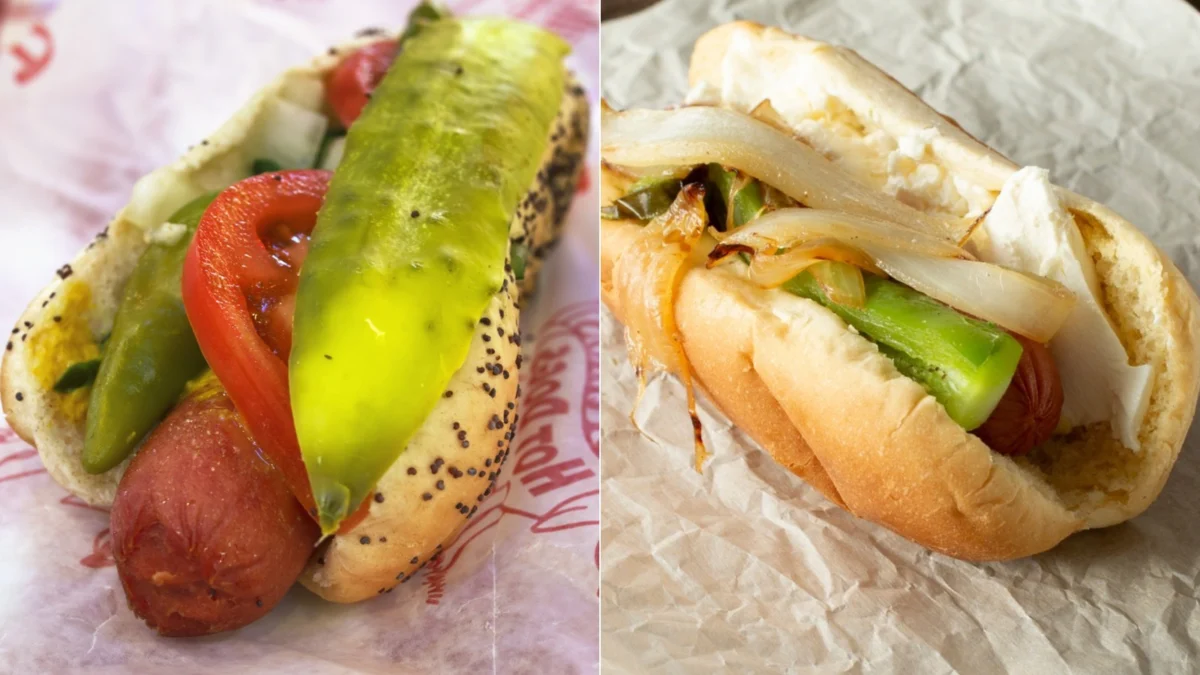
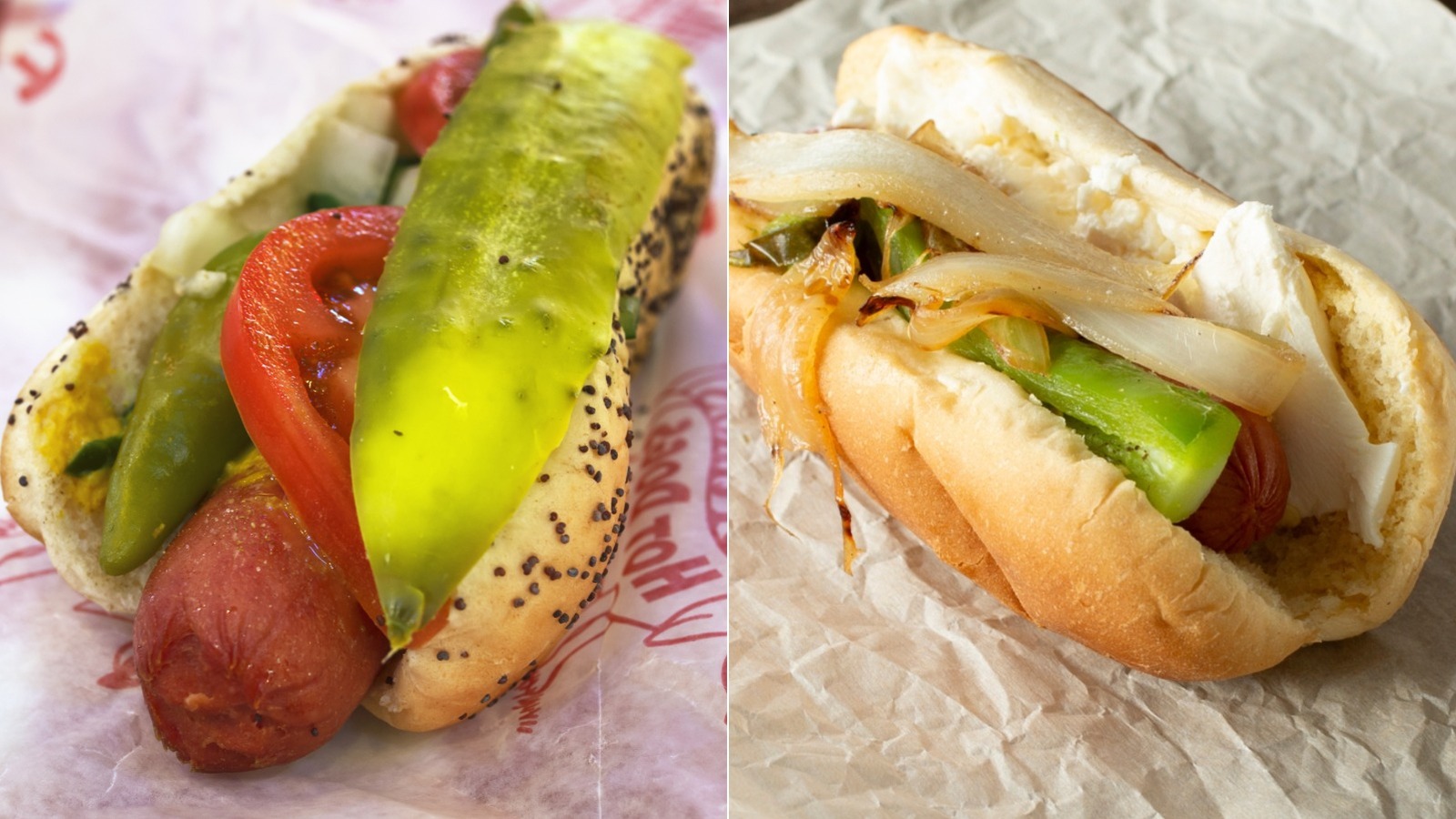
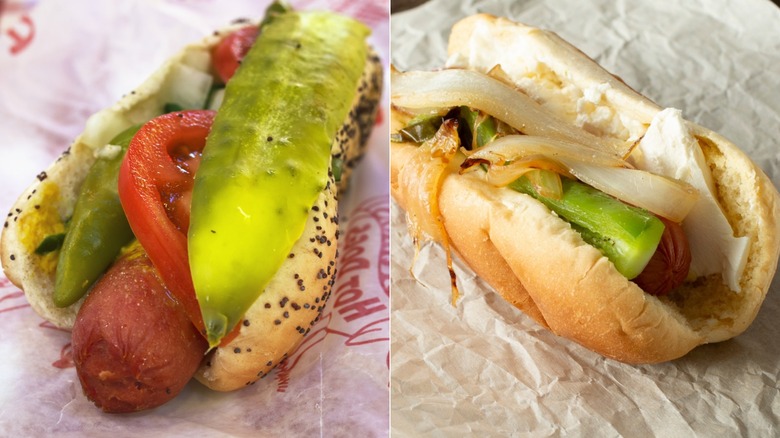
Before determining the victor, we must understand the engineering behind these two specific styles. According to the National Hot Dog and Sausage Council (NHDSC), the Chicago dog is a masterclass in maximalism. It is a garden-on-a-bun, traditionally featuring a poppyseed bun, a steaming all-beef frankfurter, yellow mustard, neon-green relish, chopped raw white onions, tomato wedges, a dill pickle spear, sport peppers, and a generous dusting of celery salt. Ketchup, of course, is strictly forbidden by the local code of conduct.
In stark contrast, the Seattle-style hot dog is an exercise in elegant simplicity, a favorite of the Pacific Northwest’s late-night crowd. It is typically served on a toasted bun with a generous smear of cream cheese and a heap of sautéed grilled onions. While variations exist—including the addition of jalapeños or a drizzle of sriracha—the core identity remains the marriage of the smoky, grilled meat with the rich, cooling decadence of the cream cheese.
A Chronological Journey: From Street Carts to Cult Favorites
The history of the Chicago-style dog is rooted in the Great Depression. During a time of extreme economic hardship, vendors sought to create a meal that was both inexpensive and nutritionally dense. By loading a hot dog with fresh vegetables, vendors could offer a "complete meal" for a nickel. The ingredients were specifically chosen for their ability to provide a variety of textures—crunch, snap, acidity, and heat—all within a single bite.
Conversely, the Seattle dog’s origin is more modern and subterranean. While street vendors in Seattle had been serving sausages for decades, the specific addition of cream cheese is widely attributed to Hadley Long, a street vendor in the Pioneer Square area in the late 1980s. Legend has it that Long began experimenting with cream cheese as a topping, realizing it provided a perfect, creamy counterbalance to the savory, salty char of a grilled sausage. It quickly moved from a local curiosity to a staple of the city’s nightlife, particularly outside music venues and bars.
Field Report: Testing the Titans
To provide an empirical analysis, I visited two high-traffic institutions: Devil Dawgs in Chicago and Matt’s Famous Chili Dogs in Seattle. Both establishments hold stellar reputations, boasting thousands of positive reviews across platforms like Yelp and Reddit.
The Chicago Experience: A High-Wire Act of Toppings
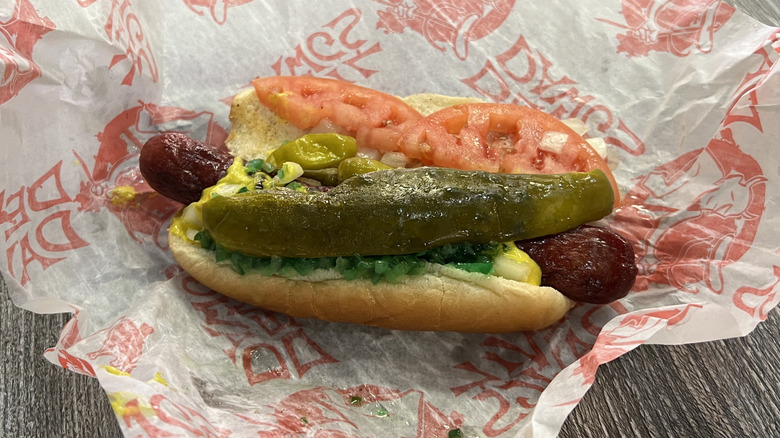
My visit to the South Loop location of Devil Dawgs offered a masterclass in the Chicago philosophy. The service was efficient, the atmosphere was neon-soaked and unpretentious, and the delivery was swift.
The visual presentation of the Chicago dog is undeniable. It is vibrant, colorful, and intimidating. However, the experience of eating it is a precarious endeavor. The structural integrity of the poppyseed bun is tested almost immediately by the sheer volume of moisture from the tomatoes, relish, and pickle. While the snap of the Vienna Beef casing was satisfying and the acidity of the sport peppers provided a necessary "kick," the bun quickly succumbed to the weight. It was a delicious, chaotic, and messy endeavor—a meal that demands total focus and, eventually, a stack of napkins.
The Seattle Experience: The Elegance of Simplicity
At Matt’s Famous Chili Dogs, the aesthetic was purely industrial—a stark contrast to the bustling city center of Chicago. The Seattle dog, however, felt like a deliberate improvement on the physics of the hot dog.
The toasted bun provided a sturdy, crisp exterior that held up perfectly against the toppings. The cream cheese served a dual purpose: it acted as a flavor bridge, mellowing the saltiness of the grilled onions and the char of the meat, while also providing a structural "glue" that kept the toppings from migrating. The bite was consistent, from the first nibble to the final mouthful. It was a more refined, cohesive, and structurally sound dining experience.
Supporting Data: Texture, Temperature, and Composition
When evaluating these two styles, we must look at the data points that define a quality sandwich:
- Structural Integrity: The Chicago dog fails the durability test. The moisture content of seven distinct toppings is inherently at odds with a soft, un-toasted bun. The Seattle dog, with fewer variables and a toasted bun, retains its integrity until the final bite.
- Flavor Profile: Chicago relies on a "symphony" approach. The celery salt and neon relish are bright and acidic, designed to cut through the heavy fat of the sausage. Seattle relies on a "harmony" approach. The cream cheese and grilled onions create a savory, umami-forward profile that enhances the meat rather than masking it.
- The "Craveability" Factor: Chicago’s dog is a lunchtime adventure; Seattle’s dog is a midnight necessity. The cream cheese adds a level of satiety that makes the Seattle dog feel like a more substantial, rounded meal, particularly when paired with the heat of jalapeños.
Official Responses and Cultural Sentiment
The debate between these two styles often borders on the religious. Chicagoans are famously defensive of their specific "no-ketchup" tradition, viewing the hot dog as a heritage item that must be preserved exactly as it was during the Depression era.
Seattleites, meanwhile, are more experimental. The Pacific Northwest’s culinary scene is known for its openness to fusion, and the Seattle dog is a direct reflection of that ethos. When asked about the "wrongness" of cream cheese, many locals argue that the ingredient serves the same purpose as butter on a steak or cheese on a burger—it is a functional fat that improves the mouthfeel of the protein.
The Verdict: Implications for the Future of the Glizzy
After testing both styles, the conclusion is clear: while the Chicago dog is a historic monument of American street food, the Seattle dog is the superior modern iteration.
The primary reason for this victory is structural. Food should be designed to be consumed, and the Chicago dog is essentially an engineering failure—a collection of excellent ingredients that constantly threatens to collapse. The Seattle dog, by contrast, respects the eater. It uses the cream cheese as a functional, structural, and flavor-enhancing agent that makes the experience of eating the hot dog more satisfying and less stressful.
The implications for the industry are significant. As mobile dining and street food continue to evolve, the "Seattle style" provides a template for the future: fewer ingredients, higher quality, and better structural design. While Chicago will always retain its status as the "hot dog capital" of the world, it might be time for the city to consider a few upgrades to its iconic recipe. Until then, the crown for the best hot dog style in America heads to the rainy, gray skies of the Pacific Northwest.