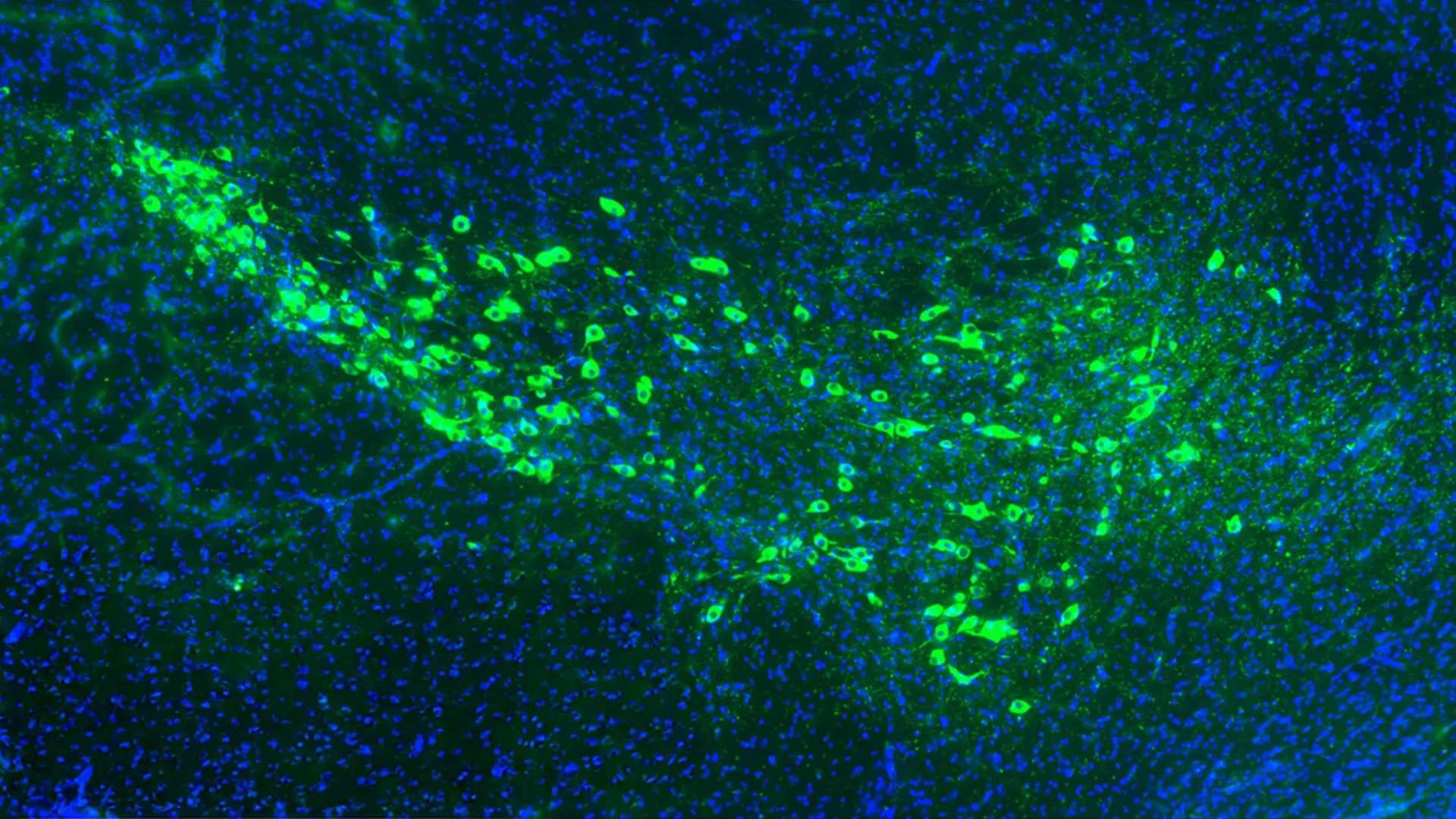
In the landscape of modern medicine, few challenges are as daunting as neurodegenerative disease. Parkinson’s disease, a progressive disorder characterized by the relentless degradation of motor neurons, currently affects over 1.1 million Americans, with nearly 90,000 new diagnoses recorded annually. For decades, clinicians have been limited to managing the tremors, rigidity, and bradykinesia (slowness of movement) that define the condition. However, a breakthrough from the Yale School of Medicine (YSM) may finally shift the paradigm from symptom management to disease modification.
New research published in the journal Nature Communications has identified two specific membrane proteins—mGluR4 and NPDC1—that act as "gatekeepers," facilitating the entry of toxic, misfolded proteins into healthy brain cells. By identifying the molecular mechanism behind the spread of the disease, researchers believe they have found a potential therapeutic target that could stop, or at the very least significantly slow, the progression of Parkinson’s.
The Pathologic Hallmark: Understanding α-synuclein
To grasp the significance of the Yale study, one must first understand the biological engine of Parkinson’s disease. The condition is fundamentally driven by the accumulation of a misfolded protein known as α-synuclein. In a healthy brain, α-synuclein plays a role in neurotransmitter release; however, in the Parkinsonian brain, this protein adopts a corrupted, misfolded conformation.
These toxic aggregates do not remain isolated within a single dying cell. Instead, they propagate throughout the brain, jumping from neuron to neuron. As α-synuclein accumulates in motor neurons, it triggers a cascade of cellular damage, leading to the death of dopamine-producing neurons in the substantia nigra—a brain region critical for motor control. Until now, the specific "doorway" through which these toxic proteins gain entry into healthy cells remained one of neuroscience’s most elusive mysteries.
A Systematic Search for the Culprits
The journey to this discovery was a massive undertaking in molecular screening. Senior author Stephen Strittmatter, MD, PhD, the Vincent Coates Professor of Neurology and chair of the Department of Neuroscience at YSM, led a team tasked with identifying the surface receptors that interact with α-synuclein.
The researchers employed a high-throughput screening approach. They engineered 4,400 distinct groups of cells, with each group expressing a unique surface protein. By exposing these cells to misfolded α-synuclein, the team monitored for signs of binding. The vast majority of these proteins showed no interaction with the toxic agent. However, 16 surface proteins demonstrated a clear affinity for α-synuclein.
Among these 16, two stood out: mGluR4 and NPDC1. These proteins are naturally occurring on the surface of neurons, particularly those responsible for dopamine production in the substantia nigra. The researchers confirmed that these specific proteins were not just binding to the toxic aggregates, but were actively transporting them into the interior of the healthy neurons, effectively seeding the next stage of cellular decay.
Chronology of the Research
The findings did not emerge overnight; they represent the culmination of years of targeted investigation into neuronal transport mechanisms.
- Initial Hypothesis (2018–2020): Dr. Strittmatter’s team posited that α-synuclein could not permeate the cellular membrane on its own. They hypothesized the existence of a cell-surface "docking station" that the protein exploited.
- The Screening Phase (2021): Utilizing a library of 4,400 cell lines, the team began the arduous process of tagging surface proteins and testing their binding affinity to synthetic, misfolded α-synuclein.
- Identification (2022): The team successfully narrowed the field to 16 candidates, with mGluR4 and NPDC1 emerging as the most significant biological drivers.
- Validation (2023): The researchers moved to mouse models, testing the impact of these proteins in vivo to determine if blocking them would yield a therapeutic effect.
- Publication (2024): The peer-reviewed findings in Nature Communications provided the definitive evidence linking these two proteins to the spread of the disease.
Supporting Data: From Cellular Models to Living Systems
The most compelling aspect of the study lies in the validation phase using genetically engineered mice. To test the hypothesis that mGluR4 and NPDC1 were essential for the disease’s spread, the researchers created mice that lacked functional versions of these proteins.
When normal mice were exposed to misfolded α-synuclein, they predictably developed the protein accumulations characteristic of Parkinson’s and began exhibiting motor impairment. However, the mice lacking either mGluR4 or NPDC1 were remarkably resilient. Not only did they show a significant reduction in the buildup of toxic α-synuclein in their brains, but they also failed to develop the Parkinson-like symptoms observed in their counterparts.
Furthermore, in a separate model specifically designed to mimic the rapid progression of Parkinson’s disease, the removal of the genes responsible for mGluR4 or NPDC1 resulted in a higher survival rate and a marked deceleration of neurological decline. These data points provide a strong causal link, suggesting that the proteins are indeed the primary vehicles for the transmission of pathology.
Official Perspectives: A Turning Point in Neuroscience
Dr. Stephen Strittmatter, the study’s senior author, emphasized the gravity of these findings during a recent briefing. "Misfolded α-synuclein is the pathologic hallmark of Parkinson’s disease," Strittmatter stated. "If we understood how it gets into neurons, we could perhaps block or slow down the progression of the disease. But to do that, we need to understand the molecular mechanism of how it spreads."
The implications of this statement are profound. Current clinical standards, such as Levodopa therapy, focus exclusively on masking symptoms by boosting dopamine levels. While effective for a time, these treatments do nothing to arrest the underlying neuronal death. By targeting the "gatekeepers"—mGluR4 and NPDC1—researchers may be able to develop monoclonal antibodies or small-molecule drugs that physically block the entry of α-synuclein, effectively isolating the toxic proteins and preventing them from turning healthy neurons into new sites of disease.
Implications for Public Health and Future Therapeutics
The necessity for a disease-modifying treatment is becoming a matter of demographic urgency. As the American population ages, the number of individuals over the age of 65 is projected to rise significantly. Because age is the primary risk factor for Parkinson’s and other neurodegenerative diseases, the healthcare system is facing a looming crisis of neuro-impairment.
"We have an aging population," Strittmatter noted. "How we can stop or slow neurons from dying is an enormous problem. This is really the time to make some inroads into figuring out how to slow it down."
Beyond Parkinson’s: A Broader Horizon
The discovery of mGluR4 and NPDC1 may also have implications far beyond Parkinson’s disease. Many neurodegenerative conditions, including Alzheimer’s disease and various tauopathies, share the common mechanism of protein misfolding and propagation. If the pathways identified by the Yale team are found to be common across other protein-aggregation disorders, the development of inhibitors against these proteins could lead to a universal strategy for treating brain degradation.
The Road to Clinical Trials
While the results in mice are highly encouraging, the transition to human clinical trials requires further rigorous study. The researchers must ensure that inhibiting these proteins does not interfere with essential normal functions within the brain. mGluR4, for instance, plays a role in synaptic signaling; therefore, any potential therapy must be finely tuned to block only the pathological uptake of misfolded proteins without disrupting healthy neurotransmission.
Despite these hurdles, the atmosphere in the neuroscience community is one of cautious optimism. By shifting the focus from the symptoms of Parkinson’s to the logistics of its spread, the YSM team has provided a clear roadmap for the next generation of drug discovery.
Conclusion
The identification of mGluR4 and NPDC1 as transporters of toxic α-synuclein represents a seminal moment in Parkinson’s research. For the millions of patients and families navigating the uncertainty of a progressive neurodegenerative diagnosis, these findings offer something that has been in short supply: a concrete, actionable target. While a cure remains on the horizon, the ability to potentially freeze the progression of the disease would transform Parkinson’s from a terminal, degenerative condition into a manageable, static state—a victory that would redefine the standard of care for millions.
As the Yale team moves into the next phase of development, the global scientific community watches with anticipation. The gatekeepers have been identified; the task now is to lock the door.