In the world of American whiskey, few names command the reverence of the Buffalo Trace Antique Collection (BTAC). Among the annual releases that define this prestigious lineup, George T. Stagg occupies a space of near-mythical status. For the uninitiated, the transition from entry-level spirits to high-proof, barrel-strength bourbons can be daunting. Yet, for those who have traversed the spectrum—from the accessible, fruity notes of a standard Tennessee whiskey to the sophisticated depth of a blended Scotch—George T. Stagg represents the pinnacle of the craft. It is a bottle often relegated to the "special occasion" shelf, a centerpiece of any serious collection, and a testament to the raw, unadulterated power of Kentucky bourbon.
The Essence of George T. Stagg: Main Facts
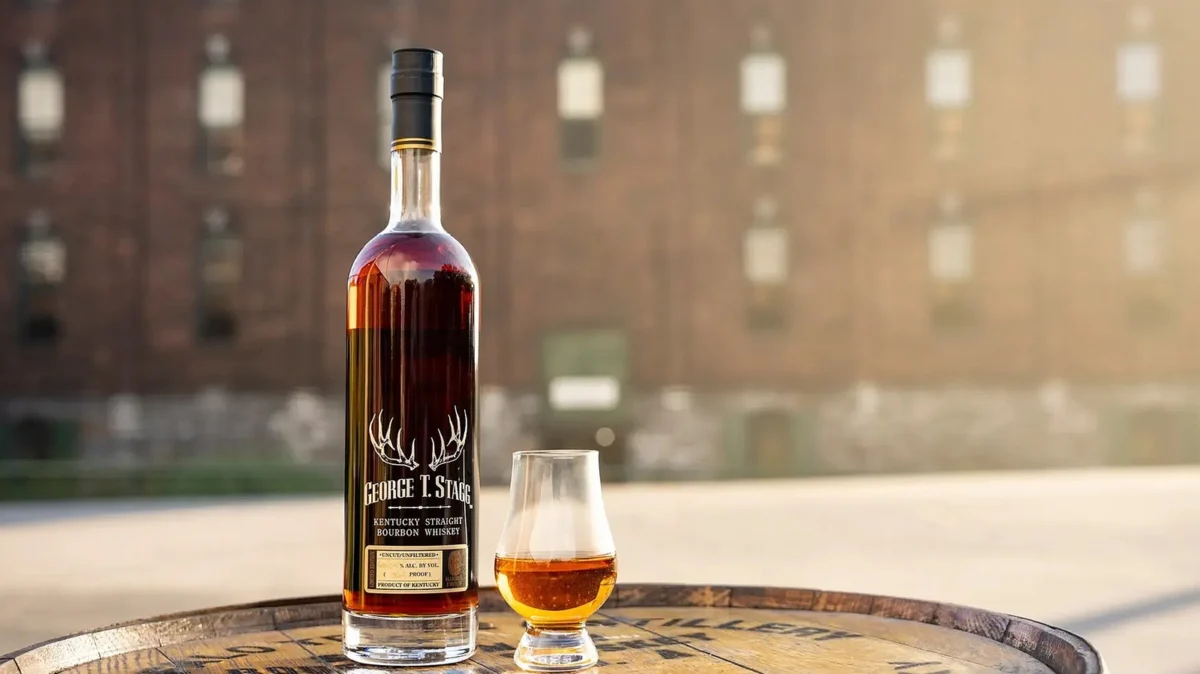
George T. Stagg is not merely a bourbon; it is an experience of sensory intensity. Bottled uncut and unfiltered, it arrives at the consumer with the exact profile it possessed within the charred oak walls of the barrel. Because it lacks the dilution typical of mass-market spirits, its alcohol by volume (ABV) is consistently staggering. The 2025 release, for instance, clocked in at a formidable 71.4% ABV (142.8 proof).
This is a spirit designed for those who appreciate the boldness of high-proof whiskey. It is a cornerstone of the Buffalo Trace Antique Collection, a series that has set the industry standard for quality since the turn of the millennium. To possess a bottle is to hold a piece of distilling history, and to share a dram of it is considered a significant gesture of hospitality among whiskey enthusiasts.
A Chronological Evolution
The history of George T. Stagg is inextricably linked to the broader resurgence of interest in premium American whiskey. While the Buffalo Trace Antique Collection itself debuted in 2000, George T. Stagg did not officially join the lineup until 2002. Its creation was not a top-down marketing decision, but rather a direct response to a growing chorus of consumer feedback. Throughout the late 1990s, the distillery received consistent requests for a barrel-strength, long-aged whiskey that stayed true to the traditional Kentucky profile.
The distillery listened. By selecting barrels that showcased the pinnacle of their maturation process, they developed Stagg. Over the last two decades, the whiskey has maintained its legendary status, consistently earning accolades from critics and global competitions alike.
However, the path has not been entirely linear. In 2021, collectors were met with an unprecedented gap in the annual release cycle. For the first time since its inception, George T. Stagg was absent from the Antique Collection. The distillery provided a rare, transparent explanation: the barrels tested for the 2021 release simply did not meet the rigorous quality standards required to bear the Stagg name. Rather than compromising the legacy of the brand, Buffalo Trace opted to withhold the release, choosing to keep the spirit in the warehouse for further aging or alternative use.
Supporting Data and Flavor Profiles
The allure of George T. Stagg lies in its volatility; because it is released annually and without standardizing proof, no two years are identical. The tasting experience is a moving target that captures the specific environmental influence of the warehouse on that particular batch of barrels.
- 2006: Described in official distillery documents as possessing the richness of a "big chunk of dark chocolate."
- 2010: A study in depth, featuring dark chocolate, vanilla, and roasted coffee bean.
- 2019: A complex, multi-layered profile featuring toasted oak, floral high notes, tart cherry, espresso, and a sharp black pepper finish.
- 2025: A return to the roots of the brand, with prominent notes of vanilla, tobacco, and cherry, tapering into an earthy, oak-heavy finish.
These fluctuations are governed by the "Mash Bill #1," the proprietary recipe used for many of the distillery’s most famous labels, including Eagle Rare and E.H. Taylor. Comprising 89.5% corn, 7% rye, and 3.5% malted barley, this mash bill provides the structural backbone that allows the whiskey to survive 15-plus years of aging without losing its character to the wood.
Production Rigor: The Art of the Barrel
The production of George T. Stagg is a study in patience. Each release is aged for a minimum of 15 years, though some batches—like the 2010 release—exceed 17 years. The whiskey is aged in new charred oak barrels, which act as the primary catalyst for the spirit’s dark, rich color and profound flavor complexity.
The "uncut and unfiltered" label is the most critical component of the production process. Most commercial whiskeys are proofed down with water to reach a standard 40% or 45% ABV. By skipping this step, George T. Stagg preserves the esters, oils, and congeners that are often washed away in more processed spirits. This results in a mouthfeel that is viscous and coating, a characteristic that enthusiasts often describe as "oily" or "chewy."
Official Recommendations and Drinking Rituals
While the modern cocktail renaissance has brought many premium spirits into the mix, George T. Stagg sits in a class of its own. Distillery experts and connoisseurs alike offer a singular piece of advice: drink it neat.
The logic is simple: the distillery has spent over a decade and a half coaxing flavor out of the wood and the grain. To introduce water, ice, or mixers is to disrupt the specific balance the master distillers intended. The high proof can be intense for the uninitiated, but the recommended approach is to let the whiskey "breathe" in the glass for several minutes. This allows the volatile alcohol vapors to dissipate, opening up the complex bouquet of vanilla, tobacco, and dark fruit. It is, in every sense, a contemplative spirit meant for slow, deliberate consumption.
Market Implications: The Price of Prestige
The disparity between the Suggested Retail Price (SRP) and the market price of George T. Stagg is one of the most debated topics in the bourbon community. In 2025, the SRP was set at approximately $150. Yet, secondary market prices often range from $375 to over $1,500.
This inflation is a direct result of the "rarity vs. demand" paradox. Collectors, investors, and enthusiasts compete for a limited number of bottles released annually. Retailers, aware of the immense secondary market value, often mark up their stock accordingly. For the average consumer, this creates a frustrating reality: the bottle is theoretically affordable but practically inaccessible. However, this high demand serves as a testament to the brand’s enduring quality. Even at secondary prices, the reputation of George T. Stagg remains untarnished, largely because the liquid inside the bottle continues to deliver a superlative experience that few other bourbons can replicate.
A Legacy of Resilience
Buffalo Trace is more than just a brand; it is the oldest continually operating distillery in the United States, with roots dating back to 1775. It survived the Great Depression, the economic volatility of the 20th century, and the restrictive, near-fatal regulations of Prohibition.
This sense of historical weight permeates every bottle of George T. Stagg. The distillery’s recent design choices underscore this commitment to heritage. In newer bottles, the back label features an image of George T. Stagg himself, which is printed on the inside of the glass—visible only once the bottle has been drained. It is a poetic final touch: a tribute to the man who helped build the distillery, revealed only after the devotee has completed their journey through the bottle.
As the spirits industry continues to evolve, Buffalo Trace remains anchored in its traditional practices. By honoring its historical figures through the Antique Collection, the distillery ensures that while the whiskey inside the bottle changes with every passing season, the legacy of American bourbon remains unshakable. Whether you are a long-time collector or a curious novice, the story of George T. Stagg is the story of bourbon itself: bold, uncompromising, and timeless.