
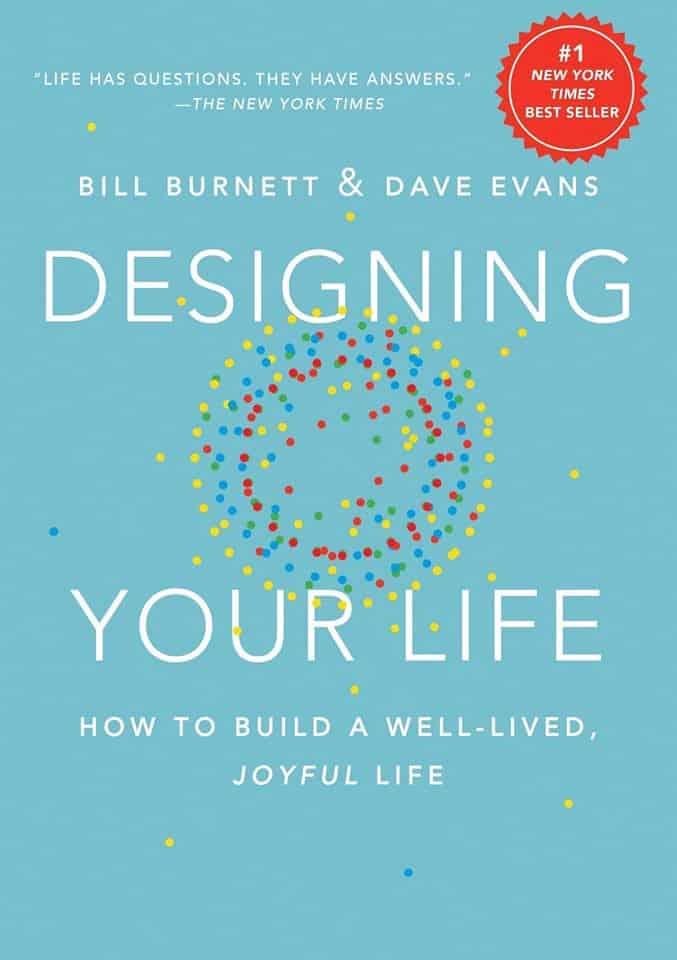
In an era defined by the relentless pursuit of professional achievement and financial stability, many individuals find themselves standing at a crossroads, questioning the very foundations of their daily existence. A burgeoning movement, spearheaded by Stanford design professors Bill Burnett and Dave Evans in their seminal work, Designing Your Life, suggests that the uncertainty of "what to be when we grow up" is not a failure of character, but a failure of process. By applying the principles of design thinking—typically reserved for engineering and product development—to the lived human experience, one can systematically iterate toward a more fulfilling existence.
This article examines the initial stages of a multi-month experiment in "life design," chronicling the collaborative journey of J.D., a long-term practitioner of financial self-improvement, and his cohort as they seek to align their personal values with their professional trajectories.
The Genesis of the Experiment: A Collaborative Approach
The impetus for this project began when J.D., known for his advocacy of mindful financial management, identified Designing Your Life as a transformative blueprint for personal development. After recommending the book to his inner circle, he formed an accountability group with two close associates: his partner, Kim, and a former college classmate, Craig.
Recognizing that the authors’ methodologies constitute valuable intellectual property, the participants opted for a structured, analytical engagement with the text. Rather than replicating the proprietary exercises verbatim, they provided a synthesized overview of their findings, allowing for an honest, transparent exploration of their own motivations and existential goals. This collaborative framework serves as a case study in how social capital—the networks of relationships among people who live and work in a particular society—can be leveraged to accelerate personal growth.
Phase I: The Audit of the Current State
The foundational tenet of the Burnett-Evans methodology is simple yet daunting: "Start where you are." Much like a comprehensive financial audit requires an accurate assessment of assets and liabilities, life design requires an unflinching, non-judgmental snapshot of one’s current reality.
The participants performed a rigorous self-assessment across four critical pillars: health, love, play, and work. By assigning numerical values and qualitative descriptions to these areas, they established a baseline. This diagnostic process is intended to be a static measurement of a dynamic state. Just as a map is useless without a "you are here" marker, the authors argue that one cannot chart a course toward a desired future without first acknowledging the constraints and opportunities of the present. Once this internal audit was complete, the participants moved to the next critical phase: the construction of a metaphorical compass.
Phase II: Building the Compass – Workview and Lifeview
The construction of a "compass" involves the drafting of two foundational documents: a Workview and a Lifeview. These mini-essays serve as statements of purpose, intended to guide decision-making during future periods of ambiguity.
The Philosophy of Labor: Defining the Workview
The Workview exercise asks individuals to articulate their beliefs about the nature of labor. The findings from J.D. and Craig reveal a profound alignment in their values. Craig, who emphasizes the importance of "right livelihood"—a concept rooted in Buddhist tradition—argues that work must be tangible, restorative, and ecologically responsible. He posits that professional life should prioritize growth and learning over the ephemeral status of competition.
J.D., conversely, views his work as a tool for dual-purpose impact: achieving personal fulfillment while simultaneously serving as a resource for others. For J.D., the intersection of passion and utility—a concept known in Japan as ikigai—is the ultimate objective. Both men concluded that while money is a necessary output of labor, it is insufficient as a sole motivator. They arrived at a consensus: work is most meaningful when it fosters abundance and provides a win-win scenario for the practitioner and the broader society.
The Existential Framework: Defining the Lifeview
The Lifeview exercise shifts the focus to the broader meaning of existence. The parallels between J.D. and Craig’s reflections were striking, particularly given that they did not consult one another during the drafting phase.

Craig’s Lifeview is anchored in a stoic acceptance of natural cycles. He finds comfort in the vastness of time and space, suggesting that the human search for meaning is a noble, if secular, pursuit. His outlook is underscored by a commitment to kindness and the belief that laughter is the only rational response to the vicissitudes of life.
J.D.’s reflection is equally grounded in the idea that life possesses no inherent meaning, thereby granting him the agency to construct his own. His moral framework is stripped of sectarian dogma and focused entirely on the treatment of others—specifically those with whom he disagrees or holds a power imbalance. He advocates for "rational self-centeredness," the idea that one must secure their own foundation before they can effectively assist others.
Implications: The Role of Social Capital and Community
Why do two individuals from different backgrounds share such an aligned worldview? The answer may lie in their shared history. Both J.D. and Craig are alumni of Willamette University, an institution guided by the motto non nobis solum nati sumus—"not unto ourselves alone are we born."
This shared intellectual heritage highlights the importance of institutional values in shaping one’s lifelong trajectory. It also raises questions about the current state of social cohesion in the United States. During their discussions, both men lamented the apparent collapse of social capital, citing Robert Putnam’s Bowling Alone as a primary reference. They concluded that the digital age, while connecting us globally, may have eroded the local, deep-seated bonds that once characterized community life. Their intent, moving forward, is to ensure that their personal and professional "designs" actively contribute to the cultivation of this lost social capital.
Looking Ahead: The Good Time Journal
As the participants conclude the initial phase of their life design project, they are shifting their focus to the mechanics of daily satisfaction. The next stage involves the maintenance of a "Good Time Journal." For the upcoming weeks, the participants will log their daily activities, tracking their levels of engagement and energy.

The objective is to utilize "mindmapping" to identify patterns in their behavior. By data-mining their own experiences, they hope to distinguish between tasks that drain their vitality and those that cultivate a sense of flow and purpose.
Conclusion: The Professionalization of Self-Actualization
The experiment undertaken by J.D., Craig, and their peers demonstrates that self-actualization is not an abstract, mystical process, but a disciplined exercise in data collection and iterative improvement. By treating their lives as a "work in progress" rather than a fixed destination, they are effectively bridging the gap between existential philosophy and practical execution.
As this group continues to refine their compasses and test their hypotheses through the Good Time Journal, they offer a compelling model for others. In a world that often demands we specialize and conform, the act of "designing one’s life" is a radical assertion of individual agency. Whether or not these exercises yield a definitive "career" path is perhaps secondary to the fact that the participants have taken the initiative to map their own terrain, ensuring that when they do arrive at their next destination, it is by design, not by default.