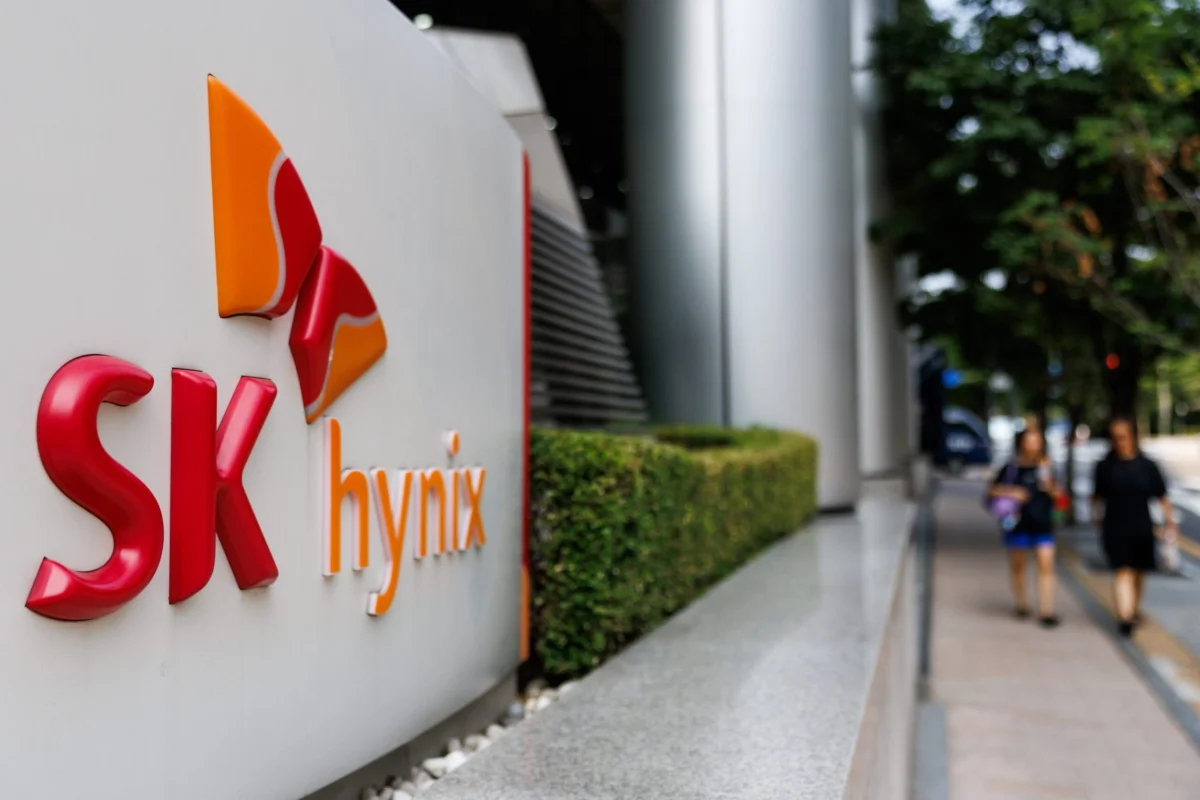
The global artificial intelligence race is entering a new, more volatile chapter as one of its most pivotal architects prepares for a historic debut on American soil. SK Hynix, the South Korean semiconductor titan and the undisputed leader in high-bandwidth memory (HBM), is set to list on the Nasdaq this Friday. The offering, expected to raise approximately $29 billion, represents a landmark event—not only as potentially the largest-ever first-time share sale by a foreign entity in the United States but as a critical barometer for the sustainability of the AI-driven market rally.
While the "Magnificent 7" have dominated headlines for the past two years, SK Hynix has quietly outperformed nearly all of them. Its arrival on the U.S. market comes at a moment of extreme tension, where record-breaking capital expenditures by "hyperscalers" meet growing skepticism from analysts who fear a "valuation snapback" is imminent.
Main Facts: A $29 Billion Litmus Test for Silicon Valley
The SK Hynix listing is far more than a corporate milestone; it is a liquidity event that will test the depth of American investor appetite for AI infrastructure. By raising $29 billion, the company is positioning itself to fund an aggressive expansion strategy designed to maintain its lead over rivals Micron Technology and Samsung Electronics.
The Nvidia Partnership
SK Hynix’s meteoric rise is inextricably linked to its status as the "favorite provider" for Nvidia. As Nvidia’s GPUs (Graphics Processing Units) became the gold standard for training large language models, the need for memory that could keep pace with these high-speed processors became paramount. SK Hynix’s HBM3 and HBM3E chips provided the solution, offering the necessary bandwidth to prevent data bottlenecks. This symbiotic relationship has seen SK Hynix’s stock price soar by 770% over the last 12 months, even after accounting for a recent 20% correction from its June peak.
Listing Details
The Nasdaq listing is expected to start trading this Friday. The $29 billion figure dwarfs most recent IPOs, coming second only to the massive $86 billion SpaceX debut last month in terms of sheer scale and market impact. However, unlike SpaceX, which operates in the burgeoning space and satellite internet sector, SK Hynix is a foundational industrial player whose health is a direct proxy for the global tech supply chain.
Chronology: From Memory Specialist to AI Powerhouse
To understand the significance of this listing, one must trace the company’s trajectory over the past year—a period defined by unprecedented growth and sudden, sharp volatility.
- July 2023 – February 2024: The HBM Ascent. As OpenAI, Google, and Meta accelerated their AI roadmaps, demand for SK Hynix’s high-bandwidth memory reached a fever pitch. The company secured long-term supply agreements with Nvidia, effectively locking out competitors for several quarters.
- March – May 2024: Outpacing the Competition. While Micron Technology enjoyed a robust 700% rally, SK Hynix surpassed it, hitting a 770% gain. Investors viewed the South Korean firm as having a superior yield and more advanced packaging technology (Mass Reflow Molded Underfill) than its peers.
- June 2024: The Peak and the Pivot. SK Hynix shares hit an all-time high in mid-June before a broader rotation out of tech stocks began. Concerns about "AI fatigue" started to surface, leading to a 20% selloff.
- Last Month: The Kospi Shockwave. In a move that rattled global markets, SK Hynix management suggested a potential tactical slowdown in its AI memory business to manage capacity. This caused the South Korean Kospi index to suffer its fifth-worst daily plunge in history, sending ripples through European and U.S. markets.
- The Present: The Nasdaq Entry. Following the successful (though volatile) IPO of SpaceX and the resolution of several geopolitical tensions, SK Hynix moves to capture U.S. capital to fund its next generation of fabrication plants (fabs).
Supporting Data: The Economics of the AI Build-Out
The numbers behind the SK Hynix story illustrate both the massive opportunity and the growing risks inherent in the semiconductor sector.
Performance Comparisons
| Metric | SK Hynix (12-Month) | Micron Technology (12-Month) | S&P 500 (12-Month) |
|---|---|---|---|
| Stock Growth | 770% | 700% | ~25% |
| Recent Drawdown | 20% (from June peak) | 18% | 3% |
The $1 Trillion Capex Wall
The primary drivers of SK Hynix’s revenue are the "hyperscalers"—Microsoft, Amazon, Google, and Meta. Combined, these entities are on track to spend nearly $1 trillion on AI infrastructure by the end of next year. However, the data suggests that internal cash flows are no longer sufficient to fund this "insatiable demand." This has forced a shift toward the debt and equity markets, with companies issuing record amounts of bonds to keep their data center projects alive.
Supply Chain Impact
The focus on AI chips has come at a cost to the broader consumer electronics market. Because SK Hynix and its peers have diverted production capacity to high-margin HBM, there is a looming shortage of standard DRAM and NAND used in smartphones and laptops. This scarcity has already forced Apple and other device manufacturers to signal price hikes for their upcoming product cycles, potentially dampening consumer demand.
Official Responses: Warnings of "Excessive Froth"
While the market remains generally bullish on AI’s long-term potential, institutional voices are increasingly sounding the alarm regarding the current pace of speculation.
Capital Economics: A Warning from History
James Reilly, senior markets economist at Capital Economics, has been vocal about the recent volatility in the semiconductor space. Commenting on the sharp selloffs seen in SK Hynix and the Kospi, Reilly noted:
“This volatility is, in our view, evidence of excessive froth and calls into question the sustainability of this rally. Such selloffs have previously only happened during bear markets like the Asian financial crisis, the dot-com bubble, and the Great Financial Crisis.”
Bank of America: The 7,100 Target
Analysts at Bank of America reaffirmed a cautious stance this Tuesday. Despite the excitement surrounding the SK Hynix listing, they maintained a year-end S&P 500 target of 7,100—a 5% drop from current levels.
“Our bear market signposts suggest speculation is hitting extreme levels as high-multiple stocks have gapped up demonstrably, an event that has historically preceded a valuation ‘snapback,’” the bank stated.
The SpaceX Precedent
Investors are also looking at the recent performance of SpaceX as a cautionary tale. While the space giant’s IPO was a massive success in terms of capital raised, the stock has been highly volatile, currently trading near its first-day closing price. More concerningly, bonds issued by SpaceX shortly after its IPO sold off quickly, trading at levels typically reserved for "junk-rated" borrowers despite the company’s investment-grade status. This suggests that even for "blue-chip" AI and tech firms, the credit markets are becoming increasingly wary.
Implications: The High-Stakes Future of Memory
The listing of SK Hynix on the Nasdaq marks the beginning of a new era for the semiconductor industry, one characterized by massive capital requirements and the constant threat of oversupply.
The Boom-and-Bust Cycle
The semiconductor industry is historically cyclical. To meet current demand, SK Hynix is committing hundreds of billions of dollars to build two massive new production plants in South Korea. While this capacity is needed today, the risk is that by the time these plants are operational, the initial "gold rush" of AI training may have cooled, leading to a glut of high-end memory and a crash in prices.
OpenAI and the IPO Pipeline
The market’s reception of SK Hynix will directly influence the timeline for other AI giants. Reports suggest that OpenAI, once rumored for a late 2024 IPO, may push its listing out to 2027. The "wobbles" in SpaceX’s post-IPO performance and the extreme volatility in SK Hynix’s Korean listing have made Silicon Valley leadership rethink the wisdom of going public in a "frothy" environment.
Geopolitical Stability vs. Economic Doubt
Ironically, the macro environment has shown signs of stabilization that should, in theory, support a rally. Hostilities between the U.S. and Iran have largely subsided, leading to a drop in oil prices and bond yields. Typically, lower energy costs and stable yields provide a "clear path" for tech growth. However, the fact that stocks are struggling to maintain their gains despite these tailwinds suggests that the market’s concerns are internal—focused on whether AI can actually deliver the profits required to justify its $1 trillion price tag.
Conclusion
As SK Hynix prepares for its first trades on the Nasdaq this Friday, the eyes of the financial world will be on the ticker. A successful, stable debut could reinvigorate the AI trade and provide the necessary capital for the next leap in computing power. A volatile or disappointing showing, however, could confirm the fears of analysts at Bank of America and Capital Economics, signaling that the AI bubble is finally beginning to lose its luster. In the high-stakes world of high-bandwidth memory, SK Hynix is no longer just a supplier; it is the heartbeat of the modern market.