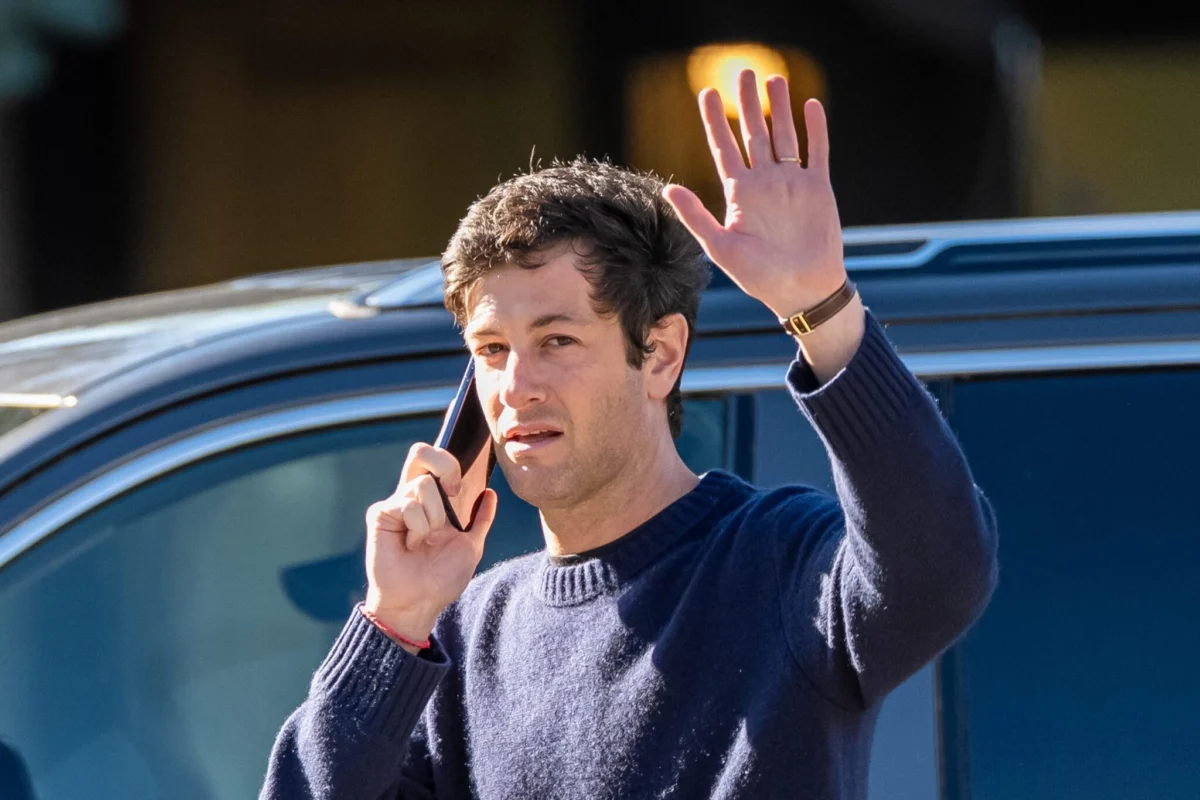
The intersection of high-stakes private equity and the world’s most popular sport has rarely seen a collision as spectacular or as litigious as the recent collapse of the "FIFA Forward Enterprise" (FFE). At the center of this storm is Joshua Kushner, the founder of Thrive Capital and brother to Jared Kushner, who recently broke his silence on a failed multibillion-dollar attempt to privatize a portion of the FIFA World Cup’s commercial rights.
What was intended to be a transformative $4.2 billion investment has instead devolved into a complex legal battlefield spanning Swiss criminal courts and U.S. federal districts. Kushner’s admission of regret—not for the deal’s intent, but for underestimating the "political dynamics" of global football—shines a light on the deep-seated rift between soccer’s global governing body and its powerful European confederation.
Main Facts: The $4.2 Billion Proposal
The proposal, known internally as FIFA Forward Enterprise (FFE), represented a radical departure from FIFA’s traditional non-profit operational model. The plan sought to create a new commercial subsidiary that would house the most lucrative assets of the world’s most-watched sporting event: the FIFA World Cup. These assets included global broadcasting rights, licensing agreements, and ticket sales.
The Financial Architecture
Thrive Capital, led by Kushner, was positioned as the lead investor in a consortium that included high-profile figures such as BANN Ventures CEO Greg Maffei. The group proposed an investment of approximately $4.2 billion in exchange for a 20% minority stake in the newly formed FFE. This investment would have valued FIFA’s commercial operations at a staggering $20 billion.
The "Global South" Incentive
Under the terms of the deal, FIFA would have retained majority control and final decision-making power. However, the immediate draw for FIFA’s 211 member associations was the promise of "increased development funding." Each member association was slated to receive an immediate $20 million windfall to bolster local infrastructure, youth academies, and national team programs. Kushner argued that this capital injection was essential to breaking the historical concentration of wealth within a small group of elite European and South American nations.
The Collapse
The proposal met a swift and brutal end in late July 2024. Facing a revolt from European governing bodies and threats of a World Cup boycott, FIFA President Gianni Infantino was forced to scrap the plan. The fallout has since moved from the boardroom to the courtroom, with allegations of "secret deals" and "shadow governance" dominating the headlines.
Chronology: From Concept to Courtroom
The timeline of the FFE’s rise and fall illustrates how quickly a multi-billion-dollar financial vehicle can be dismantled by the internal politics of international sports.
- Early 2024: FIFA President Gianni Infantino and a small circle of advisers begin quiet negotiations with Thrive Capital and other private equity interests to explore the commercialization of World Cup rights.
- Spring 2024: The FFE framework is refined. The plan envisions a commercial subsidiary that allows FIFA to bypass some of the bureaucratic hurdles of its non-profit status while providing an exit for investors through long-term revenue sharing.
- July 2024: Details of the FFE leak to the international press. The revelation sparks immediate outrage from UEFA (the Union of European Football Associations) and other regional bodies who claim they were kept in the dark.
- Late July 2024: Under immense pressure and the threat of legal action from European member nations, FIFA officially announces the cancellation of the FFE proposal.
- August 2024: UEFA begins filing discovery motions in U.S. federal courts (New York and Florida) to obtain documents and testimony from Kushner and Thrive Capital.
- Late August 2024: Joshua Kushner issues a statement via Axios expressing regret over the firm’s involvement, citing a failure to appreciate the "political dynamics" and the "lengths some would go to" to block the deal.
- Present: FIFA files counter-motions in U.S. courts to block the release of documents to UEFA, characterizing the legal pursuit as a "smear campaign."
Supporting Data: The Stakes of the Game
To understand the intensity of the opposition, one must look at the financial and political data underlying the global soccer economy.
The Revenue Gap
While FIFA generates billions in revenue every four-year World Cup cycle, the distribution of wealth in football is notoriously top-heavy.
- UEFA’s Dominance: The European confederation represents only 55 of FIFA’s 211 members, yet it controls the vast majority of the sport’s commercial wealth through the Champions League and elite domestic leagues like the English Premier League.
- The Promise of $20M: For a small member association in Africa or Oceania, a $20 million lump sum represents more than a decade’s worth of their current FIFA development grants. This "Robin Hood" narrative was the primary selling point for Infantino and Kushner.
The Legal Front
The legal battle is currently focused on Section 1782, a U.S. statute that allows parties to obtain discovery in the United States for use in foreign proceedings.
- Jurisdictions: Filings have been made in the Southern District of New York and the Southern District of Florida.
- The Valuation Question: Critics have questioned the $20 billion valuation of FFE, suggesting it was either an undervaluation of the World Cup’s true potential or an inflated figure designed to lure in member associations with the promise of quick cash.
Official Responses: A War of Words
The rhetoric surrounding the FFE collapse has been uncharacteristically sharp for the usually buttoned-down world of sports governance.
Thrive Capital’s Defense
Joshua Kushner’s statement was a mix of defense and retreat. He maintained that the deal was intended to democratize soccer wealth. "Money in football has historically been concentrated amongst a small group of countries," Kushner noted. He emphasized that the deal was never a "determination" but rather an "idea that every Member Association would vote on." However, his admission that Thrive "would not have gotten involved" had they known the outcome suggests a significant miscalculation of the reputational risk involved.
FIFA’s Counter-Attack
Gianni Infantino has apologized for the "errors in execution" regarding the proposal’s transparency but has not backed down from the philosophy behind it. In recent court filings, FIFA lawyers accused UEFA of conducting a "smear campaign" intended to "maintain its outsized influence over global soccer." FIFA argues that UEFA’s legal maneuvers in the U.S. are a bad-faith attempt to prevent other regions—specifically Africa and Asia—from gaining the financial independence that private equity might provide.
UEFA’s Stance
UEFA, led by President Aleksander Čeferin, has been the deal’s most formidable opponent. Their primary grievance is procedural: they allege that Infantino attempted to sell off soccer’s "crown jewels" without the consent of the FIFA Council. UEFA is currently preparing a criminal complaint in Switzerland, alleging that FIFA officials engaged in "disloyal management" by negotiating the FFE in secret.
Implications: The Future of the World’s Game
The collapse of the Kushner-led deal has far-reaching implications that extend beyond the balance sheets of Thrive Capital.
1. The 2027 FIFA Presidency
Gianni Infantino is up for reelection in March 2027. Prior to the FFE scandal, he was considered a lock for another four-year term. Now, he faces a "crisis of confidence." While he maintains strong support from the 64 member associations in Africa and South America, several influential European nations have withdrawn their support. The FFE debacle has given his detractors a potent narrative: that he is willing to sacrifice the long-term integrity of the sport for short-term financial gains.
2. Private Equity in Sports
The FFE failure serves as a cautionary tale for private equity firms eyeing the "Big Four" sports or global soccer. While firms like CVC Capital Partners and Silver Lake have successfully taken stakes in Spain’s La Liga or New Zealand’s All Blacks, the FIFA World Cup is a different beast entirely. It is a "public trust" in the eyes of many fans and regulators. Kushner’s experience suggests that financial logic often takes a backseat to nationalist and regional politics in international sports.
3. The Legal Precedent of Discovery
If UEFA is successful in using U.S. courts to force the disclosure of internal Thrive Capital and FIFA communications, it could open the door for more aggressive oversight of international sporting bodies. The involvement of celebrity litigator Alex Spiro on behalf of Thrive Capital indicates that the firm is prepared for a "scorched earth" legal defense to protect its proprietary internal processes.
4. A Divided Global Game
The most lasting impact may be the deepening rift between Europe and the rest of the world. By blocking a deal that would have sent billions to developing soccer nations, UEFA has reinforced the perception that it is an elitist "gatekeeper." Conversely, by attempting to bypass the governing council, FIFA leadership has reinforced the perception that it is prone to the same lack of transparency that plagued the Sepp Blatter era.
In the end, Joshua Kushner’s "regret" is a reflection of a Wall Street titan realizing that in the world of global football, the most important rules aren’t found in a contract—they are written in the complex, often volatile history of the game itself. For now, the World Cup remains a non-profit asset, but the forces of privatization have been signaled, and the battle for control of the pitch is only just beginning.