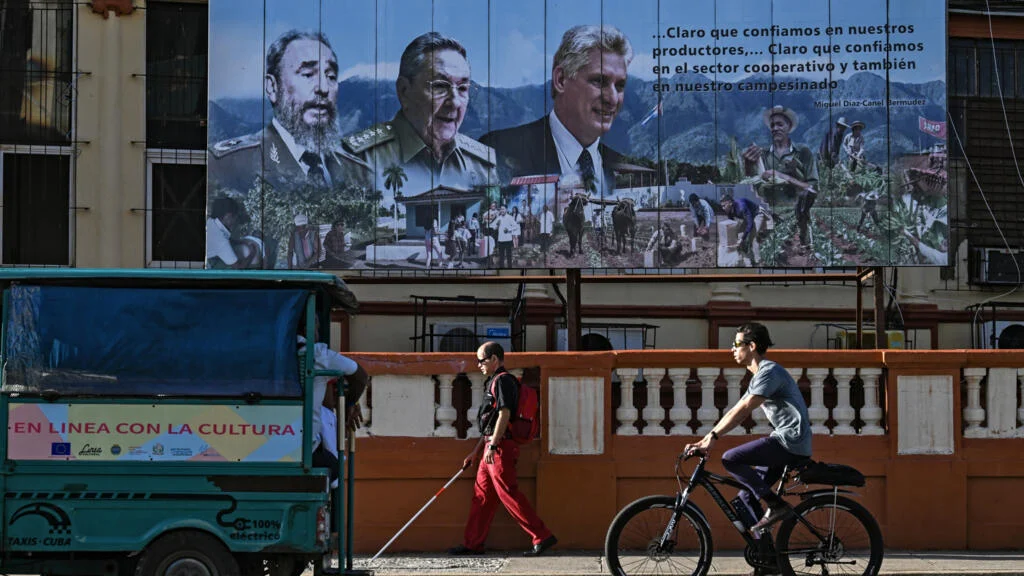
In a development that signals a profound shift in the governance of the Caribbean nation, Cuba’s former president and current power broker, Raul Castro, has formally endorsed a sweeping package of liberal economic reforms. Facing an unprecedented humanitarian and fiscal crisis, the Cuban government, led by President Miguel Diaz-Canel, is scrambling to implement a fast-track overhaul aimed at decentralizing the economy, incentivizing private investment, and shrinking the bloated state apparatus.
The decision, solidified during an extraordinary plenary session of the Communist Party’s politburo, represents one of the most significant pivots in the nation’s post-revolutionary history. As the country grapples with the fallout from a restrictive U.S. oil blockade and chronic shortages of basic necessities, the leadership is attempting to balance the preservation of socialist ideology with the cold, hard reality of economic survival.
The Catalyst: A Nation on the Brink
The urgency of these reforms cannot be overstated. Since the implementation of a tightened oil blockade by the United States in January, Cuba’s economy has entered a state of emergency. The ripple effects of this policy have been catastrophic: the nation is currently enduring massive, systemic power cuts—some lasting upwards of 30 hours—which have paralyzed industrial production and crippled daily life.
Shortages of fuel, medicine, and potable water have pushed the population to the limit. For many, these reforms are not merely a matter of policy, but a survival imperative. "I welcome any change that helps revive the dying patient," one private supermarket owner in Havana noted, speaking on the condition of anonymity due to the sensitivity of the situation.
Chronology of Crisis and Change
To understand the gravity of the current situation, it is necessary to view the trajectory of the Cuban economy over the last two decades:
- 2006: Raul Castro succeeds his brother, Fidel Castro, initiating a slow, cautious process of economic liberalization.
- 2021: The Cuban government takes a landmark step by authorizing small-to-medium private businesses, allowing them to employ up to 100 people. This sector has since become a vital, albeit limited, engine of growth.
- January 2026: The United States imposes a comprehensive oil blockade, exacerbating existing supply chain issues and plunging the island into a deep energy crisis.
- June 2026 (Present): Faced with total economic stagnation, the Politburo convenes an extraordinary session. Raul Castro issues a written endorsement of radical reforms, effectively silencing potential hardline dissent.
- Late June 2026: The National Assembly prepares to fast-track legislation that would open more sectors to private capital, including investment from the Cuban diaspora.
Structural Overhaul: Shrinking the State
At the heart of the government’s proposal is a move to diminish the state’s stranglehold on the economy. Historically, state-owned enterprises (SOEs) have accounted for roughly 80 percent of all economic activity. The new reforms aim to grant these enterprises greater autonomy, though critics argue that without broader market liberalization, such autonomy remains largely symbolic.
President Diaz-Canel has explicitly called for a reduction in the number of government ministries and a significant trim to the public sector workforce. The goal is to shift the burden of economic productivity from a centralized bureaucracy to a more dynamic, private-sector-led model. Furthermore, the administration plans to extend the same investment conditions currently enjoyed by foreign investors to domestic Cuban entrepreneurs and those living abroad, effectively dismantling the "second-class citizen" status previously assigned to the Cuban diaspora.
Official Responses and Ideological Balancing
The government is navigating a delicate tightrope. Prime Minister Manuel Marrero has taken to social media and public forums to reassure the party faithful that these reforms do not represent a capitulation to capitalism. "The reforms in no way imply relinquishing the social responsibility of the state," Marrero stated via X.

The strategy appears to be one of "managed liberalization"—inviting private capital to fill the gaps left by the state while maintaining the party’s central control. By leveraging the immense political capital of the nonagenarian Raul Castro, the administration has managed to frame these changes as "the most beneficial to the revolution at this time." By casting the reforms as a protective measure for the revolution, the leadership hopes to prevent ideological fracturing within the Communist Party ranks.
Supporting Data and Economic Realities
The reliance on the state has been the Achilles’ heel of the Cuban economy. Data from the last five years suggests that while the private sector has been a beacon of efficiency, it remains hampered by regulatory red tape and a lack of access to foreign currency.
- Public Sector vs. Private: Despite the 2021 liberalization, the state continues to control the vast majority of resources. The move to reduce the number of ministries is intended to cut overhead costs that have historically drained the national budget.
- Diaspora Capital: The government hopes that by inviting Cubans living abroad to invest, they can stabilize the local currency and increase the flow of hard capital, which has been severely restricted by U.S. sanctions.
- The Foreign Investment Gap: With many international investors having pulled out of Cuba due to the threat of secondary U.S. sanctions, the government is hoping that internal capital—both from the island and the diaspora—can act as a stopgap to prevent a total collapse.
The Geopolitical Dimension: The Shadow of Washington
The success of these measures remains inextricably linked to the stance of the United States. While the reforms are designed to stabilize the domestic economy, they are also a signal to Washington. Whether these changes will appease the current U.S. administration—which has been explicit in its goal of forcing a change in Cuba’s economic and political model—is highly doubtful.
The U.S. government views the economic collapse as a result of systemic mismanagement and lack of political freedom. For President Trump and his advisors, the "socialist model" is the root of the problem, and limited reforms may be viewed as merely putting a bandage on a bullet wound. The ongoing, albeit tense, negotiations between Havana and Washington will likely determine whether the blockade is eased or whether the economic pressure will continue to tighten.
Implications for the Future
The path forward for Cuba is fraught with peril. The transition from a command economy to one that encourages private enterprise—without losing the social safety nets that the revolution prides itself on—is a historic challenge.
If successful, the reforms could alleviate the suffering of the Cuban people and potentially pave the way for a more normalized relationship with the international financial community. However, if the government fails to execute these reforms effectively, or if the U.S. continues to escalate its sanctions, the social fabric of the island may reach a breaking point.
As the National Assembly convenes to ratify these measures, the eyes of the world are fixed on Havana. For a generation of Cubans accustomed to hardship, the promised reforms offer a sliver of hope. Yet, as history has shown, in the volatile landscape of Caribbean politics, the distance between policy pronouncement and actual economic improvement is often vast. The "dying patient" may have been diagnosed, but whether the prescribed medicine—a dose of radical liberalization—will lead to recovery or further complications remains the central question of the decade.