In the silent, crowded architecture of the developing fetal brain, a high-stakes migration occurs. Billions of newly formed neurons must navigate a dense, labyrinthine landscape to reach their preordained positions in the cerebral cortex. This process, essential to the formation of the brain’s intricate communication networks, has long been viewed as a standard developmental milestone. However, a groundbreaking study published in the journal Nature has revealed that this journey is far more perilous than previously understood: the very act of squeezing through tight cellular gaps causes neurons to suffer routine, significant DNA damage.
This discovery, led by researchers at Kyoto University’s Institute for Integrated Cell-Material Sciences (WPI-iCeMS), challenges fundamental assumptions about genomic stability. While double-strand DNA breaks—where both strands of the double helix are severed—are typically associated with mutations, cellular senescence, and disease, the study reveals them to be a paradoxical, programmed feature of healthy brain development.
The Physical Gauntlet: Recreating the Neuronal Journey
To understand the mechanical toll of neuronal migration, the research team, led by Professor Mineko Kengaku, designed an experimental environment that mirrored the restrictive spaces of the embryonic brain. Using microfluidic technology, the scientists created a series of tiny, narrow channels that mimicked the tight gaps between fibers and neighboring cells that neurons must traverse.
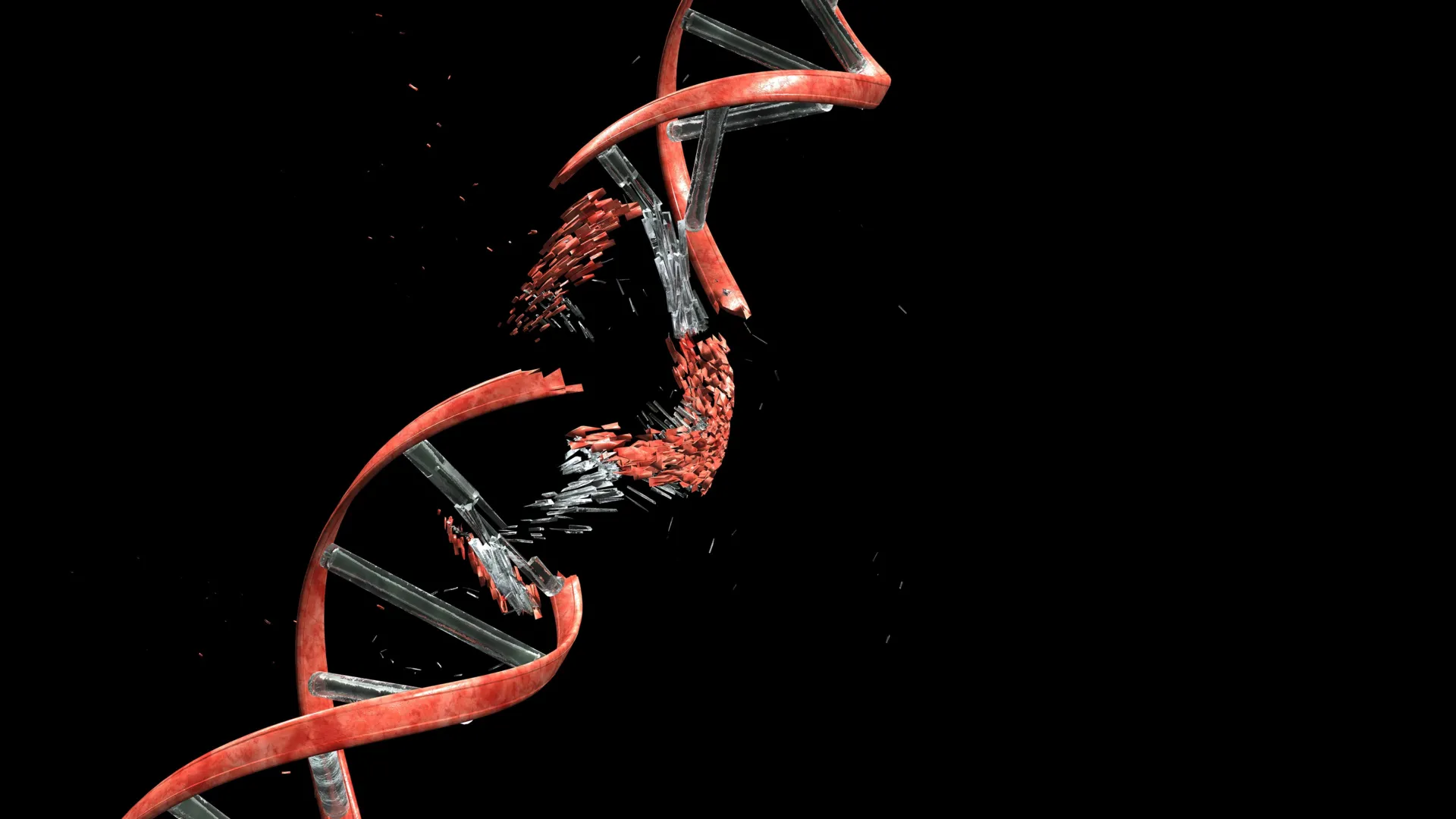
By tracking these neurons with high-resolution fluorescent markers, the team observed a startling phenomenon: as neurons forced their way through the microchannels, they exhibited clear evidence of double-strand DNA breaks. The mechanical stress of compression appeared to overwhelm the structural integrity of the genome. Yet, the data revealed a striking resilience. Once the neurons emerged from the narrow channels into more spacious areas, the damage did not trigger cell death. Instead, it was systematically repaired. Within 24 hours of exiting the "gauntlet," the vast majority of the neurons had successfully mended their DNA, returning to a state of normal function.
The Enzyme That Turns Against Itself
The investigation into the mechanics of this damage led the researchers to a culprit: Topoisomerase IIβ (Top2β). Under normal conditions, Top2β is an essential "maintenance" enzyme. It acts as a molecular relief valve, temporarily cutting DNA strands to alleviate the physical tension and twisting that naturally occurs during routine cellular activity, before seamlessly reconnecting the strands.
However, the study identified a "mechanical trap" scenario. When a neuron is subjected to extreme physical compression during migration, the tension on the DNA becomes so intense that the Top2β enzyme becomes stuck midway through its cycle. Unable to complete the reconnection process, the enzyme leaves the DNA broken. The cell is then forced to rely on a complex repair pathway known as non-homologous end joining (NHEJ) to seal the breach.
This process is akin to a structural engineer repairing a bridge while it is still under heavy load. The fact that the neuron survives this ordeal speaks to the efficiency of the brain’s internal "repair crew," which operates with clockwork precision during the most delicate stages of development.
Comparative Biology: Why Neurons Outperform Cancer Cells
The study’s findings took on added significance when researchers compared the behavior of these healthy neurons to that of cancer cells moving through similar micro-channels. It is well-documented that cancer cells often experience DNA damage when migrating—a phenomenon that typically leads to further mutations and aggressive cellular instability.
However, the neurons exhibited a remarkably different profile. In cancer cells, the damage appeared to be indiscriminate, often affecting critical regions of the genome that regulate growth and survival. In contrast, the neurons localized their damage to non-essential regions of the genome. By sparing their most critical gene functions from the mechanical trauma of the journey, neurons maintain their integrity, essentially "sacrificing" less important DNA to ensure that the vital genetic blueprint remains intact. This sophisticated spatial regulation of damage suggests that neurons have evolved a protective mechanism to prioritize survival during the migration phase.
The Consequences of Failure: Insights from Ligase 4
To determine what happens when this repair mechanism falters, the research team engineered a mouse model lacking Ligase 4, an enzyme strictly required for the NHEJ repair pathway. If the brain’s ability to mend its DNA during migration were merely a background event, these mice should have remained unaffected.
The results were telling. While the mice developed normally in early life and showed no immediate, catastrophic abnormalities, they began to exhibit worsening balance and coordination problems as they matured into adulthood. These symptoms provided a crucial clinical link: they closely mirrored the neurological deficits observed in human disorders characterized by genome instability, particularly those affecting the cerebellum.
This evidence reinforces the hypothesis that the efficient repair of migration-induced DNA damage is not merely a biological curiosity, but a foundational requirement for long-term neurological health. When the repair fails, the "history" of that mechanical journey is etched into the adult brain, potentially manifesting as neurodevelopmental or motor-control disorders.
Official Perspectives: Shifting the Paradigm
Professor Mineko Kengaku, the lead author of the study, views these findings as a significant shift in how neuroscience conceptualizes the neuronal genome. "The developing brain appears to have evolved to tolerate and repair the neuronal damage efficiently," says Kengaku. "But understanding the limits of that tolerance—and what happens when repair is incomplete—brings us closer to understanding a range of neurological conditions."
Kengaku suggests that the implications of this study extend beyond the immediate mechanics of development. "It shifts how we think about the neuronal genome," she notes. "All neurons originate from the same DNA, but DNA damage and repair can introduce small genetic differences between individual neurons through a small mechanical journey. Some of that history may be written into the genome itself."
This implies that the brain’s diversity—the way individual neurons function and adapt—may be partially driven by this "mechanical history." By acknowledging that the genome is dynamic and subject to physical shaping during development, scientists may have uncovered a new layer of complexity in how the brain builds its own diversity.
Implications for Future Medicine
The implications of this research are far-reaching. By demonstrating that DNA damage is a routine part of healthy brain development, the team has opened new avenues for investigating neurodegenerative and neurodevelopmental diseases. If, as the study suggests, some neurological conditions stem from a failure to repair this early-life mechanical damage, it could fundamentally change how researchers approach diagnosis and potential therapies.
Furthermore, the study provides a unique lens through which to view the "genetic mosaic" of the brain. If every neuron carries the subtle, unique scars of its own migration, this could explain why certain cells are more vulnerable to disease than others, or why individual neurons within the same region show varying levels of resilience.
The collaboration, which spanned Kyoto University, the University of Tokyo, the University of Osaka, the National University of Singapore, and the Tokyo Metropolitan Institute of Medical Science, highlights the multidisciplinary effort required to decode such complex biological processes. As the scientific community continues to explore the intersection of biomechanics and genetics, the "mechanical journey" of the neuron will likely remain a central pillar in our understanding of how the human brain is built, maintained, and ultimately, how it sometimes fails.
Conclusion
The odyssey of the migrating neuron is a testament to the sheer resilience of biological life. In the narrow, crowded corridors of the developing cortex, neurons endure physical stress that would be considered catastrophic in many other cellular contexts. Yet, through an elegant interplay of enzymes and repair pathways, the brain transforms this potential hazard into a routine part of its development.
This research not only sheds light on the hidden dangers of brain formation but also invites us to reconsider the static nature of the genome. Our neurons are not just products of their genetic code; they are also the products of their history, shaped by the physical forces they overcome to reach their destination. As we move forward, the challenge will be to determine exactly how these "scars" of development influence the lifelong health of the brain, offering a new frontier in the quest to treat the most complex organ in the human body.