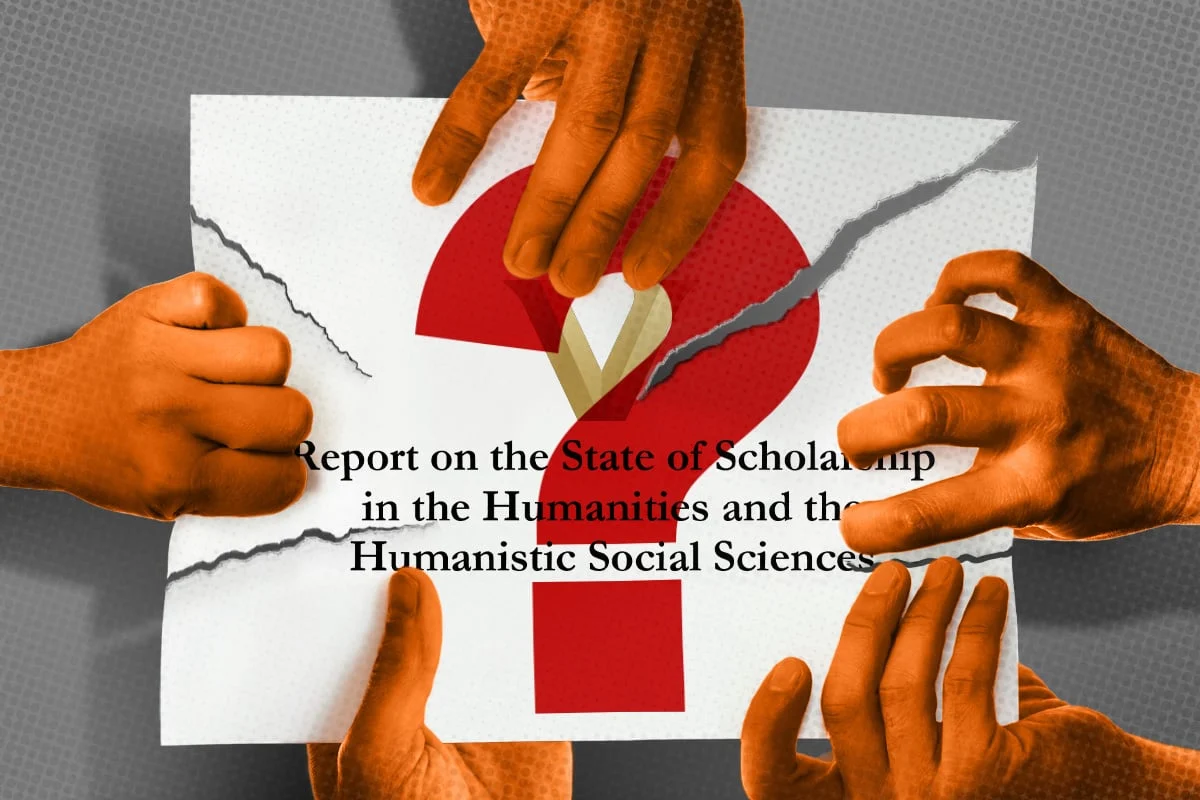
In the quiet halls of American academia, a profound intellectual firestorm has erupted. At the center of the controversy is a newly released document, the Report on the State of Scholarship in the Humanities and the Humanistic Social Sciences—colloquially dubbed the "Vanderbilt/Washington University of St. Louis report." The publication, which purports to offer a diagnostic assessment of the health of the modern academy, has instead become a lightning rod, igniting a fierce debate over the fundamental purpose of higher education, the nature of objective truth, and the role of political identity in the pursuit of knowledge.
The report’s core contention is stark: it argues that contemporary scholarship has drifted away from its traditional moorings of objectivity, rigor, and the pursuit of universal truth. In their stead, the authors suggest, an increasing preoccupation with social justice, activism, and identity-based politics has taken root. While the authors employ tempered language, their message is unambiguous—they perceive a crisis in which political commitments have displaced scholarly ones, threatening the integrity of the humanities and social sciences.
The Chronology of a Controversy
The release of the report in mid-2026 was met with immediate, visceral pushback from across the academic spectrum. Critics were quick to note that the document’s publication timing coincided with a broader, national cultural debate regarding the "politicization" of university campuses.
Following the report’s release, a series of rebuttals emerged. By early June 2026, academic associations, departments, and individual scholars began issuing formal responses. The American Anthropological Association (AAA) led the charge, releasing a statement that challenged the report’s methodology. The AAA argued that the document reached "sweeping conclusions" without performing the necessary due diligence required to engage with the complex, nuanced work of the disciplines it scrutinized.
Simultaneously, questions were raised about the transparency of the report itself. Critics pointed out that the document relied heavily on internal, proprietary assessments that were shielded from public scrutiny, making it nearly impossible for the broader academic community to verify the evidence or the interpretation of the data presented. As these critiques mounted, the conversation shifted from the initial claims about "politicization" to a deeper, more structural question: What is the baseline of academic objectivity, and who gets to define it?
The Nostalgic Mirage of Apolitical Scholarship
A central pillar of the report’s argument is an implicit, often idealized, vision of the "Golden Age" of the academy. This is a nostalgic view of the university as a realm of pure, apolitical objectivity—a sanctuary where scholars purportedly pursued knowledge free from the "contamination" of ideological commitments.
However, historians and critical theorists have been quick to dismantle this vision as a historical fiction. This imagined academy was, by necessity, a space from which women, people of color, and other marginalized groups were systematically excluded. For decades, the "neutrality" of the academy was predicated on a narrow, exclusionary demographic base. When the gates of the university were finally forced open, it was not merely a matter of demographic shift; it was a fundamental disruption of the intellectual canon.
The rise of fields such as Women’s Studies, Black Studies, Ethnic Studies, and Postcolonial Studies was not a departure from scholarly inquiry, as the report implies. Rather, these disciplines arose as a corrective response to long-standing absences. They were designed to ask the questions that were ignored—not because they were unscientific, but because the individuals most affected by those questions had been barred from the lecture halls and the faculty lounges where the "canon" was determined.
Data and Disciplinary Shifts
The report characterizes subjects like decolonization, feminism, and critical race theory as evidence of "troubling politicization." Yet, from a sociological perspective, this development is a logical, predictable consequence of an increasingly diverse faculty body. As the American academy became more representative of the nation it serves, the research agendas naturally broadened.
If one considers the scholarly record, the trend is clear:
- Expansion of Inquiries: The diversification of the faculty has led to a measurable increase in the study of structures that shape inequality, such as housing policy, labor law, and gendered healthcare outcomes.
- Methodological Innovation: The introduction of new archives—ranging from oral histories of marginalized communities to the digitizing of non-Western texts—has expanded the methodological toolkit of the humanities.
- Increased Representation: While the report views this as a shift in focus, advocates view it as an expansion of the "territory" of knowledge. The community of scholars is now broader than at any point in American history, and as a result, the questions being asked are more reflective of the complexities of the human experience.
The Transformation of Institutional Culture: The Bowen Parallel
To understand this transition, one need only look at the history of coeducation. In his seminal work, Lessons Learned: Reflections of a University President, William Bowen, the former president of Princeton University, reflected on the impact of integrating women into the university.
Initially, the administration’s focus was narrow: "What can Princeton do for women?" However, as the process unfolded, the realization shifted to "What will women do for Princeton?" The result was not merely an increase in the student population; it was a total transformation of the university’s culture, its intellectual life, and its very definition of excellence.
The same logic applies to the current landscape of knowledge production. When scholars from historically excluded groups entered the academy, they did not just "add" to the existing conversation; they fundamentally expanded the architecture of the conversation itself. They introduced new frameworks, new archival sources, and, crucially, new ways of understanding the relationship between the observer and the observed. To frame this as a loss of "rigor" is to mistake the expansion of a field for its erosion.
Official Responses and the Burden of Proof
The report’s authors argue that they are not against the inclusion of diverse groups, but rather against the methods used to study them. Yet, this is a distinction without a difference. By labeling the inquiry into race and gender as inherently "political" or "non-objective," the report creates a hierarchy of knowledge where traditional subjects are seen as "neutral" and new subjects are seen as "ideological."
Many prominent scholars, including Dwight A. McBride of Washington University in St. Louis, have argued that this framework inherently protects the status quo. If we accept the premise that traditional, Western-centric inquiry is the only valid form of "objectivity," then any departure from that model will always be viewed with suspicion. This creates a circular logic: the academy remains "neutral" only as long as it ignores the perspectives of those it previously excluded.
Implications: The Future of the Humanities
The implications of this debate are profound. If the academy adopts the logic of the Vanderbilt/Washington University report, it risks turning the clock back on decades of intellectual progress. It suggests that the humanities must return to a narrow, pre-1960s conception of knowledge to regain their "legitimacy."
However, if the academy embraces its own evolution, the path forward is one of rigorous, inclusive debate. The "neutrality" that the report pines for was, in many ways, an unexamined bias. The modern challenge is to develop a new, more robust conception of objectivity—one that is aware of the positionality of the scholar and that recognizes that inclusion is not an impediment to truth, but a prerequisite for it.
The current friction within the humanities is not a sign of decline; it is the friction of growth. When scholarly fields are sites of vigorous disagreement, they are at their most vibrant. The true danger to the humanities is not the presence of "politics" in the curriculum, but the retreat into a siloed, exclusionary definition of what counts as human knowledge.
As we look toward the future, the question is not whether the academy has become "too political." It is whether our current metrics for "rigor" are capable of accounting for a broader, more inclusive understanding of the human condition. Until we confront that question directly, we will continue to mistake the necessary, painful, and vital process of academic transformation for a decline in the pursuit of truth. The humanities have not lost their way; they have simply expanded their map.