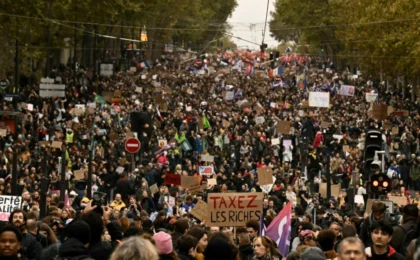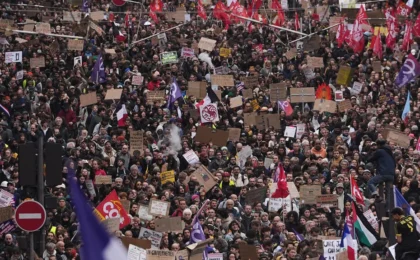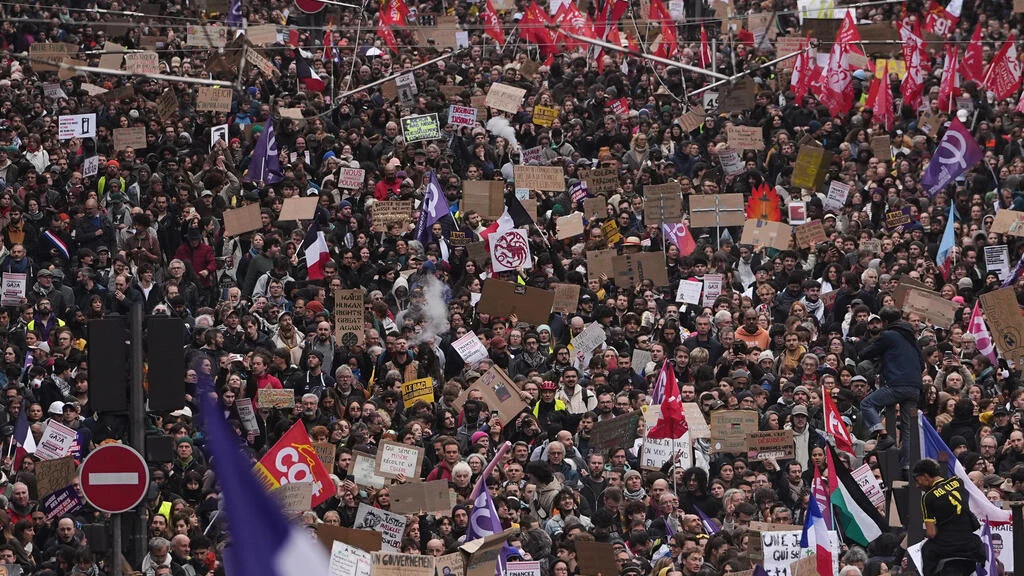
PARIS – France was plunged into a state of high tension this Saturday as hundreds of thousands of demonstrators took to the streets across the country. The marches, organized to protest the surging cost of living and government austerity measures, descended into widespread clashes between protesters and security forces. With nearly 1,000 arrests reported and significant injuries sustained on both sides, the events have cast a long, dark shadow over the nation’s political landscape just six months before the presidential election.
The violence, which occurred exactly one week after a similar wave of riots saw thousands detained and public infrastructure heavily damaged, has prompted President Emmanuel Macron to take an uncompromising stance on "restoring order." However, as the government doubles down on a security-first approach, the growing frustration among the citizenry suggests that the path to stability is becoming increasingly treacherous.
The Chronology of Chaos: A Saturday of Confrontation
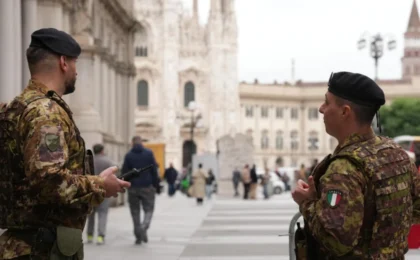
The day began under an ominous atmosphere. With 70,000 security forces deployed nationwide—a massive logistical undertaking intended to prevent a repeat of the previous week’s destruction—authorities implemented strict containment measures. In Paris, the government mandated a last-minute route change for the main march, pushing it toward the city’s southeastern periphery. Major cultural landmarks, including the Louvre and the Musée d’Orsay, shuttered their doors, and large swathes of central Paris were subjected to partial curfews.
The Morning Calm and Afternoon Surge
For the majority of the day, the main demonstrations in the capital remained largely orderly. Estimates placed the turnout in Paris alone between 110,000 and 250,000 people. Families, students, and trade unionists marched under the banner of economic relief, demanding action on inflation and energy costs.
However, as the sun began to set and the official marches neared their dispersal points, the mood shifted sharply. According to Interior Minister Laurent Nuñez, a hardened core of roughly 500 "ultra-left" extremists infiltrated the tail end of the procession. What followed was two hours of intense urban combat. Riot police squads, moving with increased speed and coordination, deployed tear gas and batons to break up the remaining crowds. AFP journalists on the ground reported repeated charges by police forces, with some protesters, particularly the youth, bearing the brunt of the crackdown.
Regional Flare-ups
The unrest was not confined to Paris. In the western city of Nantes, demonstrators successfully breached police lines, overcoming water cannons and tear gas to reach the city center. Similar scenes of defiance were recorded in Lyon, where police dispersed roughly 1,000 protesters, and in Marseille, where reports of looting emerged on the sidelines of the marches. Meanwhile, in cities like Cannes and Montpellier, an unprecedented phenomenon occurred: far-right activists mobilized specifically to confront "ultra-left" groups, adding a volatile layer of ideological tribalism to the ongoing economic unrest.

Supporting Data: The Scale of the Upheaval
The sheer scale of Saturday’s mobilization highlights the profound disconnect between the French government and a significant portion of its population.
- Turnout Estimates: Official government figures suggest approximately 410,000 participants nationwide, while the CGT union claims the number reached as high as 800,000.
- Law Enforcement: The mobilization of 70,000 officers represents one of the largest internal security deployments in recent French history.
- Casualties: Interior Minister Nuñez confirmed that two individuals suffered "serious" injuries. One man in Toulouse reportedly lost several fingers, and another person was severely injured in Clermont-Ferrand.
- Arrests: The arrest of nearly 1,000 individuals follows a staggering 2,700 arrests the previous week, signaling a government strategy focused on preemptive detention and rapid dispersal.
Official Responses and the Rhetoric of "Order"
Interior Minister Laurent Nuñez characterized the day’s outcome as "more positive" than the previous week, citing the efficacy of pre-demonstration checks and the rapid deployment of police as key successes. He maintained that the government’s priority remains the protection of businesses and public order, framing the police response as a necessary reaction to an "extremely elevated level of violence."
However, the government’s narrative is being aggressively challenged. Critics, including opposition politicians and human rights advocates, argue that the crackdown is an assault on the fundamental right to protest. Protesters on the ground expressed a sense of creeping authoritarianism. "If they prohibit protests then that means we are heading more and more towards a regime that is fascist, that is dictatorial," said Silem, a 20-year-old protester in Lyon.
The government’s decision to label non-union-led demonstrations as "illegitimate" has further alienated the public. By attempting to delegitimize the grassroots nature of these protests, the administration has inadvertently fueled the perception that it is disconnected from the realities of the working class.
Political Implications: A Country Divided
The timing of this unrest could not be more critical. With the presidential election looming in six months, France is navigating a period of acute political volatility.
The Rise of the Far-Right
Adding to the tension, the National Rally party, led by Marine Le Pen, held a rally in the city of Orléans to launch her presidential campaign. The event drew thousands of counter-protesters, reflecting the deep polarization of the French electorate. Le Pen, currently leading in many polls, is positioning herself as the primary beneficiary of the government’s inability to handle the crisis. The sight of anti-fascist protesters clashing with both the police and ideological rivals in the streets provides a grim backdrop to the electoral cycle.

The Economic Catalyst
The root of this unrest—inflation—is not unique to France. Across Europe, from Italy to Portugal, nations are grappling with the rising cost of living, exacerbated by the ongoing conflict in the Middle East and the resulting surge in fuel prices. However, France’s specific history of street-level resistance, exemplified by the legacy of the "Yellow Vests" (Gilets Jaunes) eight years ago, makes it particularly susceptible to rapid escalations of civil disobedience. The fact that the Yellow Vests have already called for further demonstrations on October 31 for "the freedom to protest" suggests that the current wave of anger is far from peaking.
The Legacy of the Macron Presidency
President Macron, now in his final term, faces a legacy-defining crisis. Having spent a decade at the helm, he is now presiding over a nation where the social contract is fraying. Far-left candidate Jean-Luc Mélenchon, who participated in the Paris rally, delivered a stark warning to the government: "Macron is going to understand that this is going to repeat itself every week."
Conclusion: The Road Ahead
As the dust settles on another weekend of violence, the outlook for France remains precarious. The government’s reliance on police force to manage economic dissent is a high-stakes gamble. While it may succeed in preventing the immediate destruction of property, it risks deepening the resentment of a populace that feels its voice is being drowned out by tear gas and barricades.
The upcoming months will be a test of endurance for both the French administration and the protesters. With the electoral clock ticking and the economic drivers of the crisis showing no sign of abating, the streets of France are likely to remain the primary theater for the nation’s unfolding political drama. Whether the government chooses to pivot toward dialogue or continues to lean into its security-centric mandate will determine whether the country descends further into chaos or finds a path toward democratic reconciliation.