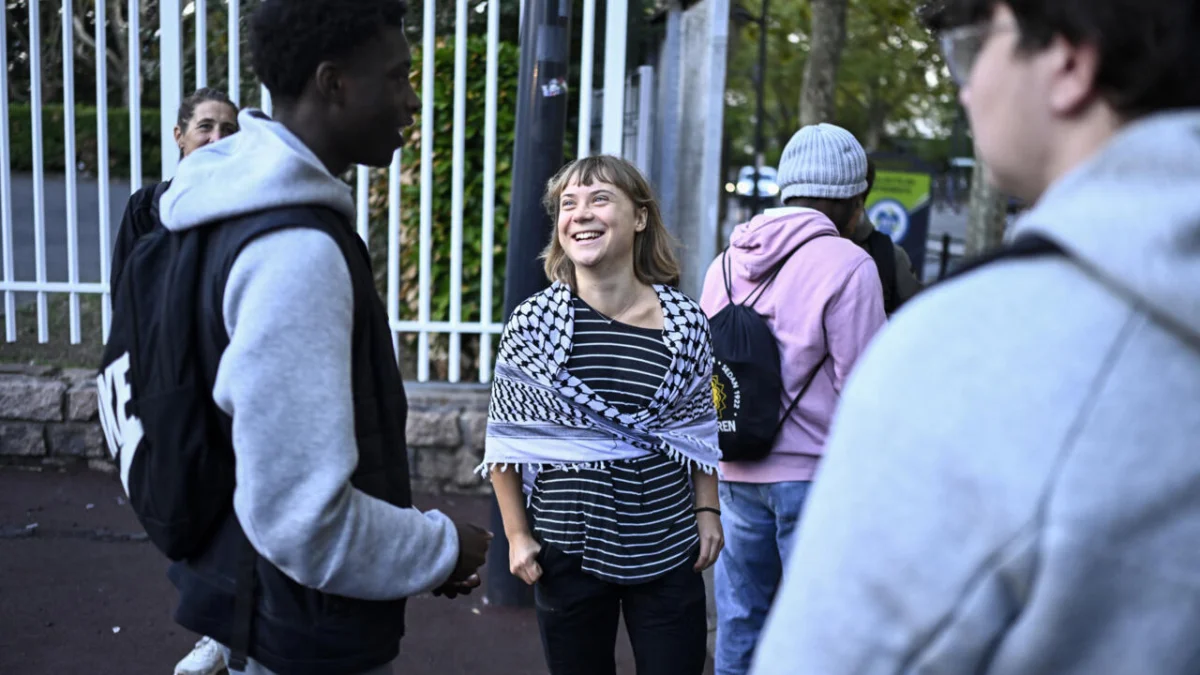
PARIS – The French education system is currently under intense scrutiny as a wave of nationwide demonstrations sweeps across the country. Students, labor unions, and opposition factions have converged to voice deep-seated grievances regarding the deteriorating state of public schools. From chronic teacher shortages to crumbling infrastructure, the movement has gained significant momentum, punctuated this morning by the high-profile arrival of Swedish climate and social activist Greta Thunberg at a protest in Saint-Denis.
As of Tuesday, October 13, 2026, the protests have shifted from isolated campus disruptions to a broader societal confrontation. While authorities report a slight dip in the total number of school closures compared to last week, they have simultaneously issued stern warnings regarding the "intensification of violence" on the picket lines.
The Core Grievances: A System Under Strain
The current unrest is not a singular event but the culmination of years of mounting frustration within the French Éducation Nationale. The primary drivers of the protest include:
1. The Teacher Shortage Crisis
Data released by the Ministry of Education earlier this autumn confirmed a record-breaking vacancy rate for teaching positions in both primary and secondary schools. The shortage is particularly acute in rural areas and the banlieues (suburbs) of major cities like Paris, Lyon, and Marseille. Critics argue that low starting salaries, coupled with the increasing complexity of classroom management, have made the profession unattractive to young graduates.
2. Dilapidated Infrastructure
Many of the schools participating in the blockades are located in buildings that have seen little to no investment in decades. Students have shared images on social media documenting leaking roofs, malfunctioning heating systems, and outdated technology, sparking a viral discourse on the "inequality of learning environments."
3. Curriculum and Reform Pushback
Beyond material conditions, there is significant pushback against recent administrative reforms that students and teachers claim prioritize austerity over educational quality. The reduction of elective subjects and the implementation of more rigid standardized testing have fueled the perception that the government is distancing itself from the needs of the student body.
Chronology of the October 2026 Escalation
- October 5: Preliminary walkouts begin in the Saint-Denis region following a heating failure at a major secondary school, forcing hundreds of students into the cold.
- October 8: Student unions announce a "National Day of Action," calling for a total shutdown of secondary education facilities across France.
- October 10: The Ministry of Education attempts to open a dialogue, but negotiations collapse within hours. Union leaders label the government’s proposals "insufficient and insulting."
- October 12: Protests turn physical in several cities. Police report minor injuries among officers, and property damage is recorded at three regional administrative buildings.
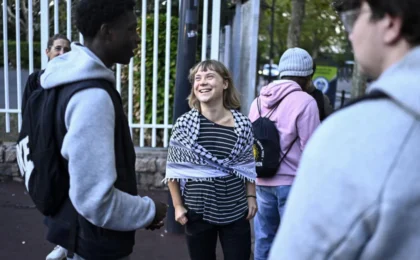
- October 13 (Today): Greta Thunberg arrives at the Lycée Paul Éluard in Saint-Denis, lending international visibility to the blockade. The government signals a move toward a more rigid policing strategy.
The Saint-Denis Flashpoint: Thunberg’s Intervention
The arrival of Greta Thunberg at the Lycée Paul Éluard in Saint-Denis this morning marked a turning point in the optics of the protest. Thunberg, known globally for her climate activism, has increasingly aligned her advocacy with broader social justice movements, including the right to high-quality public services.
Speaking to a crowd of students, Thunberg emphasized the intersectionality of their struggle. "When the state fails to provide a safe, warm, and staffed environment for its children, it is failing the future," she stated. Her presence has effectively shielded the protesters from some of the more aggressive criticisms leveled by government officials, as her global profile forces a international spotlight on the French administration’s handling of the unrest.
Supporting Data: The Reality of the Classroom
The statistics behind the movement reveal a stark reality that policymakers are struggling to address:
- Vacancy Rates: Roughly 8% of teaching positions remain unfilled for the 2026-2027 academic year, an increase of 1.5% from the previous year.
- Infrastructure Investment: Public spending on school maintenance has seen a 12% decrease in real terms since 2022, largely due to inflationary pressures and budget reallocation to other public sectors.
- Student-to-Teacher Ratios: In the affected districts, the ratio has climbed to nearly 30:1, making individualized attention—a pillar of the French pedagogical model—nearly impossible.
Official Responses: A Government Divided
The French government has adopted a two-pronged strategy: defensive rhetoric and security-focused containment.

The Ministry of Education’s Stance
The Minister of Education issued a statement earlier today, acknowledging the "legitimate concerns" of students but condemning the blockade tactics. "We cannot allow the education of our youth to be held hostage by the radical fringes of student unions," the statement read. The Ministry has promised an emergency aid package for school repairs, though it remains vague on the timeline for implementation.
The Interior Ministry’s Warning
The Ministry of the Interior has expressed deep concern regarding the "radicalization of tactics." Authorities claim that agitators from outside the student movement are infiltrating protests to incite violence against police officers. "We are seeing a trend of urban guerrilla tactics being applied to school blockades," a spokesperson noted, indicating that police presence will be increased around "high-risk" schools for the remainder of the week.
Implications: The Long-Term Fallout
The standoff holds significant implications for the administration of President [Name of current French leadership, if applicable] and the stability of the education sector.
1. The Political Cost
If the government chooses to suppress the protests through force, it risks alienating a generation of young voters. Conversely, if it grants broad concessions, it faces a budget crisis and potential backlash from conservative factions demanding fiscal discipline.
2. The Future of Educational Reform
This movement may force a fundamental rethink of the French education model. Many experts are now calling for a "New Deal for Education," suggesting that the current centralized system is too slow to react to regional crises. A move toward decentralization, allowing local municipalities more control over their budgets, is being debated in the National Assembly.
3. The "Thunberg Effect"
The involvement of international figures like Thunberg suggests that the French school protests could become a template for European student movements. If the French administration fails to reach a peaceful resolution, it could inspire similar protests across the EU, where teacher shortages and funding cuts are becoming increasingly common.
Conclusion
As night falls on Paris, the blockades remain in place. The students of Lycée Paul Éluard, bolstered by the solidarity of international activists, show no signs of backing down. For the French government, the challenge is now one of legitimacy. Can they restore order without sacrificing the trust of the youth they are meant to educate?
The coming days will be critical. With further demonstrations planned for Wednesday and Thursday, the pressure on the Ministry of Education to provide concrete, immediate solutions has never been higher. The eyes of the nation—and increasingly, the world—are fixed on the classrooms of France, where the struggle for the future of education is being fought in real-time.
Stay tuned to our liveblog for continuous coverage of the developments in Saint-Denis and across the country as this situation unfolds.