In a landmark development for both the defense sector and the field of atmospheric science, Redwood City-based startup WindBorne Systems has secured a significant contract with the U.S. Air Force. The agreement, potentially valued at up to $49 million, marks a pivotal moment in the integration of autonomous technology and artificial intelligence into global weather monitoring. By leveraging a constellation of 700 autonomous balloons, WindBorne is moving beyond traditional, physics-based forecasting, ushering in a new era of high-fidelity, data-driven intelligence.
The Core Agreement: A Strategic Partnership
Under the terms of the new contract, the U.S. Air Force will procure high-resolution atmospheric data collected by WindBorne’s proprietary fleet. This arrangement is structured as an "indefinite-delivery, indefinite-quantity" (IDIQ) vehicle, meaning the Air Force is not obligated to spend the full $49 million upfront. Instead, the military can issue task orders for specific geographical regions and timeframes, paying only for the data it requires for its operational needs.
To date, the Air Force has already initiated orders totaling $1.7 million. Executives at WindBorne anticipate that this initial expenditure is merely the opening salvo in a long-term collaboration. The contract was awarded on a sole-source basis, a testament to the unique nature of WindBorne’s capabilities. According to the company, the government determined that no other entity could provide the same level of global, on-demand atmospheric data collection that meets the rigorous requirements of modern military operations.
A Chronology of Innovation
WindBorne Systems, founded in 2015, has spent nearly a decade refining its approach to atmospheric data. Its journey from a Silicon Valley startup to a primary defense contractor is marked by several key technological milestones:
- 2015–2020: The Foundation. The company focused on developing the hardware—autonomous, engine-less balloons capable of navigating the stratosphere—and the software to control them.
- 2024 (Early Summer): The release of WeatherMesh 6. This iteration of their deep-learning forecasting model signaled a shift in industry standards, demonstrating the ability to outperform the European Centre for Medium-Range Weather Forecasts (ECMWF) in specific predictive categories.
- 2025 (August): A watershed moment occurred when WindBorne became the first organization to successfully navigate an unpowered flight system into the eye of a typhoon. This feat was made possible by the combination of precise altitude control and advanced AI-driven trajectory modeling.
- 2026 (August): The company secured a $37 million Series B funding round, providing the necessary capital to scale its constellation and improve its R&D capabilities, setting the stage for the current Air Force contract.
Supporting Data: Why AI is Replacing the Supercomputer
For decades, meteorology has been defined by the use of massive, energy-intensive supercomputers that solve complex fluid dynamic equations to simulate the atmosphere. While effective, these models are computationally expensive and often sluggish.
The rise of transformer model architectures—the same technology underpinning large language models—has revolutionized this process. By ingesting decades of historical weather data, deep-learning models can now identify patterns and generate forecasts in a fraction of the time required by traditional methods.
WindBorne distinguishes itself by being one of the first organizations to feed its own empirical, real-time data directly into its AI models. While government agencies and research labs like Google DeepMind are making strides, WindBorne’s "closed-loop" system—where the balloon fleet collects the data that feeds the model, which in turn directs the balloons—creates a virtuous cycle of improvement that current incumbents struggle to replicate.
Official Responses and Strategic Rationale
Andrey Sushko, co-founder and CTO of WindBorne, views the Air Force contract as a validation of the company’s long-term vision. "This is largely a vehicle through which continued growth of the constellation can be supported, as well as some work on research and development to continue to improve the hardware and performance of the balloons," Sushko stated in an interview.
Sushko emphasized that the decision to award the contract without competitive bidding reflects the government’s realization that WindBorne’s operational model is distinct. "It’s a determination by the government that for this capability of collecting global data, we were the only company able to provide it in the way that met their needs for these operations," he noted.
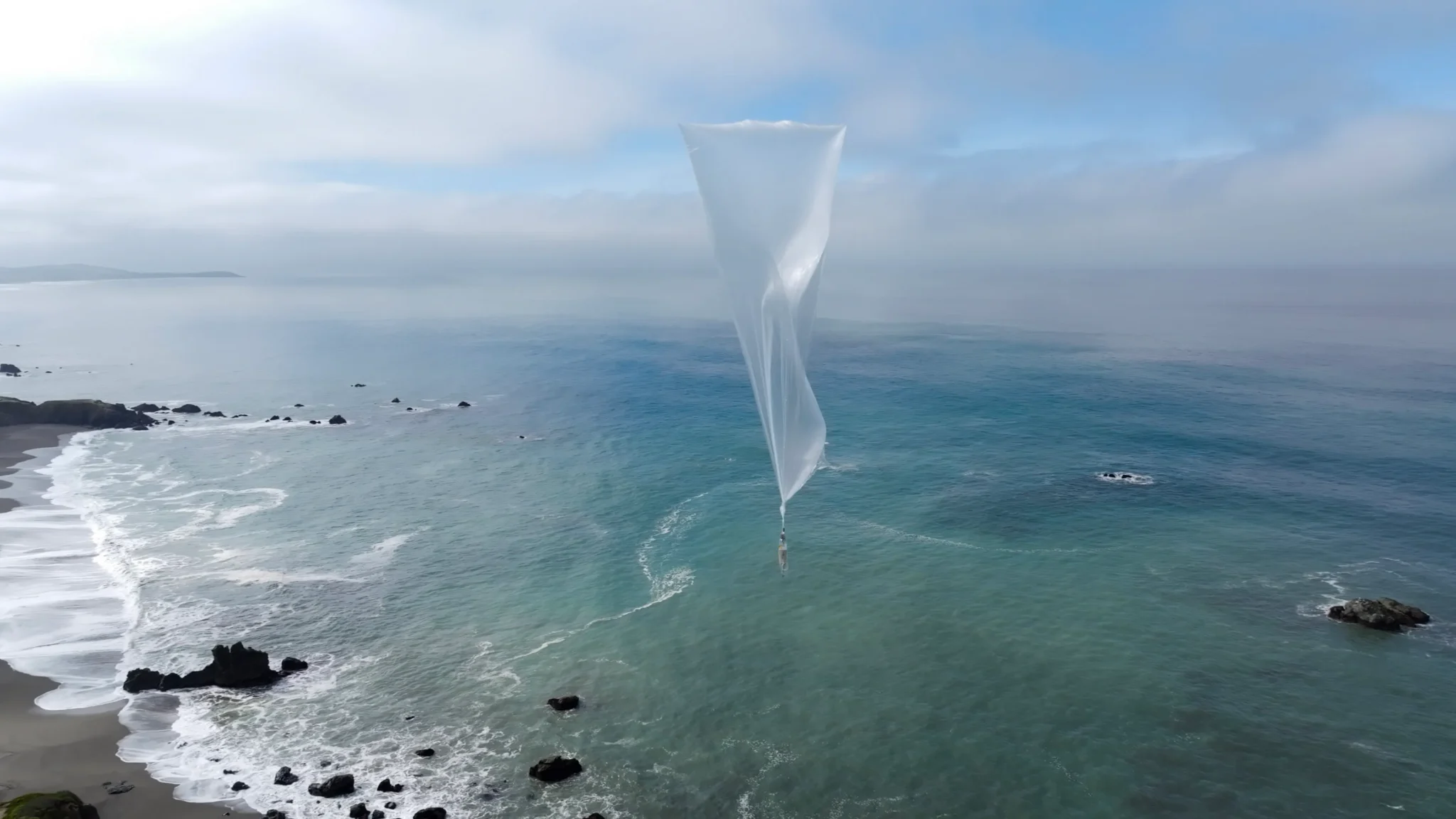
The ability to steer balloons without engines—by simply adjusting altitude to catch different wind currents—is the "secret sauce" that makes this possible. By bleeding air or dropping sand ballast, the balloons act as sophisticated, mobile weather stations that can be deployed at will to fill data gaps in the ocean or over remote conflict zones where traditional ground stations are non-existent.
Implications for Global Weather and Defense
The implications of this technology are far-reaching, spanning both civilian and military spheres:
1. Military Operations and Tactical Advantage
For the U.S. Air Force, accurate weather data is a mission-critical asset. Precise knowledge of wind shear, humidity, and atmospheric pressure at high altitudes is essential for flight safety, targeting, and intelligence gathering. By controlling its own "weather network," the military gains a tactical edge, allowing it to respond to localized weather events that might be missed by global satellite coverage or standard ground-based radars.
2. The Shift in Meteorological Research
The success of WindBorne and similar firms signals a "jagged frontier" in meteorology. While AI models are proving faster and often more accurate, they have not yet completely replaced physics-based models. Instead, the industry is moving toward a hybrid approach, where AI and traditional simulations work in tandem to provide a comprehensive understanding of the climate.
3. Economic and Scaling Challenges
With a $37 million Series B round and a new $49 million contract vehicle, WindBorne is positioned for rapid scaling. However, managing a constellation of 700+ balloons globally is a logistical challenge. The company must ensure that its hardware remains robust enough to withstand the harsh conditions of the stratosphere while keeping costs low enough to remain a viable alternative to satellite-based data.
4. The Role of Private Enterprise in Public Infrastructure
This contract is a prime example of the "New Space" and "New Defense" trend, where the government offloads the development of critical infrastructure to private startups that can iterate faster than traditional defense contractors. By acting as an early and anchor customer, the Air Force is not just buying a service; it is effectively funding the R&D of a dual-use technology that will likely benefit the global civilian population through more accurate weather warnings and climate research.
Conclusion: A New Horizon
As climate change continues to increase the volatility of global weather patterns, the ability to predict and understand the atmosphere has never been more vital. WindBorne Systems, through its unique combination of autonomous hardware and cutting-edge deep learning, has proven that the future of weather forecasting is not confined to a supercomputer in a climate-controlled room. Instead, it is currently drifting through the stratosphere, collecting the data points that will define the next generation of meteorological science.
For the U.S. Air Force, the contract represents a smart investment in flexibility and speed. For WindBorne, it is the ultimate validation of their "data-first" philosophy. As the constellation grows and the WeatherMesh models continue to evolve, the boundary between real-time observation and predictive forecasting will continue to blur, making the world a slightly more predictable place in an increasingly chaotic climate.