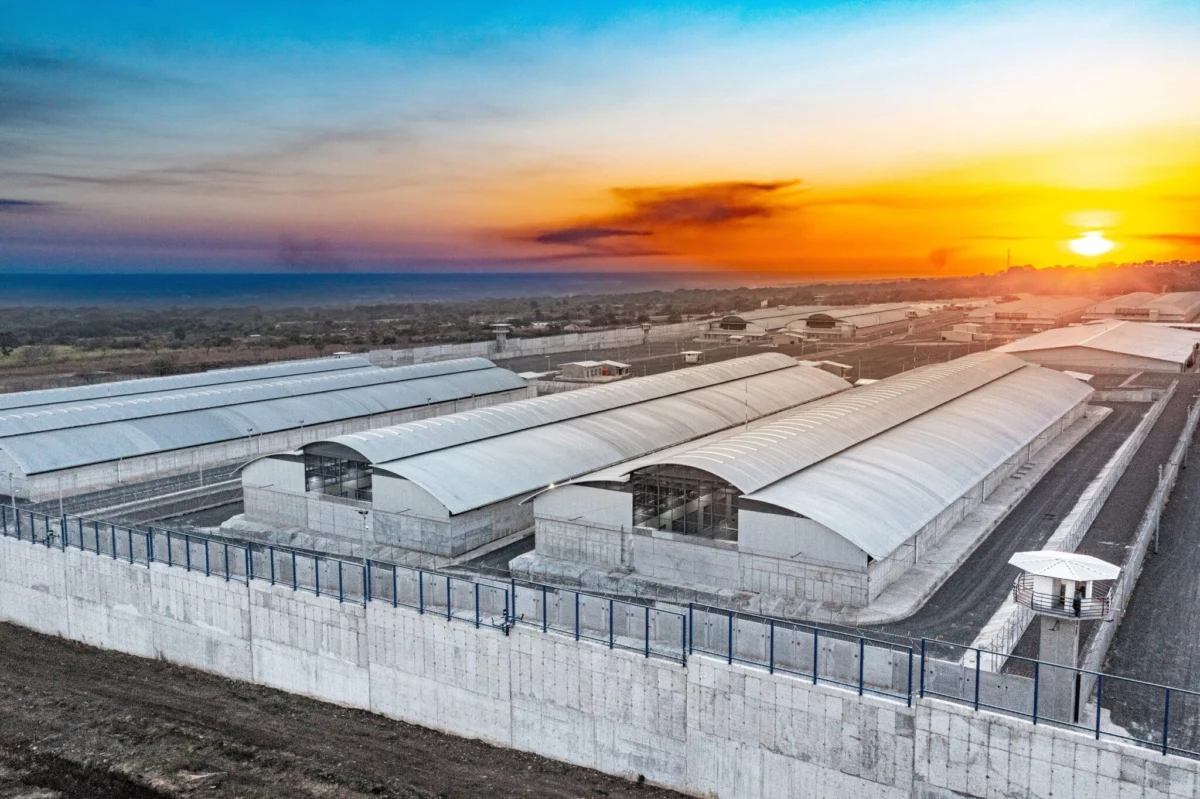
In a scathing report released Wednesday, Human Rights Watch (HRW) characterized the Salvadoran judicial system as a "mockery of justice," detailing a systematic campaign of mass trials that have effectively dismantled the presumption of innocence in the Central American nation. Since the beginning of 2026, Salvadoran courts have engaged in the unprecedented practice of convicting hundreds of defendants simultaneously, a strategy that legal experts say relies on uncorroborated evidence and strips the accused of any meaningful opportunity to mount a defense.
This latest development marks a chilling escalation in President Nayib Bukele’s four-year "war on gangs." While the administration maintains that these measures are an "efficient, necessary" evolution required to eradicate powerful criminal syndicates like MS-13 and Barrio 18, human rights organizations argue that the system has transitioned from a crackdown on crime into a rubber-stamp apparatus for mass, arbitrary incarceration.
The Chronology of a State of Exception
To understand the current crisis, one must look back to March 2022, when El Salvador experienced a lethal surge in gang-related homicides. In response, President Bukele requested, and the Legislative Assembly granted, a nationwide "state of exception." This constitutional suspension of rights, which has been renewed repeatedly for over four years, fundamentally altered the country’s legal landscape.
Key Milestones:
- March 2022: The state of exception is declared, allowing for the suspension of rights such as the right to private communication and the right to be informed of the reasons for detention.
- 2023–2024: The Salvadoran Congress passes legislative reforms specifically designed to facilitate mass trials. Prosecutors are granted the authority to group hundreds of defendants into single trials based on nothing more than alleged affiliation with a specific "gang cell" or geographic region.
- 2025: Growing evidence emerges from whistleblowing police officers who reveal that internal quotas for arrests have led to the systemic fabrication of criminal reports.
- October 2026: Human Rights Watch publishes its comprehensive condemnation, highlighting that the "mass trial" phase of the emergency powers has solidified into a permanent, albeit deeply flawed, judicial process.
Supporting Data: The Anatomy of Mass Incarceration
The statistics surrounding El Salvador’s prison population are staggering. With an estimated 120,000 people currently behind bars—roughly two percent of the entire national population—El Salvador holds one of the highest incarceration rates in the world.
According to HRW, more than 93,000 of these detainees were apprehended under the emergency order. Of that population, 3,000 are children. Perhaps most damning is the fact that over 90 percent of those arrested have remained in prison for years without a trial, a clear violation of Article 14(3)(c) of the International Covenant on Civil and Political Rights (ICCPR), which mandates the right to a trial within a reasonable time.
The logistical impossibility of a fair trial under these conditions is stark. Defense lawyers interviewed by HRW reported that they are often given only minutes to represent dozens, sometimes hundreds, of defendants at once. Judges, acting under the auspices of the "Tribunals Against Organized Crime," frequently seal case files, preventing lawyers from reviewing the evidence against their clients. In many instances, the defense is barred from speaking privately with the accused, rendering the concept of legal representation entirely performative.
The Myth of "Efficiency" vs. The Reality of Fabrication
The Bukele administration’s rhetoric centers on the efficiency of the "new" justice system. By consolidating cases, the government claims it is clearing a backlog of crime and restoring order to a society long plagued by gang violence. However, investigations suggest that this "efficiency" is built on a foundation of coerced and fabricated testimony.
Police officers, speaking on the condition of anonymity, have confessed to HRW that they were under immense pressure to meet arrest quotas. To fulfill these requirements, officers were directed to produce generic, inaccurate reports. These reports, often devoid of specific evidence linking an individual to a crime, become the "uncorroborated evidence" that the courts use to secure mass convictions.
"These hearings are designed to produce guilty verdicts, not to weigh evidence under due process," says Juanita Goebertus, Americas director at Human Rights Watch. "The result is not accountability for the victims of gang violence; it is simply rubber-stamping mass incarceration."
Official Responses and the Defense of the Status Quo
The Salvadoran government has consistently dismissed international criticism as the work of foreign actors who do not understand the necessity of their security policies. President Bukele’s administration argues that the "old" judicial system was hopelessly corrupt and infiltrated by the very gangs they are now dismantling.
From the government’s perspective, the "Tribunals Against Organized Crime"—which hide the identities of judges and witnesses—are necessary security measures to protect judicial officials from retaliation. By keeping the proceedings opaque, the government claims it can ensure the safety of the court while efficiently processing high-level gang members. However, critics point out that these measures also prevent public scrutiny, effectively shielding the judiciary from accountability for the errors, biases, and intentional abuses committed within their walls.
The Legal and Human Implications
The mass trial strategy is a direct affront to both international law and fundamental human rights. El Salvador is a signatory to the American Convention on Human Rights (ACHR) and the ICCPR, both of which codify the right to a fair trial, the right to counsel, and the presumption of innocence.
Direct Violations Include:
- Article 10 of the Universal Declaration of Human Rights (UDHR): Guaranteed access to a fair and public hearing by an independent and impartial tribunal.
- Article 14 of the ICCPR: The right to be informed promptly and in detail of the charges, the right to communicate with counsel of choice, and the right to adequate time and facilities to prepare a defense.
The long-term implications for El Salvador are profound. When a nation systematically discards the rule of law to achieve a security objective, it risks creating a permanent state of injustice. The incarceration of thousands of individuals—many of whom have no legal path to prove their innocence—creates deep-seated societal trauma.
Furthermore, the normalization of "secret" justice and mass convictions sets a dangerous precedent. If the state can suspend the rights of the accused to combat gangs today, the same legal infrastructure can easily be turned against political dissidents, journalists, or any citizen who challenges the state tomorrow.
As the international community watches, the situation in El Salvador serves as a stark warning: security achieved at the expense of human rights is rarely sustainable. The "efficiency" of the current judicial system is, in reality, a total dissolution of the promise of justice, leaving the Salvadoran people in a state of limbo where the law is no longer a shield for the innocent, but a weapon used by the state.
For the families of the 120,000 currently behind bars, the silence from the halls of power is deafening. Until El Salvador restores the independence of its judiciary and ensures that trials are conducted in accordance with international standards, the "war on gangs" will continue to be remembered not for the safety it provided, but for the fundamental human rights it extinguished.