Volkswagen, the titan of the German automotive industry, has released its third-quarter sales results for 2026, and the figures paint a sobering picture of a brand in transition. Faced with shifting consumer demand, a temporary gap in its product portfolio, and broader economic headwinds, the automaker saw a marked decline in both domestic U.S. performance and its global footprint. While the numbers represent a clear setback, they also underscore a calculated, albeit painful, pivot toward a new generation of vehicles.
The State of Play: A Challenging Quarter in the U.S.
For the three-month period ending September 30, 2026, Volkswagen’s U.S. operations reported 78,179 vehicle deliveries. This represents a significant 10.9 percent contraction compared to the 87,705 units sold during the same period in 2025.
The decline is largely attributed to the cyclical nature of the automotive business. The Atlas and Atlas Cross Sport, which represent the backbone of the brand’s American sales volume—accounting for roughly one-third of total units—saw their numbers dip by 19.5 percent and 9.5 percent, respectively. However, analysts note that this was largely anticipated. With the arrival of the redesigned second-generation Atlas arriving at dealerships this month, consumers have been waiting for the updated model, naturally softening demand for the outgoing iteration.
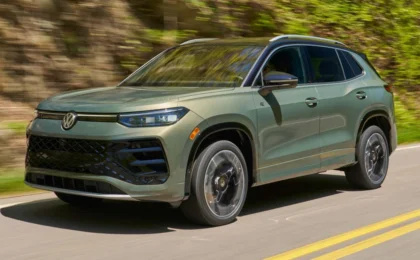
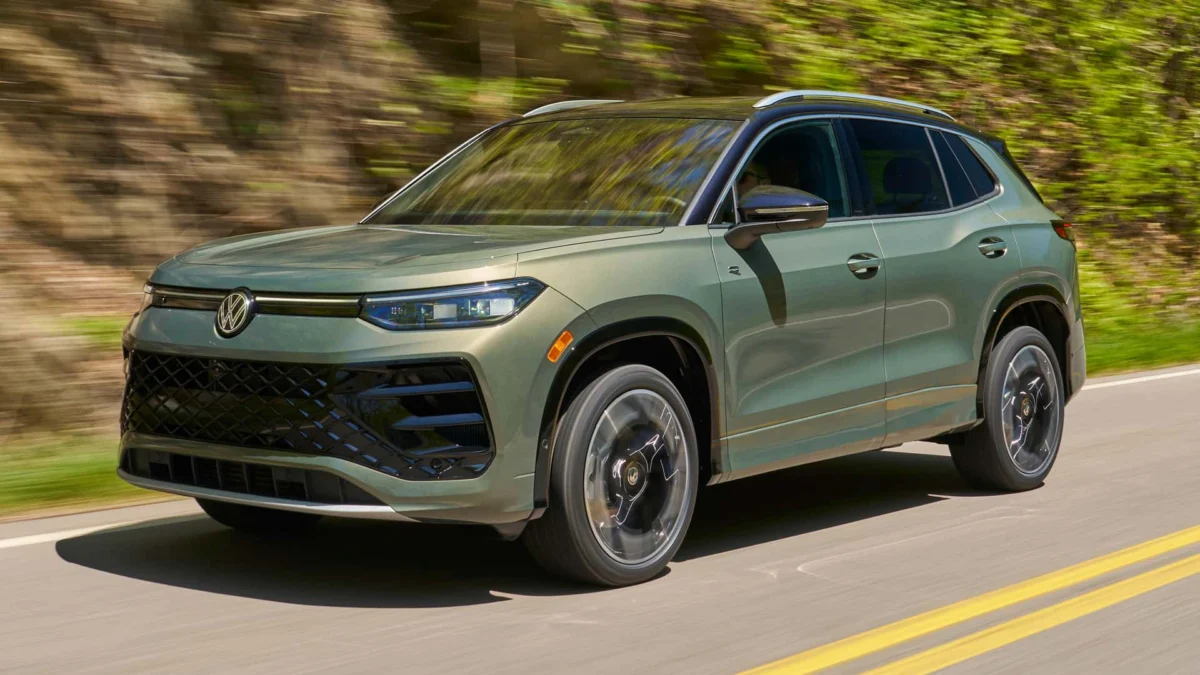
Conversely, there were distinct bright spots within the traditional internal combustion engine (ICE) lineup. The recently refreshed Tiguan saw a robust 27.4 percent increase in sales, while the evergreen Jetta model enjoyed a 24.9 percent surge, moving just over 14,000 units. The Taos crossover remained remarkably consistent, holding steady with a marginal 0.4 percent increase.
Chronology of a Strategic Pivot
To understand the current performance, one must look at the timeline of Volkswagen’s recent operational shifts.
- Early 2026: Volkswagen officially ceased production of the ID.4 in its current form, setting the stage for a successor but creating an immediate vacuum in its North American electric vehicle (EV) offerings.
- Mid-2026: The company extended the production hiatus of the ID. Buzz. Originally intended as a one-year sabbatical, the brand confirmed a two-year absence for the beloved electric van, pushing its return to 2028.
- Late Q3 2026: The release of Q3 results confirmed the impact of these decisions. With the ID.4 production lines idle and the ID. Buzz off the market, the company’s EV sales cratered.
- Looking Ahead: The global unveiling of the new "ID. Tiguan" (destined for Europe) and the imminent arrival of the next-generation Atlas represent the primary pillars of the brand’s recovery strategy heading into the final quarter of the year and into 2027.
A Deep Dive into the Data
The stark contrast between the brand’s ICE performance and its electrification efforts is laid bare by the raw data.
| Model | Q3 2026 | Q3 2025 | % Change |
|---|---|---|---|
| Atlas | 15,375 | 19,105 | -19.5% |
| Atlas Cross Sport | 6,889 | 7,609 | -9.5% |
| Taos | 9,780 | 9,741 | 0.4% |
| Tiguan | 28,091 | 22,050 | 27.4% |
| ID. 4 | 989 | 12,470 | -92.1% |
| ID. Buzz | 432 | 2,469 | -82.5% |
| Jetta | 14,092 | 11,287 | 24.9% |
| Golf GTI | 1,829 | 1,937 | -5.3% |
| Golf R | 702 | 1,041 | -32.6% |
| Total Sales | 78,179 | 87,705 | -10.9% |
The most glaring data points are the 92.1 percent collapse in ID.4 sales and the 82.5 percent drop for the ID. Buzz. These are not necessarily signs of waning consumer interest in EVs, but rather the mathematical consequence of a supply-side shutdown. With production lines transitioning to next-generation platforms, the current availability of these specific models has all but vanished.
The EV Conundrum: A Necessary Pause?
Volkswagen’s aggressive push into electrification has hit a speed bump. The decision to halt the ID.4 was a strategic maneuver intended to clear the way for a more competitive successor, yet it has left the brand’s showrooms devoid of a volume-selling EV for the time being.
Industry observers argue that this is a "valley of death" period. By pulling the plug on aging EV tech, Volkswagen is attempting to preserve its brand equity for when its more advanced, higher-range, and software-optimized vehicles arrive. However, the market is unforgiving, and the lack of inventory has allowed competitors to capture market share that Volkswagen may find difficult to win back.
Furthermore, the performance of the brand’s performance icons, the Golf GTI and Golf R, also softened, with sales falling 5.3 percent and 32.6 percent respectively. As the automotive industry leans heavily toward SUVs and electrification, the traditional "hot hatch" segment continues to face niche-market pressures.
Global Headwinds: The View from Wolfsburg
The challenges are not confined to the North American market. On a global scale, Volkswagen is navigating a complex geopolitical and economic environment that has dampened demand across almost all major regions.
In the last three months, the automaker delivered 946,600 vehicles worldwide, failing to reach the psychological 1.0-million-unit mark. This represents a 19.3 percent decline compared to the 1,172,300 vehicles delivered in Q3 2025. When looking at the year-to-date figures, the global picture remains equally challenging, with 3,014,000 vehicles sold so far in 2026, down 13.7 percent from the 3,492,000 units recorded at the same point last year.
These figures reflect cooling economic growth in China, supply chain volatility in Europe, and the ongoing recalibration of global automotive manufacturing processes.
Implications for the Future: Is the Strategy Working?
The question facing Volkswagen’s leadership is whether the current pain will yield long-term gains. The company is betting heavily on the "newness" of its upcoming product cycle.
- The Atlas Effect: The launch of the redesigned Atlas is the immediate catalyst for the brand’s recovery in the U.S. By maintaining a strong presence in the three-row SUV segment, Volkswagen is ensuring it keeps its primary revenue stream alive.
- The EV Reset: While the current EV numbers are dismal, the promise of a North American-specific successor to the ID.4, combined with the eventual return of the ID. Buzz in 2028, suggests that the brand is playing a long game. The goal is to move past early-generation EV teething issues and introduce a platform that is more profitable and better suited to regional tastes.
- Operational Efficiency: The company is currently undergoing significant internal restructuring, focusing on reducing complexity and lowering production costs at its manufacturing facilities, such as the crucial Chattanooga plant.
Conclusion
Volkswagen is currently in a state of deliberate contraction. By phasing out older models and pausing the delivery of others, the brand is sacrificing short-term sales volume to ensure it does not get bogged down in the maintenance of an aging portfolio. While the 10.9 percent drop in U.S. sales and the 19.3 percent drop globally are eye-catching, they are symptomatic of a company undergoing a structural transformation.
The coming year will be the true litmus test for this strategy. If the new Atlas can capture the market interest the brand expects, and if the roadmap for the next generation of ID vehicles remains on schedule, Volkswagen may look back at this difficult quarter as a necessary clearing of the decks. However, in an increasingly crowded and competitive automotive landscape, the margin for error is razor-thin. For now, the German automaker finds itself in a precarious position, waiting for its next wave of products to arrive and reassert its dominance in the global market.