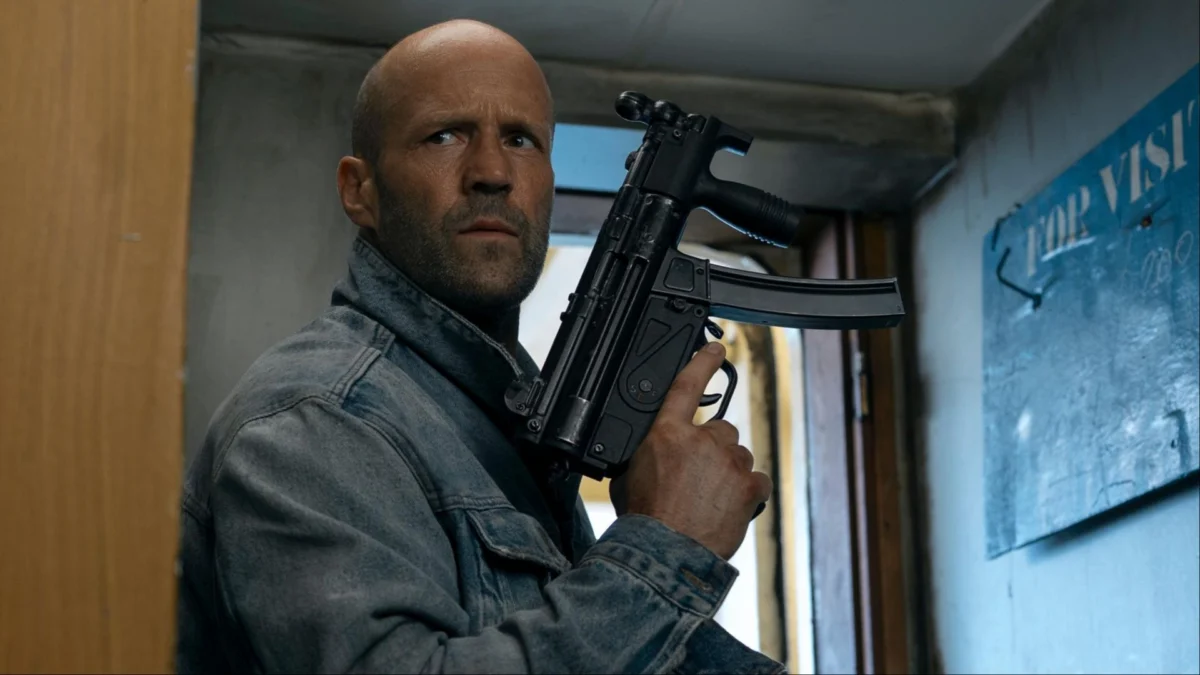
In an industry that often fetishizes the "chameleon" actor—the performer who loses themselves in prosthetics, complex accents, and radical physical transformations—Jason Statham stands as a defiant anomaly. With a career spanning nearly three decades and encompassing nearly 60 feature films, Statham has carved out a cinematic niche so distinct that it has become an entire genre unto itself. From his breakout in Guy Ritchie’s gritty London underworld to his current status as a box-office titan in films like The Beekeeper and the upcoming Mutiny, Statham has remained remarkably consistent.
While critics have long pointed out that Statham tends to play the same "tough guy with a mysterious past" in every film, the man himself has finally offered the definitive explanation for his brand of stardom. It is not a lack of range, he argues, but a calculated commitment to authenticity.
From the Streets to the Silver Screen: A Chronology of a Reluctant Star
To understand Statham’s approach to acting, one must first look at his unconventional trajectory. Unlike many of his Hollywood peers, Statham did not spend his twenties in black-box theaters or auditioning for Shakespearean roles.
The Pre-Cinema Years (1990–1997)
Before he was a household name, Statham was a high-level athlete. A member of Britain’s National Swimming Squad for twelve years, he represented England at the 1990 Commonwealth Games as a competitive diver. This life of rigorous discipline and physical conditioning provided the foundation for his screen presence. Simultaneously, he worked as a street vendor—a career he inherited from his father—selling jewelry and knock-off goods. This "hustler" background, which required quick wit, charm, and an ability to read people, proved to be better preparation for action cinema than any acting conservatory.
The Guy Ritchie Catalyst (1998–2002)
Statham’s transition to film was purely serendipitous. While working as a model for the brand French Connection, he was introduced to director Guy Ritchie. Recognizing the authentic, gritty energy of the former athlete, Ritchie cast him as Bacon in Lock, Stock, and Two Smoking Barrels (1998). The film was a cultural phenomenon, launching both their careers. Statham’s follow-up with Ritchie, Snatch (2000), solidified his persona: the fast-talking, cool-headed rogue.
The Action Titan Era (2003–Present)
Following the success of The Transporter (2002), Statham pivoted fully into the action-thriller archetype. He spent the next two decades dominating the genre with franchises like Crank, The Expendables, and the Fast & Furious series. His recent move into high-concept thrillers like The Beekeeper and the highly anticipated Mutiny confirms that his audience hasn’t grown tired of his formula; they have come to demand it.
The "Thespian" Myth: Addressing the Criticism
The primary critique leveled against Statham throughout his career is that he lacks versatility. The question is often posed: Why not branch out? Why not play a character who doesn’t resort to hand-to-hand combat?
In a candid 2017 interview on the Jim and Sam Show, Statham addressed this head-on, delivering what remains the most insightful commentary on his own professional philosophy. When asked if he is ever offered roles involving emotional domesticity or complex, non-physical character arcs—jokingly framed as "a mathematician going through a bitter divorce"—Statham’s response was characteristically blunt.
"I don’t get offered those," he laughed. "And frankly, I don’t want them."
Statham’s reasoning is rooted in a refreshing brand of professional honesty. He rejects the label of "thespian," a title he believes is reserved for those who have spent years honing their craft in the pursuit of transformation. Instead, he views himself as an entertainer who relies on his natural physical capabilities. "I’m not really some thespian that can adopt and chameleon himself into different roles," he admitted. "I just got into this by being in the right place at the right time."
The Philosophy of Authenticity: Why It Works
Statham’s insistence on playing characters that align with his own history as an athlete and a street-smart salesman is not laziness; it is a strategic choice of "authenticity." He argues that because he lacks traditional acting training, he is most effective when he can tap into his own lived experience.
The Physicality Advantage
The action genre is notoriously punishing. By performing many of his own stunts and maintaining a high level of physical fitness, Statham brings a sense of stakes to his films that a "chameleon" actor might struggle to replicate. He understands the mechanics of movement, the economy of violence, and the physical presence required to command a frame. As he noted, "I get a lot of the physical roles because I can do all that. So there’s an authenticity with that, so I tend to stick with that."
Knowing the Limitations
Statham’s career longevity is a testament to the power of self-awareness. He knows exactly what his audience expects when they buy a ticket to one of his films. By refusing to chase roles that he feels he would "be no good at," he avoids the pitfalls of ego-driven casting that often lead to critical failures. He chooses to be the best in his lane rather than a mediocre performer in a lane that doesn’t suit him.
Implications for the Future of Action Cinema
As Statham looks toward the future, his strategy remains consistent, even as he begins to play with the boundaries of his own celebrity.
The Expanding Franchise Portfolio
Statham is currently set to reprise two of his most iconic roles: Adam Clay in the sequel to the massive hit The Beekeeper, and Deckard Shaw in the final chapters of the Fast & Furious saga. These roles represent the pinnacle of his established brand, where his ability to balance stoic intensity with dry, witty banter remains unmatched.
Meta-Humor and Self-Reflection
Perhaps most exciting is his upcoming project, Jason Statham Stole My Bike, directed by David Leitch. The film promises a meta-narrative where Statham plays a heightened version of himself. This suggests that the actor is fully aware of his public perception and is finally leaning into the "Jason Statham" character as a construct. By engaging in this level of self-reflexive humor, he is effectively taking ownership of the tropes that have defined his career, potentially turning the critique of his "lack of range" into his most clever performance to date.
Conclusion: The King of the Genre
In an era of cinema where the lines between reality and CGI, between actor and character, are increasingly blurred, Jason Statham offers a rare sense of reliability. He is a man who knows exactly who he is and what he brings to the table. He is not trying to win an Oscar for a quiet, introspective drama, and he isn’t pretending to be a master of classical technique.
Instead, he has mastered the art of being Jason Statham. By staying true to his roots as a sportsman and a hustler, he has built an empire on the foundation of confidence, physical precision, and, most importantly, authenticity. Whether or not he ever plays a "mathematician going through a divorce," one thing is clear: the audience will continue to show up, because they know exactly what they’re going to get—and they wouldn’t have it any other way.