Welcome back to TechCrunch Mobility. As the industry stands on the precipice of a new era defined by artificial intelligence and autonomous systems, the pace of change is accelerating. Whether it is the regulatory hurdles being dismantled in the trucking sector or the massive influx of capital into robotaxi infrastructure, the landscape of transportation is shifting beneath our feet.
As we approach Disrupt 2026 in San Francisco, the air is thick with anticipation. Following a brief period of reflection in the quietude of New Hampshire’s White Mountains, I am ready to dive into the high-stakes world of mobility innovation. For those looking to join the conversation, you can secure your spot at Disrupt with a 30% discount by using the code mobility30.
Breaking Barriers: The Federal Exemption for Autonomous Trucks
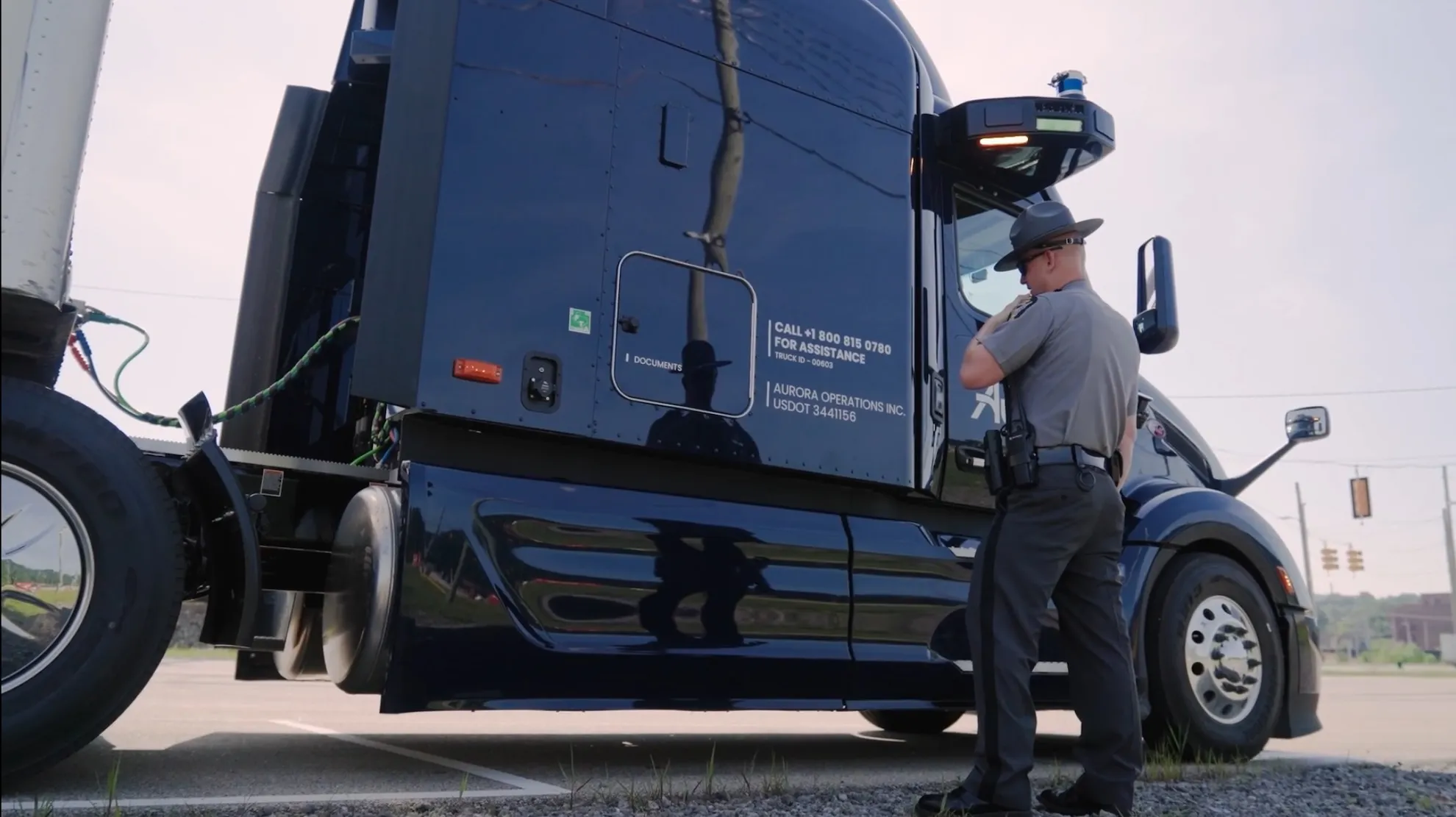
The autonomous trucking industry has long operated under a "Catch-22" of federal safety regulations. For decades, the Federal Motor Carrier Safety Administration (FMCSA) has mandated that in the event of a mechanical failure, a human driver must exit the vehicle and place reflective warning triangles on the road within 10 minutes to signal hazards to other motorists. For self-driving trucks—which lack a human operator to physically exit the cab—this regulation served as a functional blockade to full commercialization.
A Legal and Regulatory Journey
This week, that barrier was officially dismantled. Following a protracted legal battle that saw Aurora Innovation take federal safety regulators to court after being denied an initial exemption, the company escalated the matter to the District of Columbia Court of Appeals. The industry’s persistence has finally paid off. The FMCSA has granted a five-year exemption, allowing autonomous truck developers like Aurora and Kodiak AI to bypass the physical triangle requirement.

Instead, these companies are authorized to use high-visibility, cab-mounted warning beacons. These beacons function as a "21st-century solution" that immediately alerts other road users to a stationary vehicle, removing the need for a human to step onto the shoulder of a highway, thereby eliminating a significant safety risk.
Industry and Regulatory Perspectives
The implications for the supply chain are profound. Daniel Goff, vice president of external affairs at Kodiak AI, noted that this regulatory milestone is essential to "usher in an autonomous era of freight movement on U.S. roads—one that can save lives and improve the efficiency of goods delivery."
Gerardo Interiano, head of government relations and public affairs at Aurora, highlighted the government’s evolving recognition of autonomous technology. "This decision underscores a pragmatic approach to safety," Interiano stated. "By using technology to alert others, we remove people from harm’s way entirely."
As the industry celebrates this win, a lingering question remains: Will these beacons become the universal standard for all heavy-duty transport, potentially phasing out the humble reflective triangle for human-driven rigs as well?

Financial Currents: Capital Injections and Restructuring
While regulatory wins provide the "green light," capital provides the fuel. The mobility sector is currently witnessing a massive redistribution of wealth, from strategic debt financing to significant venture-backed growth.
Waymo’s $5 Billion Debt Milestone
In a historic shift for the company, Waymo has secured a $5 billion debt financing package. Previously reliant on parent company Alphabet and select venture partners, Waymo’s move to debt markets signals a transition from "experimental startup" to "industrial titan." Led by PIMCO, Blackstone, and Sixth Street, the syndicate of lenders includes a "who’s who" of institutional finance, such as T. Rowe Price, Fidelity, and Apollo. This capital will be deployed to accelerate Waymo’s commercial footprint across the U.S., Europe, and Japan.
Strategic Shifts at Redwood Materials
The path to autonomous sustainability isn’t always linear. Redwood Materials, founded by Tesla co-founder JB Straubel, continues to refine its focus toward energy storage. Following a 10% workforce reduction earlier this year, internal sources suggest that the company’s leadership ranks are undergoing a significant turnover, with the vice presidents of engineering, operations, treasury, and external affairs all departing in recent weeks. This pivot suggests a tightening of operations as Redwood attempts to corner the battery recycling and storage supply chain.
Notable Deals of the Week
- Parallel Systems: The rail-tech startup nabbed $100 million in Series C funding to continue developing autonomous rail vehicles capable of hauling freight up to 500 miles without a human operator.
- Flai: With $27 million in Series A funding led by Base10 Partners, this startup is leveraging AI to streamline dealership appointments, showing that the "mobility" umbrella extends deep into retail operations.
- Uber’s Expansion: In a move that blends logistics with food services, Uber has agreed to acquire catering firm ezCater in a $2.3 billion all-cash deal.
The Global Mobility Snapshot
The broader mobility landscape remains volatile as privacy concerns and market demand fluctuate.

The Privacy Backlash at Flock
Surveillance technology company Flock announced an 18% workforce reduction (approximately 270 employees) this week. The move follows growing public and regulatory backlash regarding the company’s license plate reading and people-tracking cameras. This serves as a reminder that as mobility technology grows more invasive, the social license to operate becomes just as important as the regulatory one.
Production and Market Realities
- Lucid Motors: The EV manufacturer reported a 54% drop in production this quarter, citing a strategic decision to limit output to better align with current market demand.
- Tesla in Europe: In a concession to German regulators, Tesla has rebranded its "Full Self-Driving (Supervised)" software to "Tesla Assisted Driving" in European markets, highlighting the divergence in global regulatory expectations for AI-driven systems.
- Pony.ai and Uber: The partnership between Uber and China’s Pony.ai to launch robotaxis in London marks a significant cross-border expansion of driverless services, signaling that the "autonomous export" market is heating up.
Disrupt 2026: The Intersection of AI and Physical Systems
As we look toward TechCrunch Disrupt 2026 in San Francisco (October 13), the agenda is packed with leaders who are actively building the future of physical AI.
We will kick off the event with Rivian CEO RJ Scaringe, who is betting the company’s future on a trifecta of EVs, robotics, and autonomy. Other highlights include:
- Robotics Strategy: A deep dive with GM’s Mikell Taylor, Waabi’s Raquel Urtasun, and Shield AI’s Nathan Michael on the complexities of building AI systems where "failure is not an option."
- Prototypes to Products: Insights from Foxglove CEO Adrian MacNeil and Bedrock Robotics CTO Kevin Peterson on scaling physical AI.
- The Human-Robot Interface: A showcase featuring the Stretch 4 robot from Hello Robot, alongside insights from Neuralink co-founder Max Hodak.
The presence of executives and engineers from powerhouses like OpenAI, Nvidia, Anthropic, and Hugging Face underscores a fundamental truth: mobility is no longer just about tires and engines. It is about intelligence.

Whether you are a founder looking for your next round, an engineer navigating the complexities of edge computing, or an investor tracking the flow of capital into sustainable energy, the next week in San Francisco promises to set the tone for the next decade of transportation.
Got a tip or a story you think we should cover? Reach out to our team at TechCrunch. Your insights help shape the conversation.
Disclaimer: When you purchase through links in our articles, we may earn a small commission. This does not affect our editorial independence.