We hear it in casual conversation, see it in corporate mission statements, and find it cataloged in the self-help aisles of every bookstore: "The Game of Life." The metaphor is so pervasive that it has transcended its origins as a parlor game to become an operating system for the modern individual. From the 1860s, when Milton Bradley introduced his seminal board game to a nascent American middle class, to the digital age, where social media serves as a scoreboard for our existence, we have been conditioned to view our days as a series of levels to be conquered.
However, a growing chorus of philosophers, sociologists, and psychologists is beginning to challenge this narrative. They argue that by framing life as a competition, we are not merely missing the point of existence—we are actively sabotaging our own well-being.
The Chronology of a Cultural Metaphor
The transformation of life into a competitive sport did not happen overnight. It is a byproduct of shifting societal values over the last century and a half.
- 1860: Milton Bradley publishes The Checkered Game of Life. It was the first popular board game in the United States, designed to instill virtues like industry, perseverance, and, tellingly, material accumulation. It taught players that success was a linear path to a specific, pre-defined finish line.
- The 20th Century Rise of Meritocracy: As the industrial age matured, the educational and corporate systems began to emphasize standardized testing and performance metrics. The "game" became institutionalized. Success was no longer about personal contentment; it was about rank, percentile, and ladder-climbing.
- The Digital Age (2010s–Present): The rise of social media platforms transformed life into a permanent, public performance. We now have quantifiable "metrics" for social status—likes, shares, and followers—creating a 24/7 leaderboard where the "Game of Life" is visible to all.
Today, the metaphor has become an internalized trap. We treat our status, our careers, and even the schools our children attend as objective evidence of our "winning percentage."
The Anatomy of a Game vs. The Reality of Life
To understand why this mindset is so corrosive, we must first define the parameters of a "game." A game is an activity governed by arbitrary, external rules. It is, by design, competitive. It requires a clear distinction between winners and losers. Most importantly, games are pursued for the sake of the game itself—they possess no intrinsic, life-altering value outside the temporary excitement of play.
When we map this structure onto our existence, we commit a fundamental error. Life, unlike a game, lacks an external rulebook. There is no neutral referee to declare who has "won" a life. When we attempt to treat our daily experience as a competition, we prioritize "objective" metrics—the house size, the job title, the luxury vehicle—because these are the only things that can be easily measured and compared. In doing so, we relegate the truly meaningful aspects of life—ethics, deep-seated joy, and intellectual growth—to the sidelines.
Supporting Data: The Psychological Toll of Comparison
Psychological research into social comparison theory confirms that the "Game of Life" mentality is a recipe for chronic dissatisfaction.
Leon Festinger, who first proposed the theory in 1954, noted that humans have an innate drive to evaluate themselves in comparison to others. However, when this drive is amplified by a "competitive" life philosophy, it leads to two equally damaging outcomes:
- The Inferiority Trap: When we view life as a game, we are constantly scanning the horizon for someone who has "more." This leads to pervasive insecurity and a sense of inadequacy, as there is always someone higher on the ladder.
- The Arrogance Loop: When we perceive ourselves to be winning, we often lapse into elitism and a lack of empathy for those "below" us, failing to realize that the game’s rules are often rigged by factors outside of individual control, such as socio-economic background and pure luck.
Furthermore, studies on "hedonic adaptation" show that the "prizes" of the game—that new car or that promotion—provide only a temporary spike in happiness. We quickly reset to our baseline, forcing us to chase the next objective to maintain our "winning" status. This is the treadmill of the competitive life, and it is fundamentally unsustainable.
Implications: The Erosion of Human Connection
Perhaps the most devastating implication of viewing life as a competition is the impact on our relationships. Genuine human connection requires vulnerability and a spirit of cooperation. It thrives when we are invested in the success of others.
If you treat life as a zero-sum game, your neighbor’s success becomes a personal failure. When a friend gets a promotion, instead of feeling unalloyed joy, a competitor feels a sting of loss. This subtle, pervasive resentment is the enemy of intimacy. It transforms our closest relationships into transactional exchanges where we are constantly calculating our relative standing. We stop being people who love and support one another and become rivals in a contest that no one asked to enter.
Reclaiming Autonomy: Playing by Your Own Rules
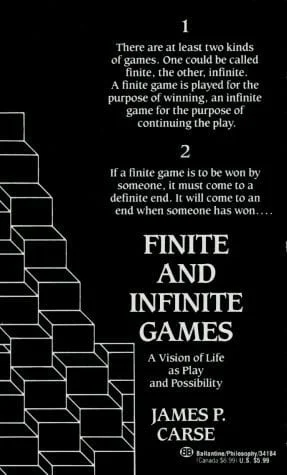
The philosopher James Carse, in his seminal work Finite and Infinite Games, posits that life is not a finite game—one that ends in a win or loss—but an infinite one. The goal of an infinite game is not to win, but to keep playing.
To live well, we must stop playing the finite games of others. This requires a radical reclamation of autonomy:
- Define Your Own Metrics: If you value creativity, kindness, or community service, these are your "points." They cannot be tracked on a public leaderboard, and that is their strength.
- Reject External Validation: When you prioritize what others deem important, you surrender your life to their agenda. If you win on their terms, you are merely fulfilling their expectations, not your own.
- Embrace the "Losses": Life involves suffering, failure, and frustration. When you view these as part of a game, they feel like humiliating defeats. When you view them as part of a human journey, they become lessons.
Final Thoughts: The Proper Place for Competition
Does this mean we should abandon competition entirely? Not at all. Competition is a vital part of the human experience. It drives excellence in athletics, sparks innovation in the marketplace, and provides a healthy outlet for our competitive instincts in hobbies and sports.
The danger lies not in the competition itself, but in its encroachment upon the sacred spaces of our lives. When you step onto the golf course or join a fantasy football league, compete with every ounce of your being. Embrace the adrenaline, the strategy, and the fun. But when the game concludes, recognize the boundary. Your family, your moral integrity, your career purpose, and your personal peace are not game pieces. They are the substance of your life.
Treating life as a game is a choice—a choice that leads to exhaustion, anxiety, and a hollowed-out version of success. Choosing to treat life as an experience to be lived, rather than a score to be settled, is the first step toward genuine freedom. The ultimate "win" in life is not having more than the person next to you; it is reaching the end of your days knowing that you played the game by your own rules, and that you enjoyed the match while it lasted.