October 7, 2026 – In a move that underscores the intensifying race to bridge the gap between digital intelligence and physical execution, Mecka AI, a rising star in the robotics infrastructure sector, has officially closed a $60 million Series B funding round. The investment, which confirms earlier industry reports of a $500 million valuation, was led by venture capital powerhouse Sequoia. The round also saw strategic participation from tech titans including Nvidia and Microsoft’s venture arm, M12, signaling an industry-wide consensus that the bottleneck for general-purpose robotics is no longer just hardware—it is the scarcity of high-quality, human-centric training data.
Since its inception in 2024, Mecka AI has positioned itself as the "Scale AI for the physical world." By capturing the nuances of human movement and translating them into actionable datasets for robotic control systems, the startup is carving out a vital niche in the burgeoning humanoid robotics market.
The Core Mission: Translating Human Dexterity for Machines
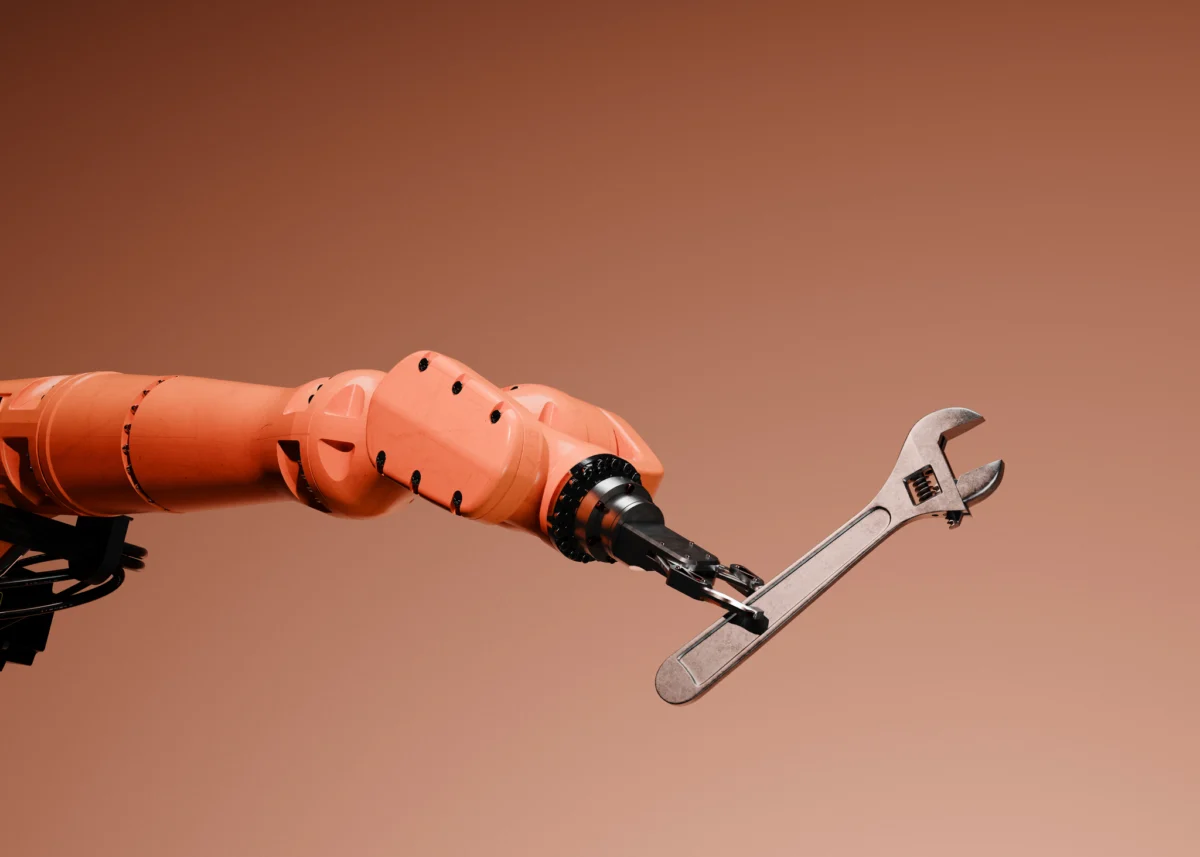
At its heart, Mecka AI addresses a fundamental irony of modern artificial intelligence: while LLMs have ingested the sum total of human text, robots still struggle to perform the mundane tasks that humans complete intuitively. Whether it is the subtle torque required to turn a wrench or the spatial awareness needed to operate a coffee machine, physical "common sense" remains an elusive milestone for autonomous systems.
Mecka AI’s solution is a sophisticated data-gathering pipeline. The startup incentivizes individuals to perform everyday chores while equipped with advanced body sensors and smartphone-based motion tracking. This raw, "teleoperated" data is then cleaned, annotated, and formatted into machine-learning sets that allow humanoid robots to mimic human dexterity. In essence, Mecka AI provides the "muscle memory" for the next generation of industrial and household robots.
Chronology: A Rapid Ascent in the AI Ecosystem
Mecka AI’s journey from a 2024 startup to a $500 million valuation is a testament to the hyper-accelerated pace of the robotics industry.
- Q1 2024: Founding of Mecka AI. The team identifies that the primary barrier to humanoid mass adoption is not the mechanical hardware, but the lack of diverse, high-fidelity datasets.
- Q3 2025: Mecka launches its proprietary data-collection platform, leveraging a global network of contributors to begin building a comprehensive repository of human physical interactions.
- September 2026: Speculation begins to circulate within the tech community regarding a massive Series B round. TechCrunch reports that Mecka is in late-stage negotiations to secure funding at a $500 million valuation.
- October 7, 2026: The company officially announces the completion of its $60 million Series B. The inclusion of heavyweights like Nvidia and M12 confirms that the company has gained the trust of the very organizations currently building the world’s most advanced robot brains.
The Landscape: Who Else is Chasing the Data Grail?
The robotics data market is becoming increasingly crowded, reflecting the high stakes of the "embodied AI" revolution. Mecka AI is not acting in a vacuum; it is entering a competitive landscape where capital is flowing at record rates.
The Rise of XDOF
One of the most notable competitors is XDOF, which—barely three months out of stealth—has already entered talks for a Series B round at a staggering $1.2 billion valuation. The discrepancy in valuation between Mecka and XDOF highlights the volatility and high speculative interest in the data-labeling sector.
The Pivot of the LLM Giants
Perhaps the greatest threat to specialized startups like Mecka comes from the established giants of the data-labeling world. Companies like Scale AI, which built its reputation by training the world’s most advanced large language models, are aggressively pivoting into robotics. Similarly, companies like Micro1 are expanding their operational scope to include video-based human motion data. The transition is logical: the same infrastructure used to verify text and images can be adapted to verify physical motion, provided the company can scale its physical data collection efforts.
Strategic Implications: Why Nvidia and Microsoft Are Investing
The inclusion of Nvidia and M12 (Microsoft) in this round is not merely a financial vote of confidence; it is a strategic alignment.
For Nvidia, the investment is a play to support its "Isaac" and "Omniverse" ecosystems. By fostering a company that generates high-quality training data, Nvidia ensures that developers using its chips and simulation environments have the raw materials required to train robots effectively.

For Microsoft, the interest lies in the convergence of cloud computing and edge robotics. As Microsoft continues to integrate OpenAI’s models into physical systems, having a partner that provides human-centric motion data allows for a more seamless deployment of "robot brains" into commercial and enterprise environments.
Challenges and Ethical Considerations
While the financial outlook for Mecka AI is bullish, the company faces significant hurdles.
Data Privacy and Labor
Collecting data from human subjects—often performing sensitive tasks in home or professional settings—presents a minefield of privacy concerns. Mecka must navigate evolving regulations regarding biometric data and ensure that its contributors are fairly compensated while maintaining the integrity of the data collected.
The "Generalization" Problem
The most difficult challenge in robotics is the "long tail" of edge cases. While a robot can easily learn to make a coffee in a lab, doing so in a cluttered, unfamiliar kitchen is a different matter. Mecka’s challenge is to ensure its data is not just voluminous, but also diverse enough to account for the chaotic nature of the real world.
The Hardware-Software Gap
There is an ongoing debate in the industry: will robotics become a hardware-first industry, or a software-first one? Mecka is betting on the latter, assuming that if the software is robust enough, the hardware will eventually catch up. However, if hardware innovation hits a plateau, the value of specialized motion data could potentially be diminished.
Future Outlook: Toward General-Purpose Robotics
The $60 million injection of capital provides Mecka AI with the runway to expand its operational footprint, improve its proprietary sensor suites, and potentially acquire smaller data-collection firms to consolidate its lead.
As the industry moves into 2027, the focus will likely shift from simple proof-of-concept demonstrations to real-world reliability. Investors are no longer satisfied with videos of robots folding laundry in controlled environments; they want to see robots that can work reliably in warehouses, hospitals, and homes.
Mecka AI’s success will ultimately depend on its ability to turn the chaotic, unscripted nature of human life into a standardized, machine-readable language. If they succeed, they will become the backbone of the physical AI economy. If they fail, the data gap will remain the primary culprit keeping humanoid robots confined to the factory floor.
For now, the message from the venture capital community is clear: in the race to build the next generation of workers, the ones who control the data will control the future.
Key Data Summary
| Metric | Detail |
|---|---|
| Series B Funding | $60 Million |
| Valuation | $500 Million |
| Lead Investor | Sequoia |
| Strategic Participants | Nvidia, M12 (Microsoft) |
| Core Product | Human-generated motion data for robot training |
| Founding Year | 2024 |
This article is for informational purposes and does not constitute financial advice. For more updates on the robotics sector and AI infrastructure, subscribe to our weekly newsletter.