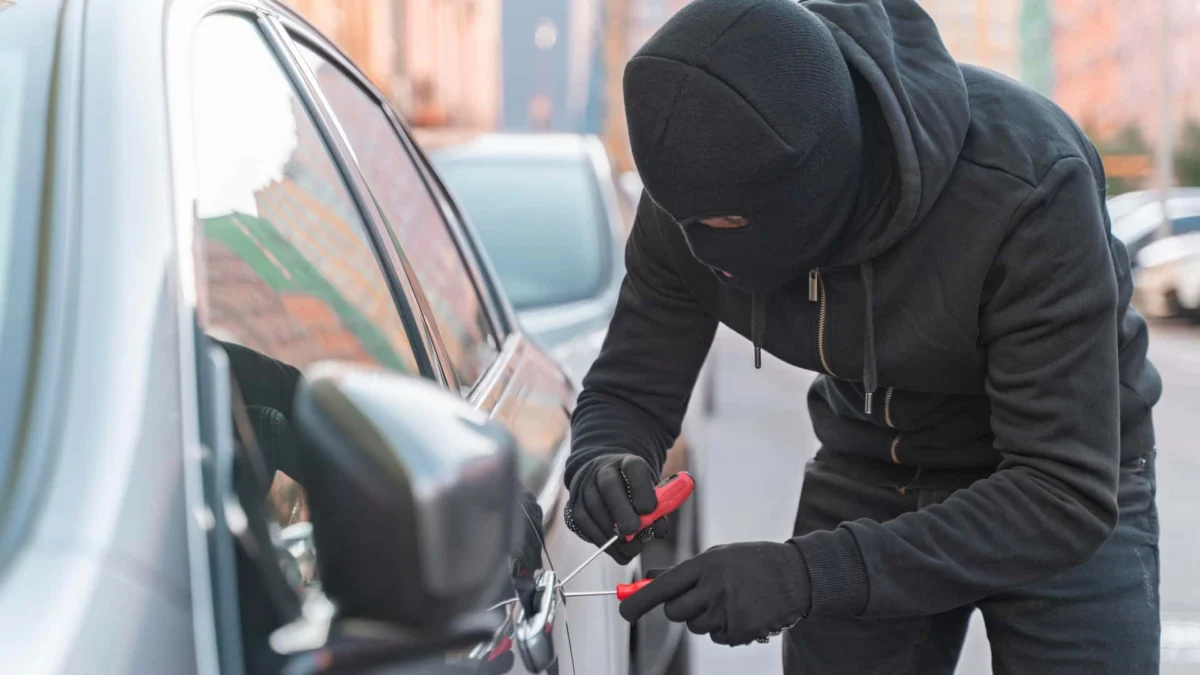
For years, American vehicle owners have navigated a landscape of heightened anxiety, defined by a surge in car thefts that followed the onset of the global pandemic. However, the latest data released by the National Insurance Crime Bureau (NICB) suggests that the tide has finally turned. Across the United States, the frequency of vehicle theft is retreating, with the first half of 2026 marking a period of significant improvement in the security of the nation’s roadways.
According to the NICB’s latest report, vehicle thefts across the country plummeted by 21 percent during the first six months of 2026 compared to the same period in 2025. Perhaps most impressively, this decline was not localized to specific regions or major urban hubs; it was a nationwide phenomenon, with all 50 states recording a year-over-year decrease. While the absolute number of thefts remains sobering, the trajectory is undeniably moving in the right direction.
The Chronology of a Crisis and Its Correction
To understand the significance of the 2026 data, one must look back at the chaotic trends that defined the post-pandemic years. Following the emergence of COVID-19, the U.S. saw a meteoric rise in property crimes, with vehicle theft becoming a primary target for opportunistic criminals. The convergence of labor shortages, supply chain disruptions, and a specific vulnerability found in certain vehicle makes—most notably Hyundai and Kia—created a “perfect storm” for automotive theft.
The year 2024 served as the first major inflection point in this timeline, as thefts began to subside, dropping by 17 percent. This momentum accelerated in 2025, which saw a 23 percent decline. By the end of 2025, the NICB recorded 659,880 stolen vehicles, the lowest annual total in several decades. The current 2026 data confirms that this is not merely a temporary fluctuation but a sustained trend of recovery.
While 268,415 vehicles were reported stolen in the first six months of 2026—averaging roughly one theft every minute—the cumulative downward pressure on these numbers suggests that increased awareness, better security protocols, and shifting law enforcement strategies are beginning to yield tangible results.
State-by-State Breakdown: A Uniform Decline
The geography of car theft has historically been uneven, with certain states bearing a disproportionate burden. However, the first half of 2026 provided a rare, universal positive.
The District of Columbia led the nation in progress, posting an astounding 52 percent decline in thefts compared to the first half of 2025. Tennessee followed closely behind with a 42 percent reduction. Other states, including Vermont (37 percent), New Hampshire (35 percent), and Colorado (35 percent), also experienced massive improvements.
Even in states where the total volume of theft remains high, the trend line is shifting. California, which continues to struggle with the highest volume of vehicle theft in the country—reporting 57,821 stolen units in the first half of 2026—nevertheless saw a year-over-year decrease. This indicates that while the state remains a high-risk area, the preventive measures implemented by local authorities and individual owners are starting to curb what was previously an unchecked surge.
Metropolitan Analysis: The Urban Exception
When analyzing major metropolitan areas, the story is largely consistent with the national narrative. The Los Angeles-Long Beach-Anaheim area remains the most targeted region, with 21,540 reported cases. It is followed by New York City and Chicago, which rounded out the top of the list.
However, Chicago stands out as a stark outlier. While virtually every other major metropolitan area mirrored the national downward trend, Chicago recorded a 2 percent increase in thefts during the first half of 2026 compared to the same period in 2025. This localized anomaly serves as a reminder that systemic issues—such as specific criminal networks or localized law enforcement challenges—can still lead to pockets of resistance against national trends. Nevertheless, the fact that the other nine of the top 10 metropolitan areas saw decreases underscores the strength of the broader recovery.
The "Kia and Hyundai" Factor
A critical component of the vehicle theft crisis has been the vulnerability of specific models. During the pandemic, the lack of electronic immobilizers in certain Hyundai and Kia vehicles became common knowledge in criminal circles, leading to a massive spike in thefts of these brands.
The NICB reports that 2025 saw the Hyundai Elantra rank as the most stolen vehicle in America, with 21,732 reported thefts. It was joined in the top rankings by the Honda Accord, Hyundai Sonata, Chevrolet Silverado 1500, and Honda Civic.
Crucially, the NICB notes that thefts involving Hyundai and Kia vehicles have declined for three consecutive years. This suggests that a combination of manufacturer-provided software updates, the distribution of steering-wheel locks, and the natural attrition of older, vulnerable models from the road is finally mitigating the specific “pandemic-era” vulnerability that plagued these brands for years.
The Persistent Reality of Organized Crime
Despite the encouraging statistics, the NICB cautions against complacency. While the "smash and grab" or joyriding style of theft may be decreasing, organized crime syndicates have not simply abandoned the automotive sector. Instead, they have shifted their focus.
Law enforcement agencies have noted a transition toward more complex, high-stakes fraud. Rather than stealing a car to drive it away, criminal organizations are increasingly involved in sophisticated schemes involving vehicle identification number (VIN) cloning, fraudulent insurance claims, and the illicit export of high-end luxury vehicles.
Consequently, while the number of total thefts is down, the financial complexity and the difficulty of recovering stolen assets have evolved. The battle against vehicle theft is no longer just about locking doors; it is now a digital and bureaucratic struggle against international crime rings that operate in the shadows of the secondary market.
Practical Advice for the Modern Motorist
In the face of these evolving threats, the NICB’s advice remains grounded in the basics. While technology has advanced, the most effective deterrents are often the simplest.
- Mechanical Deterrence: Steering-wheel locks, gear-shift locks, and audible alarm systems remain highly effective. They turn an easy target into a high-effort job, which is often enough to deter a thief.
- Digital Protection: For modern vehicles, GPS trackers and integrated telematics systems provide a layer of security that allows law enforcement to track stolen assets in real-time.
- Environmental Vigilance: Parking in well-lit, high-traffic areas remains the single most effective way to prevent opportunistic crime.
- The Human Element: Leaving a vehicle running unattended—even for a few seconds to run into a convenience store—remains one of the most common ways vehicles are stolen. Simple discipline in securing the vehicle is still the primary defense for the average owner.
Implications for the Future
The decline in vehicle thefts is a positive indicator for the automotive insurance industry, which has seen premiums rise in direct correlation with the theft spikes of the last four years. If this downward trend continues, consumers may eventually see a stabilization or reduction in comprehensive insurance costs.
Moreover, the success of the 2026 data suggests that the automotive industry’s commitment to standardizing immobilizers and better security encryption is finally outweighing the cleverness of criminal hackers. As the market transitions toward more electric and software-defined vehicles, the potential for "over-the-air" security updates could make vehicles safer than they have ever been.
In conclusion, while 268,415 stolen vehicles in six months is a figure that demands attention, the trend lines offer a rare moment of optimism. The U.S. is successfully turning the page on a period of heightened automotive insecurity. By maintaining a focus on both physical security and technological vigilance, the country is proving that it is possible to reclaim the streets from the surge of property crime that defined the early 2020s. For the American driver, the message is clear: the risk is dropping, but the responsibility to protect one’s property remains a vital part of the ownership experience.