By Global Affairs Correspondent
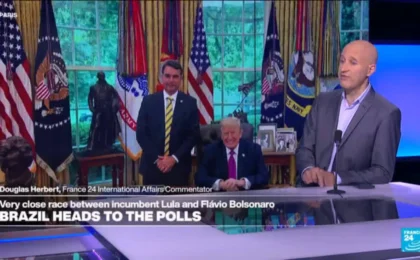
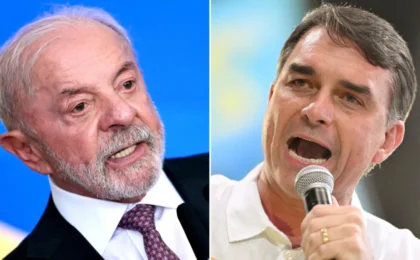
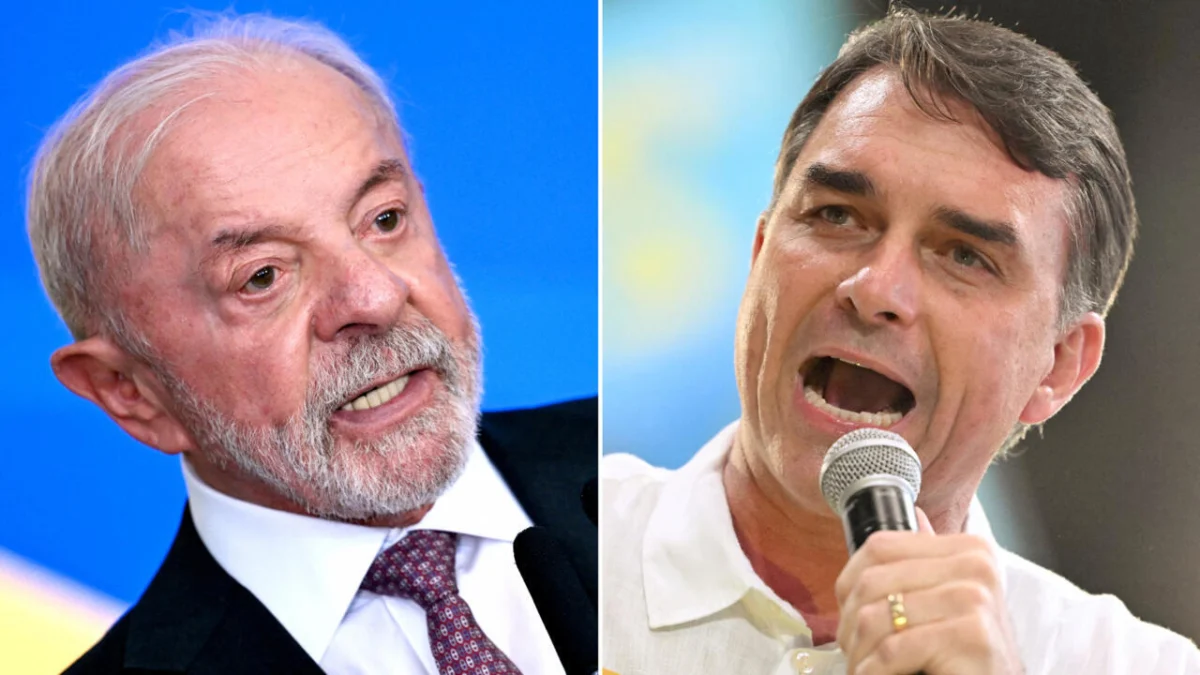
Brazil, the titan of South America, held its breath on Sunday as 159 million eligible voters headed to the polls in a watershed presidential election. The contest, which pits the veteran incumbent Luiz Inácio Lula da Silva against the firebrand Senator Flávio Bolsonaro, has become more than a mere domestic political exercise. It is a referendum on Brazil’s geopolitical identity, its economic trajectory, and its relationship with a shifting global order increasingly influenced by the doctrine of the United States under the current Trump administration.
The Candidates and the Context
At the center of this electoral storm are two figures representing vastly different visions for the future of the continent’s largest economy.
Luiz Inácio Lula da Silva, 80, is a figure of immense historical weight. Currently serving as president, he is navigating his seventh presidential campaign. A seasoned veteran of the Brazilian left, Lula has spent his tenure strengthening ties with Beijing, steering Brazil toward a more multipolar foreign policy. While his once-towering popularity faced significant headwinds during his third term—eroded by an affordability crisis and persistent corruption allegations—he retains a fierce, loyal base. His supporters view his social welfare programs, most notably the Bolsa Família, as the bedrock of social stability and poverty reduction.
On the other side of the ballot stands Senator Flávio Bolsonaro, 45. As the son of former President Jair Bolsonaro—who is currently serving a 27-year prison sentence for a failed coup attempt—the younger Bolsonaro has positioned himself as the standard-bearer for a resurgent right-wing movement. His campaign has been defined by a promise to "cleanse" Brazil of established political corruption and his explicit desire to secure a pardon for his father. Flávio Bolsonaro has campaigned on a platform of aggressive law-and-order policies, including the labeling of criminal gangs as terrorist organizations, and a pivot back toward a closer, arguably subservient, alliance with the Trump administration in Washington.
Chronology of a High-Stakes Sunday
The atmosphere at polling stations across the nation was marked by both civic duty and palpable tension. Polls opened at 8:00 a.m. and closed at 5:00 p.m. local time, with officials noting that any voter in line by the cutoff would be permitted to cast their ballot.
By midday, the Organization of American States (OAS) electoral observation mission issued a preliminary statement, noting that the proceedings were unfolding "smoothly and under adequate safety conditions." As the sun set over Brasilia, the focus shifted to the Superior Electoral Court. President Kassio Nunes Marques confirmed that the electoral infrastructure remained robust, dismissing concerns regarding international interference. "We are proceeding with the greatest possible transparency," Marques stated, as the nation waited for the rapid electronic tallies that have become a hallmark of Brazil’s modern democratic process.
Historically, the results in Brazilian elections are remarkably fast; in previous cycles, the top two candidates for a potential runoff were determined by 8:00 p.m. with 99% of votes tabulated. This speed, many voters argued, acts as a critical safeguard against accusations of electoral fraud.

Supporting Data: The Electoral Landscape
The scope of Sunday’s election extends far beyond the presidency. Brazil’s electorate participated in a massive democratic exercise to elect:
- 27 State Governors: Defining the administrative future of the nation’s diverse states.
- 513 Federal Members of the Lower House: Shaping the legislative agenda for the next four years.
- 54 of 81 Senators: A crucial battleground for the control of upper-chamber influence.
The economic backdrop remains volatile. Inflationary pressures and the cost-of-living crisis have left many Brazilians disillusioned. Professor Carlos Melo, a political scientist at Insper University in São Paulo, noted the gravity of the situation: "Many in the Lula campaign were not expecting such a difficult election a few weeks ago. It is clear that the present election is a brutal battle, and the next ones, without the presence of Lula, could prove even more challenging for the stability of the left."
Official Responses and Geopolitical Friction
The specter of US intervention has loomed large over the campaign. President Lula has repeatedly warned against external meddling, particularly following a series of diplomatic and economic skirmishes with the Trump administration. These include the imposition of high tariffs on Brazilian steel and aluminum, the revocation of the Brazilian ambassador’s visa, and sanctions placed on a Supreme Court justice involved in the investigation of the elder Bolsonaro.
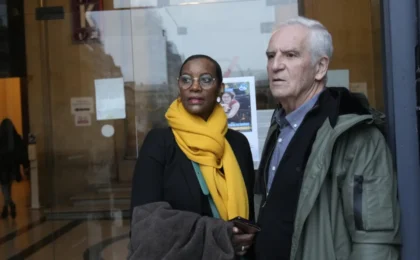
For many voters, this has become a rallying cry for national sovereignty. Maria Lucia Gerson Alo, a 69-year-old retired teacher, captured the sentiment of many at a Rio de Janeiro polling station. Wearing a shirt emblazoned with the slogan "Neither colony, nor backyard, sovereign Brazil," she remarked: "We are not a colony; that time is over. Trump should look after his own country’s problems; we will look after ours."
In contrast, the Bolsonaro campaign has openly courted favor with Washington. Flávio Bolsonaro has frequently touted his access to the White House, promising that a change in leadership would lead to lucrative deals in the rare minerals sector, a field where Brazil holds significant leverage second only to China. While the Bolsonaro camp denies receiving direct tactical support from the US government, the rhetorical alignment is unmistakable.
The Voice of the Electorate
The divide in the country is not merely political; it is deeply personal and rooted in contrasting lived experiences.
For supporters of the Bolsonaro ticket, such as 67-year-old retired engineer Rosane Wink, the primary motivation is security. After experiencing a violent robbery, Wink views the current climate as a form of "terrorism" that only a hardline conservative approach can resolve. "It’s a kind of terror that they’re doing with us," she said, supporting the promise to treat criminal syndicates with the full force of anti-terror legislation.
Conversely, for voters like Lorena Zschaber, an LGBTQ+ woman in Rio, the prospect of a Bolsonaro presidency is terrifying. "During his father’s presidency, people felt more at ease to discriminate," she said. "I can’t think of anything worse than Flávio Bolsonaro being elected."

Meanwhile, the economic divide remains the primary driver for the Lula base. Catia Oliveira, voting from Portugal, emphasized that the choice is about the preservation of the social safety net. "I vote for those that need help: health, education, basic sanitation, housing, and food," she noted, reflecting on the success of the Bolsa Família program.
Implications: A Nation at a Crossroads
If no candidate secures more than 50% of the vote, Brazil will head to a runoff on October 25. The implications of this election are profound.
1. The Geopolitical Pivot
A victory for the Bolsonaro camp would likely signify a rapid realignment of South America’s diplomatic axis. It would cement a pro-Trump bloc in the region, joining Argentina, Colombia, Honduras, and Peru in a shift toward right-wing governance that seeks closer ties with the US and a more adversarial stance toward Beijing.
2. The Integrity of Democratic Institutions
Brazil’s electronic voting system has been a model of efficiency, with no significant fraud detected since its inception in the 1990s. However, the political rhetoric surrounding "foreign interference" and "systemic corruption" has created a climate of suspicion. The ability of the Superior Electoral Court to maintain order and public trust will be the defining test of the country’s democratic resilience.
3. Economic Sovereignty
The competition over the rare minerals economy represents the next front in the global scramble for resources. Whoever holds the presidential sash will dictate whether Brazil plays these assets as a bridge between the US and China, or as a tool to extract greater concessions from the West.
4. Social Cohesion
Regardless of the outcome, the nation remains deeply polarized. The campaign has exposed raw nerves regarding religion, social rights, and public safety. The winner will face the daunting task of governing a populace that is not only divided by party lines but by fundamentally different interpretations of what it means to be a "sovereign" and "secure" Brazilian.
As the ballots are counted, one thing is certain: Brazil is no longer just a South American power; it has become a central theater in the global ideological struggle of the 21st century. The world is watching, not just to see who wins, but to see what kind of nation emerges from the ashes of this bitterly fought campaign.