In the landscape of modern European cinema, films dealing with LGBTQ+ themes are often categorized by the gravity of their struggle—marked by social realism, tragedy, and the harsh, cold palettes of institutional neglect. However, director Šimon Holý is attempting to shatter this mold with his latest feature, Chica Checa. Currently making its debut in the Crystal Globe Competition at the prestigious Karlovy Vary Film Festival, the film presents a refreshing, vibrant, and deeply empathetic approach to the universal narrative of coming out, set against the backdrop of a traditional, small-town Czech community.
The Genesis of a Dream: From Personal Diary to Screen
The path to Chica Checa was not an overnight success but a deliberate, eight-year journey for Šimon Holý. The project gestated alongside his debut feature, Mirrors in the Dark, evolving as Holý navigated his own creative and personal development.
The spark for the film came from an unlikely source: a dream. "I took it as a challenge," Holý recalls, describing how the narrative crystallized in his subconscious. "One day, I saw basically most of the film in a dream. I woke up, and I wrote it in my diary. I realized the subconscious was telling me the story of my own mother, inspired by my life in a village, and by the shifting tectonic plates of modern society."
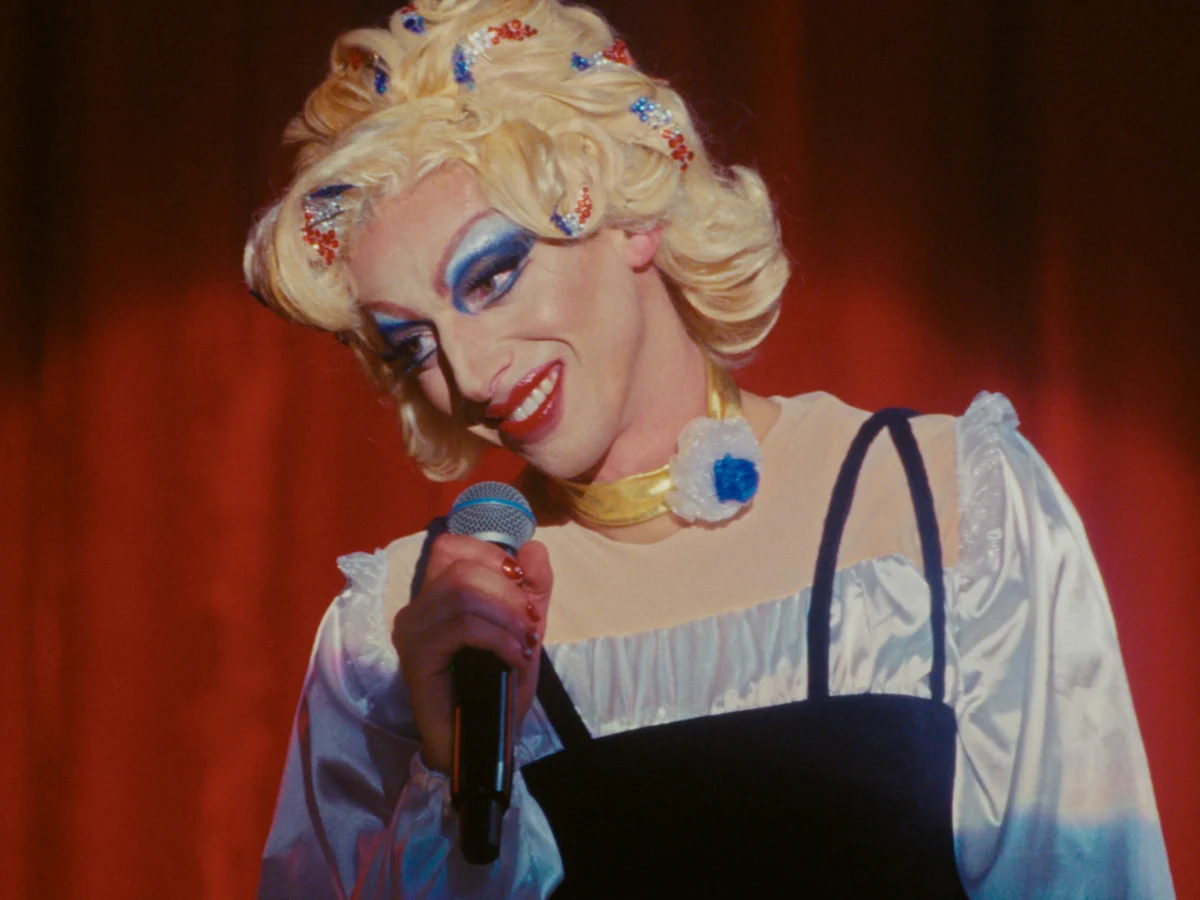
The film tells the story of Zdena, a widowed mail carrier living a quiet, orderly life in a small Czech village. Her world is defined by routine—her job and visits to her bedridden, hospitalized mother. The arrival of her son, Lukáš, who lives in Paris, acts as the catalyst for change. Lukáš has been hiding his life as a drag queen, "Chica Checa" (the "Czech Girl"), and his homosexuality from his mother, fearing the repercussions in their conservative environment. However, when his grandmother makes a dying wish to see a famous singer perform, Lukáš steps into his persona to grant it, forcing a collision between his two worlds.
Chronology of Development and Casting
The casting process was as unconventional as the film’s premise. Pavla Tomicová, who portrays Zdena, was not Holý’s initial choice. Having worked with her previously, the director sought a fresh face for the role. Yet, Tomicová’s persistence proved insurmountable.
"She never let go," Holý admits. When he finally relented to an impromptu reading with Jan Cina (who plays Lukáš), the "magic" was undeniable. "Jan and Pavla had never acted together. They didn’t really know each other. They met, and in 10 seconds, it was clear they were the right people."
For Jan Cina, the role required a significant leap of faith. Initially, the actor was wary of being typecast, given his public history of performing in drag on television. Holý convinced him that this wasn’t a matter of typecasting, but of artistic necessity. "I told him there are no drag films in the Czech Republic, and there are no real gay characters in our cinema," Holý explains. Through rigorous training with a choreographer and drag performer Just Karen, Cina not only mastered the role but developed his own drag persona, "La Chica," discovering a new dimension of creative agency as an actor.
Challenging the "Blue" Aesthetic of Social Realism
A central pillar of the film’s philosophy is its visual language. Holý intentionally sought to distance Chica Checa from the "depressive, blue, and cold" aesthetic that has characterized much of the Czech "village cinema" of the late 90s and early 2000s.
"I wanted to build this as an antithesis," Holý notes. "The film is very white, vibrant, and yellow." This visual warmth is echoed in his direction of Tomicová, whom he urged to move away from the understated, stoic acting often favored in European arthouse films. "I told her to be expressive, be emotional, because it’s about drag as well."
The Political Undercurrent: A "Gentle" Rebellion
While Chica Checa is a character-driven story about the bond between mother and son, it has inevitably become a political lightning rod. As the film transitioned from production to the editing suite, Holý and his producer, Alžběta Janáčková, realized they were making something far more resonant than they had initially anticipated.
"We felt there was a way to say something important in a very gentle, warm way," Holý says. "We wanted to open a discussion without pushing an agenda aggressively."
However, the political climate in the Czech Republic and across parts of Europe and the U.S. has intensified since the film’s inception. The rise of right-wing rhetoric regarding LGBTQ+ rights has transformed the film from a quiet family drama into a subtle act of defiance. Karel Och, the program director of Karlovy Vary, famously remarked to the filmmakers: "This is a very political film."
Holý, who also works as a music programmer for the Prague Pride Festival, notes that the environment for queer individuals has hardened significantly over the last eight years. "We have right-wing politicians in our government who are trying to make public television state-controlled," he says. "We realized that this film is actually very political because it tackles something that is happening right now."
Implications for the Czech Audiovisual Industry
The film’s production highlights a broader existential crisis for the Czech film industry. The current political discourse surrounding the funding of Czech Television—the country’s second-largest financier of the audiovisual industry—has sparked widespread protests. Plans to reduce budgets to 2008 levels are viewed by many in the creative community as a direct threat to the editorial independence and sustainability of national cinema.
"They will definitely hurt the culture as a whole," Holý asserts. "By actively fighting the Czech audiovisual industry, they are trying to dismantle the institutions that allow stories like Chica Checa to exist."
Despite these systemic pressures, the film serves as a testament to the resilience of independent storytelling. Produced by Silk Film, with support from Arina Film, The French Connection, and the embattled Czech Television, the project is now seeking distribution. Its journey from a quiet, internal dream to a bold, public-facing film that challenges social norms is, in itself, a victory.
Conclusion: A Universal Story of "Otherness"
Ultimately, Pavla Tomicová’s interpretation of Zdena frames the film not as a manifesto, but as a meditation on the human condition. As Holý recounts, Tomicová often spoke of the film not through the lens of queerness, but through the lens of empathy.
"She was always saying that this is not a story about coming out for me," Holý reflects. "It’s about otherness, about being ‘othered,’ and about the fear of not being a good mother."
In Chica Checa, the coming-out process is not met with the "all hell breaks loose" scenario of traditional melodrama. Instead, it offers a path toward connection. By choosing warmth over coldness and expression over restraint, Šimon Holý has created a film that doesn’t just ask for tolerance—it invites the audience to share in a moment of genuine, vibrant humanity. As the film screens for the Karlovy Vary audience, it stands as a reminder that the most radical thing one can do in a time of growing division is to lead with empathy.