Welcome back to TechCrunch Mobility, your definitive guide to the rapidly evolving landscape of transportation technology and the burgeoning role of artificial intelligence in moving people and goods.
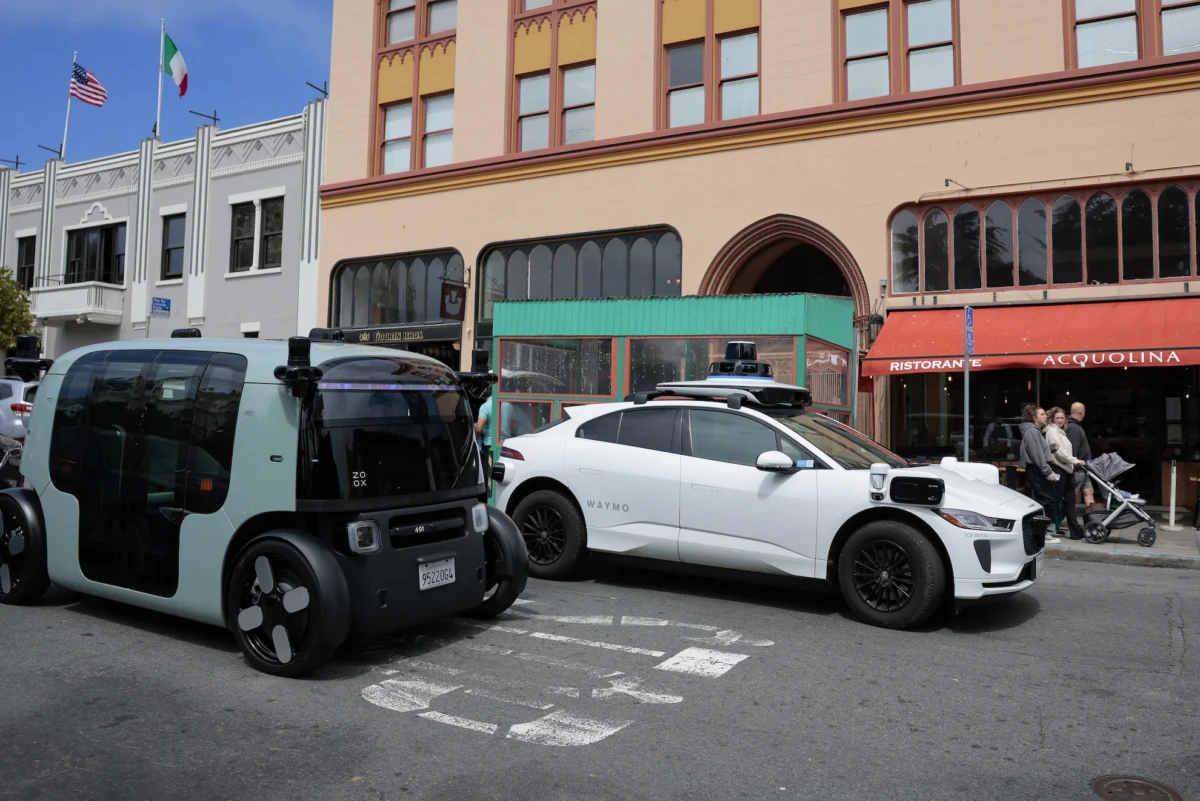
As the autonomous vehicle (AV) sector shifts from experimental pilot programs to full-scale commercial deployment, the streets of San Francisco have become a living laboratory. While the sight of Waymo robotaxis navigating complex urban intersections has become commonplace, the novelty is increasingly giving way to frustration. From stalling in active traffic lanes to inadvertently encroaching on active crime scenes, the unintended consequences of autonomous software have created a new set of challenges for municipal infrastructure and public safety agencies.
The Regulatory Pivot: Senate Bill 1246
The era of "move fast and break things" is hitting a regulatory wall. This week, California Governor Gavin Newsom signed into law Senate Bill 1246, a landmark piece of legislation aimed at reigning in the chaotic integration of robotaxis into the state’s urban fabric. The law serves as a pre-emptive strike against the next massive wave of autonomous deployment, establishing a rigid framework for safety, accountability, and emergency coordination.
For industry giants like Tesla, Waymo, and Zoox, the implications are profound. Under the new rules, AV developers are required to provide local, on-the-ground support to assist first responders when a vehicle becomes disabled. Perhaps most significantly, the law introduces a punitive structure: companies could face substantial financial penalties if their vehicles obstruct police, fire, or medical services for longer than 30 minutes.
Key Mandates for AV Operators
The legislation goes beyond simple fines, setting operational standards that prioritize human oversight:
- Domestic Oversight: All remote drivers employed by AV developers must be based within the United States and possess a valid U.S. driver’s license, ensuring that remote interventions are subject to domestic labor and safety regulations.
- Real-Time Transparency: Companies must provide local jurisdictions with granular data regarding the status and location of vehicles during system-wide failures.
- Incident Technicians: The law mandates the deployment of "local incident technicians"—boots-on-the-ground personnel capable of physically assisting with accidents or obstructions in real-time.
Chronology: From Innovation to Intervention
The trajectory of the robotaxi industry in California has been defined by rapid scaling met by increasing friction.
- The Early Days: Initial testing phases were marked by curiosity and limited, supervised deployments.
- The Scaling Phase: Companies successfully petitioned for wider operational permits, leading to a surge in uncrewed vehicles in major hubs like San Francisco and Los Angeles.
- The Conflict Point: Reports began surfacing of robotaxis blocking ambulances, stalling in fire lanes, and requiring manual intervention from first responders who were not trained to handle these sophisticated, yet occasionally immobile, machines.
- Legislative Action (2026): After mounting public pressure and documented instances of safety interference, the California legislature drafted SB 1246.
- The Path Forward (July 2028): The law is slated to go into effect in mid-2028, giving the Department of Motor Vehicles (DMV) time to finalize the regulatory specifics.
Supporting Data: The Cost of Autonomy
The push for this legislation is backed by mounting data regarding the intersection of private tech and public safety. While the industry touts the long-term safety benefits of autonomous systems, the short-term reality involves a high frequency of "edge case" failures.

Recent industry developments highlight the massive capital being funneled into this sector, even as regulatory scrutiny intensifies. For example, Tesla recently secured $30 billion in new credit lines, a signal that despite the friction in its Robotaxi and Optimus programs, the company is preparing for a massive scale-up. Meanwhile, the startup ecosystem remains robust: Harbinger recently locked in a $300 million deal to supply 2,000 electric trucks to FedEx, and Quartermaster, a maritime intelligence startup, raised $140 million in a Series B round, illustrating that the "mobility revolution" extends well beyond the passenger car segment.
However, the "data tax" on consumers remains a concern. A recent study by Northeastern University tested 21 vehicles and 30 companion apps, concluding that modern vehicles are effectively data-harvesting machines, funneling personal information to tech giants like Meta, Google, and Adobe. This, combined with the $272.5 million settlement Lyft recently paid to resolve misclassification lawsuits, paints a picture of an industry currently embroiled in as much legal and privacy-related conflict as it is technological progress.
Official Responses and Industry Outlook
The industry’s reaction to SB 1246 has been one of cautious pragmatism. While some executives argue that overly prescriptive laws could stifle innovation, the consensus among safety advocates is that the law provides a necessary baseline for public trust.
When asked if the law would eliminate robotaxi interference, experts remain skeptical. "It likely won’t," one analyst noted, "but it will formalize the process of accountability and force companies to prioritize the needs of first responders over the immediate convenience of the user."
The debate now shifts to a national stage: Will other states follow California’s lead, or will they wait for a comprehensive federal framework from the Department of Transportation? The inconsistency of state-by-state regulation remains the single biggest hurdle for companies like Waymo and Zoox, which seek to deploy uniform fleets across the country.
Implications for the Future of Mobility
The passage of SB 1246 marks the end of the "wild west" era of autonomous vehicles. By mandating local technical support and strict reporting requirements, California is essentially forcing AV companies to become part of the city’s civic infrastructure, rather than acting as a parallel, unregulated service.
As we look toward the 2030s, the challenges remain immense. Aurora is currently promising 30,000 autonomous trucks on the road by 2030—a target that, while ambitious, is being met with both excitement and skepticism. Whether companies can meet these targets while adhering to increasingly strict safety and labor laws will define the next decade of the mobility sector.

A Note on the Industry Pulse: Disrupt 2026
As the industry grapples with these regulatory shifts, the conversation continues at Disrupt 2026, TechCrunch’s annual conference in San Francisco. This year, the focus is squarely on the intersection of AI, robotics, and safety.
On October 13, I will be hosting a stage discussion with Rivian CEO RJ Scaringe, where we will dissect his multi-pronged strategy for EVs, robotics, and autonomy. Furthermore, a high-level panel featuring leaders from GM, Shield AI, and Waabi will explore the critical theme: "Building AI Systems When Failure Is Not an Option."
The transition to an autonomous future is not merely a technical challenge; it is a societal one. The legal, ethical, and logistical hurdles we see in California today are the growing pains of a massive paradigm shift. As always, the best way to stay informed is to keep a close watch on the intersection of policy and innovation.
For more in-depth coverage, analysis of the latest deals, and the most significant news in the mobility sector, stay subscribed to TechCrunch Mobility.
Disclaimer: When you purchase through links in our articles, we may earn a small commission. This doesn’t affect our editorial independence.