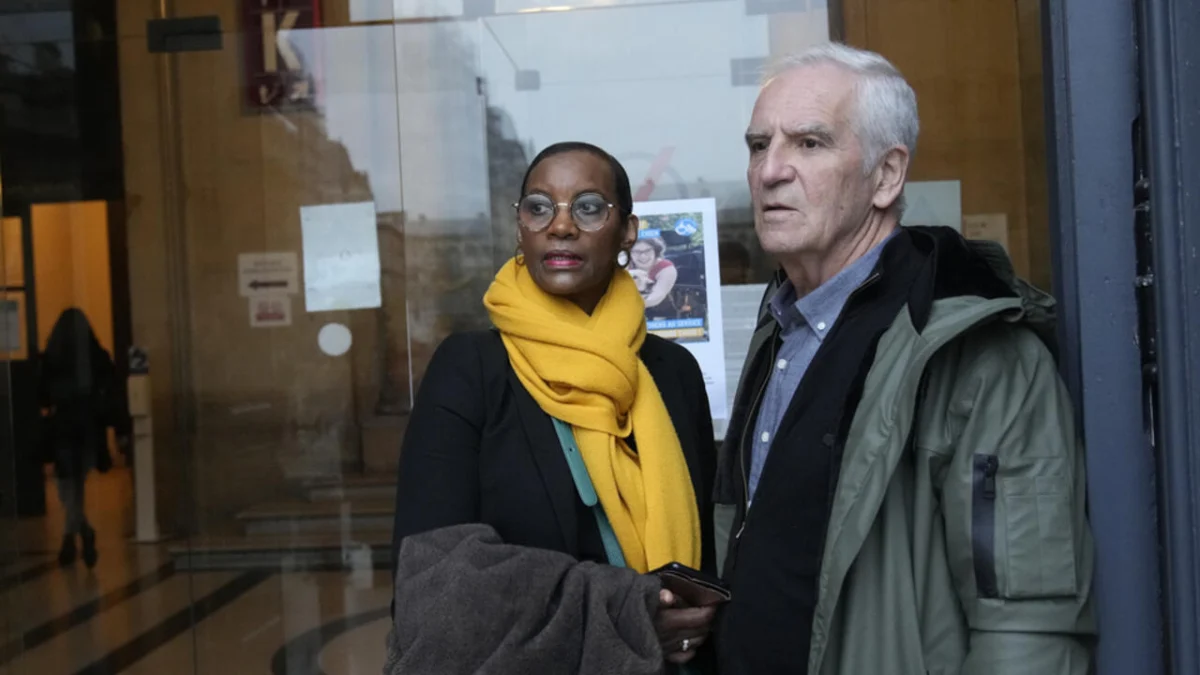
Dafroza Gauthier, a towering figure in the pursuit of international justice and a relentless investigator of the 1994 genocide against the Tutsi in Rwanda, passed away in Reims, France, this Saturday at the age of 72. Her death marks the end of a nearly three-decade-long crusade that saw her and her husband, Alain Gauthier, transform from private citizens into the primary architects of a legal movement aimed at holding genocide suspects hiding in France accountable.
For thirty years, the couple operated through their organization, Collectif des Parties Civiles pour le Rwanda (CPCR), navigating the labyrinthine complexities of French and international law. Their mission was singular: to ensure that the perpetrators of one of the 20th century’s darkest chapters did not find sanctuary in the shadows of European society.
Main Facts: A Life Defined by Accountability
Dafroza Gauthier’s journey was deeply personal. A Tutsi survivor herself, she lost numerous family members during the 100 days of slaughter in 1994, during which an estimated 800,000 Tutsis and moderate Hutus were systematically murdered by Hutu extremists.
After moving to France, she and Alain realized that many individuals accused of orchestrating or participating in the massacres had fled to the country, integrating into local communities under the radar. What began as a personal quest to find truth soon became a full-time, high-stakes investigation. Dafroza became known for her meticulous attention to detail, traveling to remote Rwandan villages to collect testimonies from survivors and witnesses, then cross-referencing this evidence with archival data to build robust dossiers against suspects residing in France.
Her efforts fundamentally shifted the landscape of French justice, pressuring the judiciary to open investigations that had long languished. She was not merely an observer; she was a catalyst who transformed the legal landscape, proving that justice—no matter how delayed—remains an essential pillar of human rights.
Chronology: Three Decades of Persistence
The timeline of the Gauthiers’ work is synonymous with the evolution of France’s handling of the Rwandan genocide.

- 1994: The genocide against the Tutsi erupts in Rwanda. Dafroza Gauthier begins the agonizing process of accounting for her lost family members.
- 1990s (Late): The Gauthiers begin documenting the presence of suspected genocidaires living openly in France. They realize that the French judicial system is ill-equipped and, at times, politically hesitant to prosecute these individuals.
- 2001: The couple formally establishes the Collectif des Parties Civiles pour le Rwanda (CPCR). The organization begins filing formal legal complaints, effectively forcing the hands of French prosecutors.
- 2010s: The CPCR achieves significant legal breakthroughs. Several high-profile trials, including those of Pascal Simbikangwa and Octavien Ngenzi, are initiated largely due to the documentation provided by the Gauthiers.
- 2023: Dafroza continues her work, appearing in French courts and maintaining her advocacy, despite declining health.
- October 2026: Dafroza Gauthier passes away in Reims. Her husband, Alain, announces the news, closing a chapter of a partnership that redefined the role of civil society in international criminal justice.
Supporting Data: The Scale of the Hunt
The statistics surrounding the Rwandan genocide remain staggering, yet the figures regarding the legal aftermath highlight the immense burden the Gauthiers undertook.
- Victims: Over 800,000 lives lost in just 100 days.
- The CPCR’s Impact: Since its inception, the CPCR has filed over 30 legal complaints against individuals suspected of playing roles in the genocide who were residing in France.
- Judicial Successes: While the wheels of justice turn slowly, the work of the CPCR directly contributed to several landmark convictions in French courts under the principle of universal jurisdiction. These trials were essential in dismantling the narrative of impunity for those who believed they could escape the consequences of their actions.
The methodology utilized by Dafroza was forensic in nature. She often conducted "justice missions" in Rwanda, spending weeks at a time in rural areas, documenting oral histories from witnesses who had never been interviewed by authorities. Her ability to gain the trust of these survivors allowed her to compile a repository of evidence that became the foundation for prosecutors in the Pôle crimes contre l’humanité (the unit specializing in crimes against humanity) in Paris.
Official Responses and Public Legacy
The news of Gauthier’s death has prompted an outpouring of tributes from human rights organizations, legal experts, and government officials.
"Dafroza Gauthier was the conscience of our legal system regarding Rwanda," noted one prominent human rights lawyer in Paris. "Without her persistence, many of these cases would have been shelved forever. She made the impossible, possible."
The Rwandan government, which has long collaborated with the CPCR, expressed deep condolences, noting that Gauthier’s work went beyond the courtroom; she was seen as a healer who provided families with the only thing they could hope for: the truth. Even within the French administration, there is a recognition that the Gauthiers pushed the state to fulfill its international obligations, often in the face of bureaucratic indifference.
Implications: The Future of Universal Jurisdiction
The passing of Dafroza Gauthier raises critical questions about the future of the pursuit of justice for the Rwandan genocide. As the perpetrators age and pass away, the window for accountability is closing. However, the legacy she leaves behind is institutionalized.

1. The Institutionalization of Evidence
Thanks to the Gauthiers, there is now a vast, organized archive of evidence regarding the genocide that is accessible to international prosecutors. This ensures that even in their absence, the work of building cases can continue.
2. A Model for Civil Society
The CPCR model—a small, dedicated group of citizens acting as "private prosecutors"—has become a blueprint for NGOs globally. It demonstrates how civil society can bridge the gap when state machinery is slow or politically compromised. The implications for other conflicts (such as those in Syria, Ukraine, or Sudan) are clear: individuals, when organized and driven by moral clarity, can alter the trajectory of international law.
3. The Burden of Memory
For the younger generation of activists, Gauthier’s life serves as a reminder that justice is not a singular event but a process. Her work ensured that the Rwandan genocide remained in the public consciousness in France, preventing the "forgetting" that often follows mass atrocities.
4. The Final Stretch
The legal cases currently winding through the French courts will continue, and the momentum she generated will be tested. There are still individuals accused of genocide living in exile who have yet to face trial. The challenge now lies with the next generation of jurists and activists to maintain the rigorous standards of investigation that Dafroza Gauthier set.
Dafroza Gauthier did not just hunt for suspects; she hunted for the humanity that was stripped away in 1994. Her life’s work was a testament to the belief that silence is the accomplice of the oppressor, and that, through diligence, courage, and an unwavering commitment to the truth, the scales of justice can be tipped, however slightly, toward those who have suffered the most. She leaves behind a world that is slightly more accountable, and a legal system that was forced to grow stronger because of her presence.