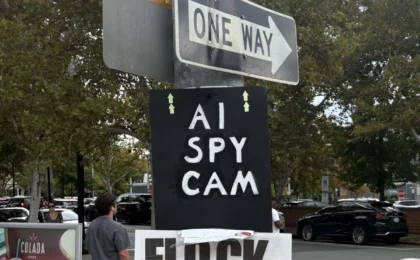
In a landmark decision that could reshape the landscape of American digital privacy, a federal judge in Oklahoma has delivered a stinging rebuke to the unchecked use of automated license plate reader (ALPR) technology. U.S. District Judge Sara Hill ruled this week that a Tulsa County sheriff’s deputy violated a woman’s Fourth Amendment rights by querying the Flock Safety database for her license plate without a warrant.
The ruling, while not yet a binding national precedent, represents one of the most significant judicial interventions against "indiscriminate mass surveillance" technology to date. It serves as a flashpoint in a burgeoning nationwide debate over whether the convenience of modern policing outweighs the constitutional right to be free from unreasonable searches.
The Case: From a California Plate to the "Fruit of a Poisonous Tree"
The incident at the heart of the ruling began when a Tulsa sheriff’s deputy initiated a search for a specific vehicle within the Flock Safety network. According to the court documents, the deputy had no articulable suspicion of criminal activity. His primary—and indeed only—justification for running the plate was that the vehicle displayed a California license plate.
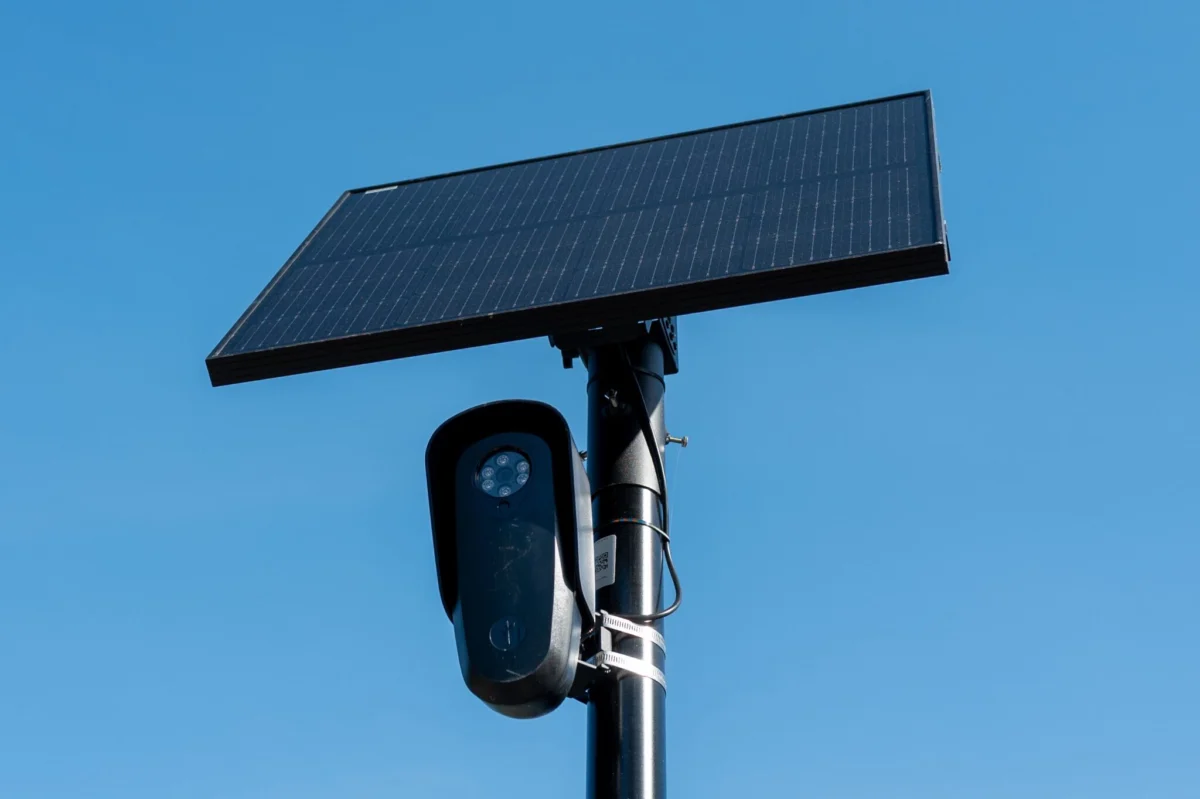
The Flock Safety system, which utilizes a sprawling network of high-definition, AI-equipped cameras, provided the deputy with a detailed map of the woman’s movements. Emboldened by this digital breadcrumb trail, the officer tracked the vehicle, conducted a stop, and eventually performed a search that allegedly yielded 91 pounds of methamphetamine.
However, Judge Hill’s ruling has effectively neutralized the prosecution’s case. In a forceful opinion, she categorized the search as an unconstitutional intrusion, writing that the evidence seized—the massive quantity of narcotics—must be suppressed under the legal doctrine known as the "fruit of the poisonous tree." This doctrine dictates that evidence obtained through illegal means cannot be used in a court of law.
"The deputy had no apparent reason for the search other than the fact that the vehicle had a California license plate," Judge Hill wrote. By accessing the database without a warrant, the deputy transformed a routine patrol tool into a mechanism for warrantless, arbitrary surveillance.
A New Frontier of Mass Surveillance
The significance of Judge Hill’s ruling extends far beyond the specific facts of this drug arrest. In her written opinion, she took direct aim at the systemic nature of Flock Safety’s surveillance model.
"This is a type of indiscriminate mass surveillance," Hill stated. "It is not targeted on a single individual, as in Carpenter v. United States." In Carpenter, the Supreme Court established that the government generally needs a warrant to access historical cell phone location data. Judge Hill argued that Flock represents an even more pervasive threat because it is not limited to a specific suspect; it is a system that "collects information about all vehicles that pass by any network-connected camera at all times, and it serves up the information to law enforcement on demand."
The "Constitutionally Problematic" Nature of Passive Tracking
The core of the legal conflict lies in the transition from traditional, manual police work to passive, algorithmic surveillance. While police have long been able to observe license plates in public spaces, the ability to archive, aggregate, and search the location history of every citizen who passes a camera creates a permanent record of movement that was previously impossible.
Judge Hill noted that tracking a person’s location becomes "constitutionally problematic when law enforcement can indiscriminately and passively catalog your whereabouts over an extended period of time and then use that information for any purpose whenever convenient." This effectively turns every camera in the network into a checkpoint, fundamentally changing the relationship between the citizen and the state.
The Growing Backlash: A Political and Institutional Shift
The Tulsa ruling is the latest in a series of setbacks for Flock Safety and the broader ALPR industry. As public awareness of the technology grows, resistance has moved from privacy advocacy groups to the halls of state legislatures and the U.S. Congress.
Legislative Resistance
Across the country, the political winds are shifting. Florida and Texas—states not typically known for restrictive surveillance policies—have both initiated moves to curtail or block the use of such camera networks over mounting privacy concerns. Lawmakers are increasingly concerned that these systems create a "perpetual lineup," where innocent citizens are treated as potential suspects by default.
At the federal level, the resistance has reached the Senate. Vermont Senator Bernie Sanders recently introduced the "Block Flock Act," a piece of legislation aimed at prohibiting federal agencies from utilizing automated license plate readers like those provided by Flock. The bill is a clear signal that the unregulated expansion of surveillance technology is becoming a significant liability for federal law enforcement funding and cooperation.
Internal Turmoil at Flock
The company itself is feeling the pressure. Flock Safety, once heralded as the "gold standard" for neighborhood and police security, is facing a shrinking market and internal instability. Reports indicate that the company has begun offering voluntary employee buyouts as part of a strategy to reduce its workforce. This move suggests that the combined weight of legal challenges, municipal contract cancellations, and the prospect of federal regulation is putting a strain on the firm’s once-meteoric growth.
The Industry Response: Searching for a "Compromise"
Flock Safety CEO Garretty Langley has spent the last several months attempting to navigate the storm of negative publicity. In various public forums, including upcoming appearances at industry events like TechCrunch Disrupt, Langley has called for a "compromise" between privacy and public safety.
The company’s defense often centers on the utility of the cameras in solving violent crimes, such as kidnapping and carjackings. However, the optics of the company’s struggle have been complicated by reports of law enforcement officers using the system for personal reasons, including stalking. Langley has issued public apologies to victims of such abuse, acknowledging that the platform’s power carries significant risks when placed in the hands of bad actors.
Despite these apologies, the fundamental tension remains: Can a system designed for "indiscriminate mass surveillance" ever be reconciled with the Fourth Amendment? Critics argue that the nature of the technology is inherently incompatible with the requirement of "particularized suspicion" that is central to American constitutional law.
Implications: The Road Ahead for Digital Privacy
The Tulsa ruling serves as a warning shot for law enforcement agencies across the United States. For years, police departments have adopted surveillance technologies under the assumption that if the data is "publicly visible," there is no expectation of privacy. Judge Hill’s decision challenges this assumption, suggesting that the aggregation of public data creates a private portrait that the government cannot access without judicial oversight.
The Legal Ripple Effect
Legal scholars anticipate that this ruling will embolden defense attorneys across the country to file motions to suppress evidence in cases where Flock data played a role in the investigation. If more judges follow Judge Hill’s lead, law enforcement may be forced to adopt a "warrant-first" policy for all database queries, effectively ending the era of real-time, warrantless tracking of citizens.
The Future of Smart Cities
The debate also touches upon the future of the "smart city" model. As municipalities increasingly integrate AI and camera networks into their infrastructure, the Tulsa case highlights the dangers of "feature creep"—where technology installed for one purpose (e.g., catching stolen cars) is repurposed for broad, suspicionless tracking.
As the judicial system continues to grapple with these issues, the legislative branch is expected to pick up the pace. Whether through the Block Flock Act or similar state-level restrictions, the era of the "wild west" for surveillance vendors appears to be coming to a close.
The fundamental question remaining for the American public is one of balance. While the promise of increased safety is a compelling argument for the adoption of high-tech policing tools, the Tulsa decision reinforces a foundational principle of the U.S. legal system: efficiency and public safety do not grant the government a blank check to monitor the private lives of its citizens. As Judge Hill so aptly put it, the ability to track every movement, at all times, is not just a tool—it is a transformation of the American experience that the Constitution was designed to prevent.