The ocean is often perceived as a silent, blue expanse, but beneath the surface, it is a cacophony of biological and physical noise. For the apex predators of the marine world, sound is not merely background noise; it is a vital sensory map. A groundbreaking study from Florida Atlantic University (FAU) has finally unlocked one of the most persistent mysteries of marine biology: just how far can a free-swimming shark hear, and can it pinpoint the origin of a sound?
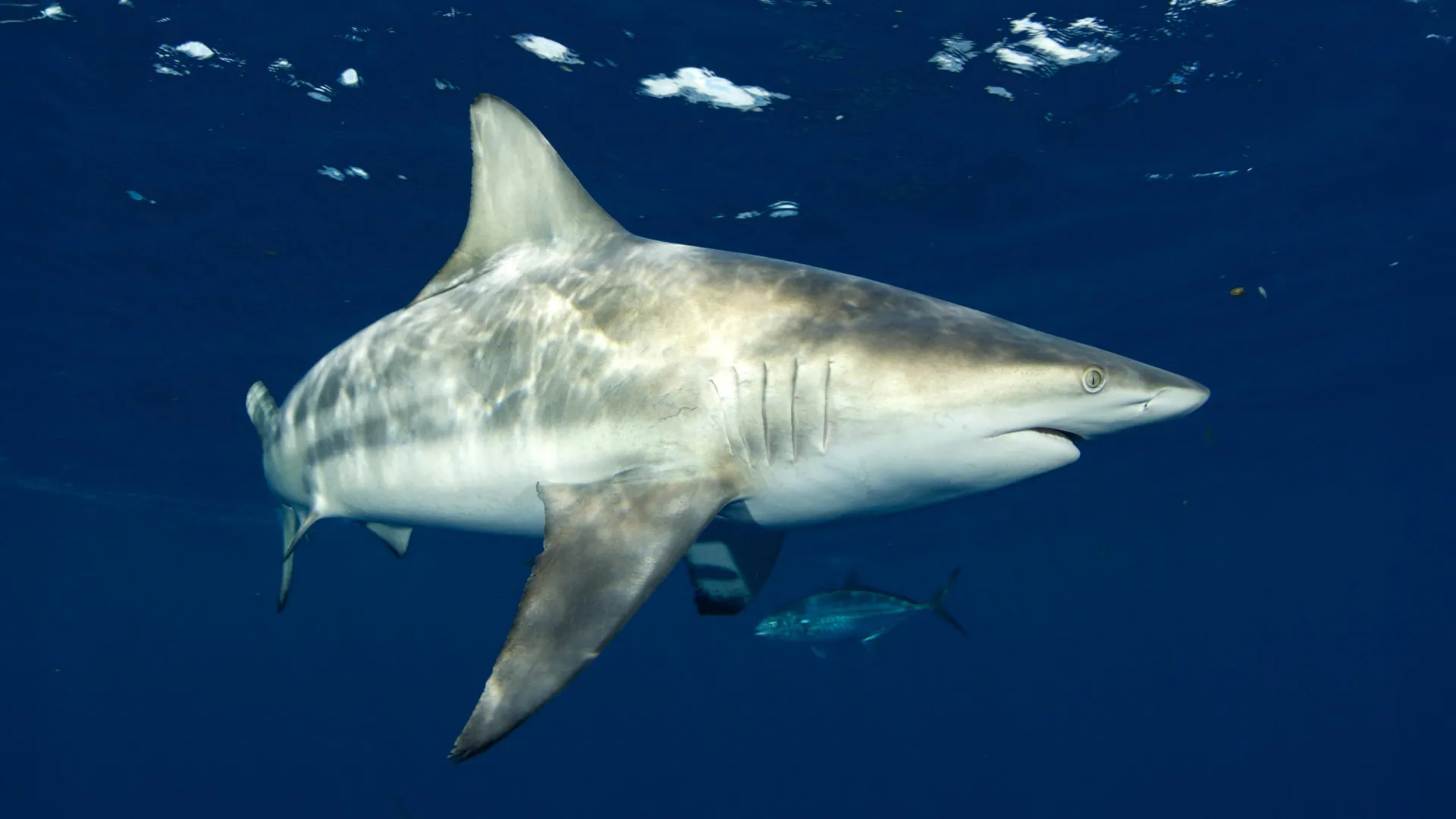
The results, published in the journal Integrative Organismal Biology, provide the first quantified evidence that sharks can detect and react to sounds in the "acoustic far field"—a region significantly further away than previously thought possible. By leveraging the latest in drone technology and precision underwater acoustics, researchers have demonstrated that blacktip sharks (Carcharhinus limbatus) can detect sounds from as far as 243 feet (74 meters) away and, crucially, navigate away from them.
The Invisible Sense: Why Shark Hearing Remains an Enigma
For decades, scientists have operated under the assumption that sharks possess a sophisticated sense of hearing, yet empirical evidence has been notoriously difficult to secure. Unlike bony fish, which often utilize a gas-filled swim bladder to amplify sound pressure, sharks rely on a more complex internal mechanism. Their hearing is primarily facilitated by the inner ear, specifically a specialized sensory structure called the macula neglecta, which is believed to detect the particle motion and vibrations that ripple through the water column.
The challenge in studying this has always been the environment itself. Laboratory settings, while controlled, suffer from the "house of mirrors" effect: sound waves bounce off tank walls, creating interference patterns that make it impossible to determine how an animal would respond in the open ocean. Consequently, our understanding of shark sensory biology has remained largely theoretical—until now.
A Chronology of Discovery: Testing the Predators in the Wild
The FAU research team, led by senior author Dr. Stephen Kajiura and lead author Caroline Sullivan, sought to bridge the gap between theoretical biology and field observation. Their approach was innovative, utilizing the natural migratory patterns of blacktip sharks off the coast of Palm Beach County, Florida.
Phase 1: Preparation and Environmental Controls
The researchers identified the Palm Beach coastline as an ideal "natural laboratory." Each winter, large populations of blacktip sharks congregate in these shallow, clear coastal waters. The clarity of the water allowed the team to deploy drones for overhead monitoring, ensuring they could track the sharks without the physical presence of researchers causing stress or behavioral changes.
Phase 2: Deployment of Acoustic Stimuli
To minimize the "vessel effect," the team anchored a boat and lowered an underwater speaker into the water, allowing it to drift with the current up to 19 meters away from the ship. This ensured that any reaction from the sharks was a direct response to the acoustic signal rather than a reaction to the boat’s engine or hull.
Phase 3: The Testing Protocols
The team played a series of low-frequency sounds—specifically in the 100–200 Hz, 200–400 Hz, and 400–800 Hz ranges. These frequencies were chosen to mimic the sounds of prey or environmental disturbances. A 10 kHz control sound was also played, a frequency known to be beyond the functional hearing range of sharks. The goal was not to lure the sharks, but to observe a "startle response"—a sudden, sharp turn that would indicate both detection and localization.
Phase 4: Data Capture and Analysis
Using calibrated hydrophones, the team measured the decibel levels of the sound at specific points in the water. Simultaneously, a drone hovering 40 to 50 meters above recorded the sharks’ trajectories. By reviewing the footage frame by frame, the team was able to map the exact distance of the shark from the speaker at the precise moment it altered its course.
The Data: Quantifying the Shark’s Range
The findings were definitive. The sharks showed a consistent, measurable reaction to all three low-frequency sound ranges, while completely ignoring the 10 kHz control signal.
The data revealed that these animals were detecting acoustic signals from as far as 74 meters (243 feet). Most impressively, the sharks did not simply freeze or swim aimlessly; they exhibited an "orienting response," making rapid, decisive turns away from the sound source. This behavior proves that sharks possess the ability to "triangulate" the origin of a sound, effectively mapping the acoustic landscape around them.
The study also highlighted a clear sensitivity preference: the sharks were more responsive to the lowest frequency ranges (100–200 Hz) and reacted to these sounds at lower intensities. This suggests that their sensory systems are evolutionarily tuned to the specific acoustic signatures of movement and struggle that characterize potential prey.
Official Perspectives: The Experts Weigh In
Dr. Stephen Kajiura, a professor of biological sciences at FAU’s Charles E. Schmidt College of Science, emphasized the significance of the "far field" detection.
"What makes this finding particularly interesting is that the sharks were responding to sounds beyond the acoustic near field, where the sound behaves differently than it does close to the source," Kajiura noted. "This suggests that they are detecting the particle motion associated with sound even at considerable distances. This is something we have not previously been able to demonstrate in free-swimming sharks."
Lead author Caroline Sullivan, who conducted this work as part of her master’s degree, underscored the importance of moving research out of the tank and into the wild. "Trying to do hearing experiments in a tank results in the sound bouncing off the walls, which causes complex and confusing signals—it is like being in a house of mirrors. This is why it is so important to do these types of experiments in the ocean with wild sharks to get a natural response."
Implications for Marine Conservation and Behavior
The implications of this research are profound, extending far beyond academic curiosity. Understanding that sharks utilize a "distant early warning system" via sound changes our perception of their predatory efficiency.
1. The Acoustic Ecology of Predators
If sharks can detect events from over 200 feet away, they are effectively "seeing" through sound long before their visual or olfactory senses (smell) come into play. This suggests that the ocean is a much louder, more information-dense environment for sharks than humans can perceive.
2. Anthropogenic Interference
With the rise of ocean noise pollution—from shipping, construction, and deep-sea mining—the discovery that sharks rely heavily on low-frequency sound raises concerns. If sharks use these frequencies to hunt and navigate, the "acoustic smog" created by human activity could be significantly impairing their ability to find food or avoid dangerous situations, essentially "blinding" them to the world around them.
3. A Foundation for Future Research
The success of this methodology—using drones and drifting speakers in a natural environment—provides a blueprint for future studies on other marine species. Researchers now have a reliable way to quantify how other predators, such as hammerheads or great whites, interact with their environment.
The next frontier for the FAU team is to determine exactly how the shark’s sensory system processes these complex signals. As Kajiura stated, "The ocean is an acoustic environment, and sharks are clearly tuned into it in ways we are only beginning to understand. The next question is how their sensory system allows them to pick up and interpret these distant sounds."
Conclusion: A More Complex Predator
This study confirms that the shark is far more than the mindless, sight-dependent eating machine of pop-culture mythology. It is a highly tuned, acoustic-sensitive hunter that navigates a sophisticated sensory world. By proving that sharks can detect and localize sounds from nearly a football field away, FAU researchers have highlighted the incredible evolutionary adaptation of these animals. As we continue to modify the oceans with our own acoustic footprint, recognizing the importance of this hidden sense is the first step in ensuring the long-term survival of one of the world’s most vital predators.
This research was supported by the Colgan Foundation and the National Save the Sea Turtle Foundation. The study’s co-author was Dr. Edmund Gerstein, a research director at the Charles E. Schmidt College of Science.