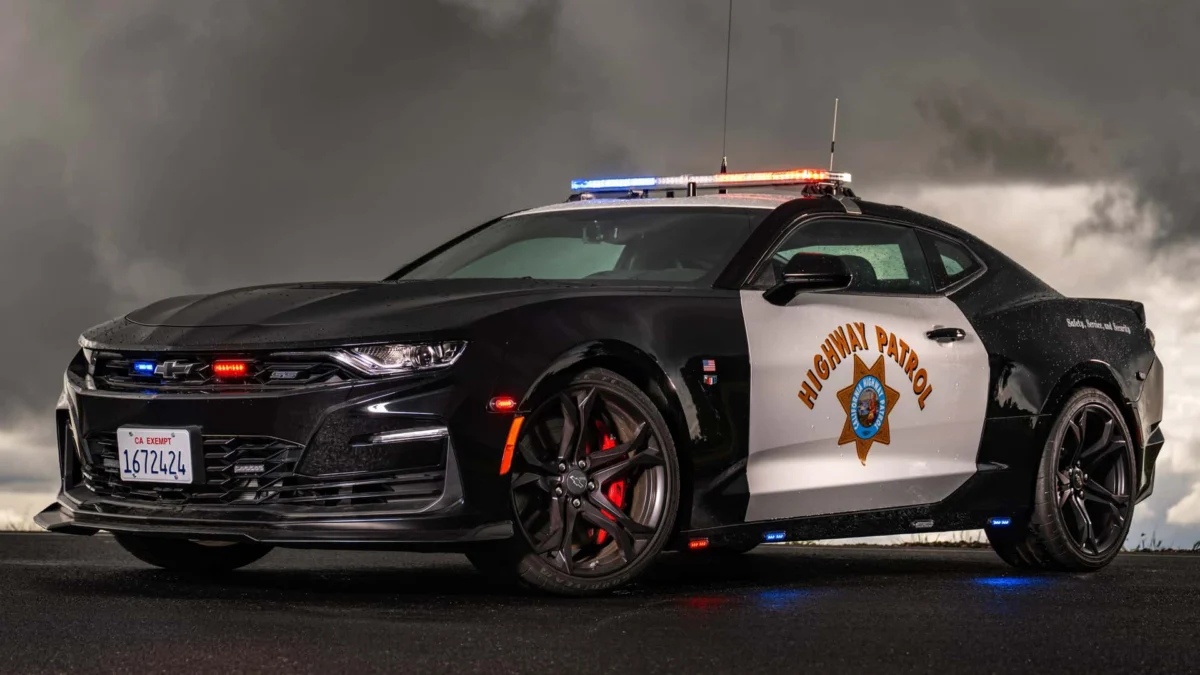
In an era where the American police fleet is increasingly dominated by standardized, utilitarian SUVs, the California Highway Patrol (CHP) has made a defiant, nostalgic statement. The agency has officially commissioned its final Chevrolet Camaro patrol vehicle, marking the end of a storied 45-year relationship between the Golden State’s finest and one of Detroit’s most iconic muscle cars.
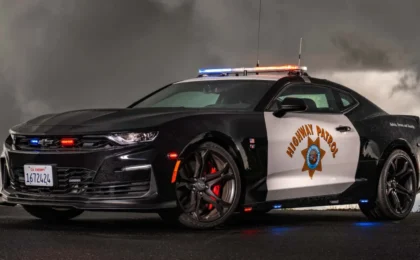
The vehicle, a menacing black-and-white SS 1LE, was unveiled this week via the CHP Fleet Operations Instagram account. Outfitted with full tactical decals, a robust push bar, and an array of emergency lighting, the car represents the swan song of a partnership that began in the late 1970s. While the sixth-generation Camaro ceased production at Chevrolet’s Lansing Grand River Assembly plant on December 13, 2023, this specific unit serves as the final vestige of a supply chain that has finally run dry.
A Legacy of High-Speed Interception
The history of the Camaro within the CHP is more than just a matter of logistics; it is a cultural touchstone. The relationship kicked off in 1979 when the agency first experimented with the Camaro Z28 as a specialized high-speed pursuit platform. At the time, the agency relied heavily on standard-issue sedans, but the rising speeds on California’s sprawling interstate network necessitated a vehicle capable of rapid acceleration and superior high-speed handling.
Throughout the 1980s, 90s, and early 2000s, the Camaro became a fixture of California’s highways. Whether it was the sharp-edged designs of the 1991 models or the long-nosed iterations of 2002, the Camaro provided officers with a tactical advantage during pursuits. Over the decades, these cars rotated in and out of service, often assigned to specialized units tasked with traffic enforcement on long, open stretches of desert highway where a traditional patrol cruiser might lack the necessary performance to close the distance on an errant driver.
The current SS 1LE is arguably the most capable version of the nameplate to ever wear the CHP badge. Powered by a naturally aspirated 6.2-liter V8 engine, it produces a formidable 455 horsepower and 455 lb-ft of torque. Unlike standard police cruisers, which prioritize cargo space and interior ergonomics, the 1LE package is essentially a track-ready setup, featuring stiffened suspension, oversized brakes, and aerodynamic enhancements designed to keep the car planted at triple-digit speeds.
The Engineering Behind the Badge
The SS 1LE is not merely a cosmetic endeavor; it is a precision instrument. The 1LE performance package was originally engineered for track dominance, providing a level of chassis rigidity and cornering stability that is rarely required—or utilized—in a standard municipal patrol car. However, for a highway patrol agency covering over 105,000 miles of diverse terrain, the 1LE’s high-speed stability is a critical safety feature.
Independent testing suggests that this iteration of the Camaro is capable of reaching a top speed of approximately 175 mph. When paired with the specialized cooling systems and heavy-duty braking components inherent to the 1LE package, the car is well-equipped to sustain the rigors of high-speed pursuit, a feat that would quickly overwhelm the mechanical limitations of a standard-issue vehicle.
Visual identity is just as important as mechanical performance. The vehicle features a classic black-and-white livery, but with a nod to the past: a whip antenna mounted on the rear, mirroring the aesthetic of the 1970s and 80s cruisers. This analog touch provides a stark contrast to the modern digital dashboard and the high-tech, integrated communication suite that powers the vehicle’s modern-day electronics.
Chronology of the Camaro in CHP Service
- 1979: The California Highway Patrol introduces the Chevrolet Camaro Z28 into its fleet as a high-speed pursuit test vehicle.
- 1980s–1990s: The Camaro becomes a recurring, albeit limited, specialty unit within the agency’s inventory, often seen alongside Ford Mustangs in rival state fleets.
- 2002: The final year of the fourth-generation Camaro marks a major milestone, as the agency retires the aging platform in favor of newer sedans.
- 2010s: The resurgence of the Camaro platform sees the CHP re-evaluating the muscle car for modern patrol duty.
- December 13, 2023: Chevrolet officially ceases production of the sixth-generation Camaro at its Lansing, Michigan facility.
- 2024–2025: The final units are delivered to various state agencies, with the CHP commissioning its last remaining SS 1LE unit.
Official Stance and Deployment Strategy
The California Highway Patrol has remained tight-lipped regarding which specific division or region will be the steward of this final Camaro. Given the sheer size of the state and the varying nature of patrol duties—from congested urban centers to lonely mountain passes—the assignment of such a unique vehicle is a matter of tactical deliberation.
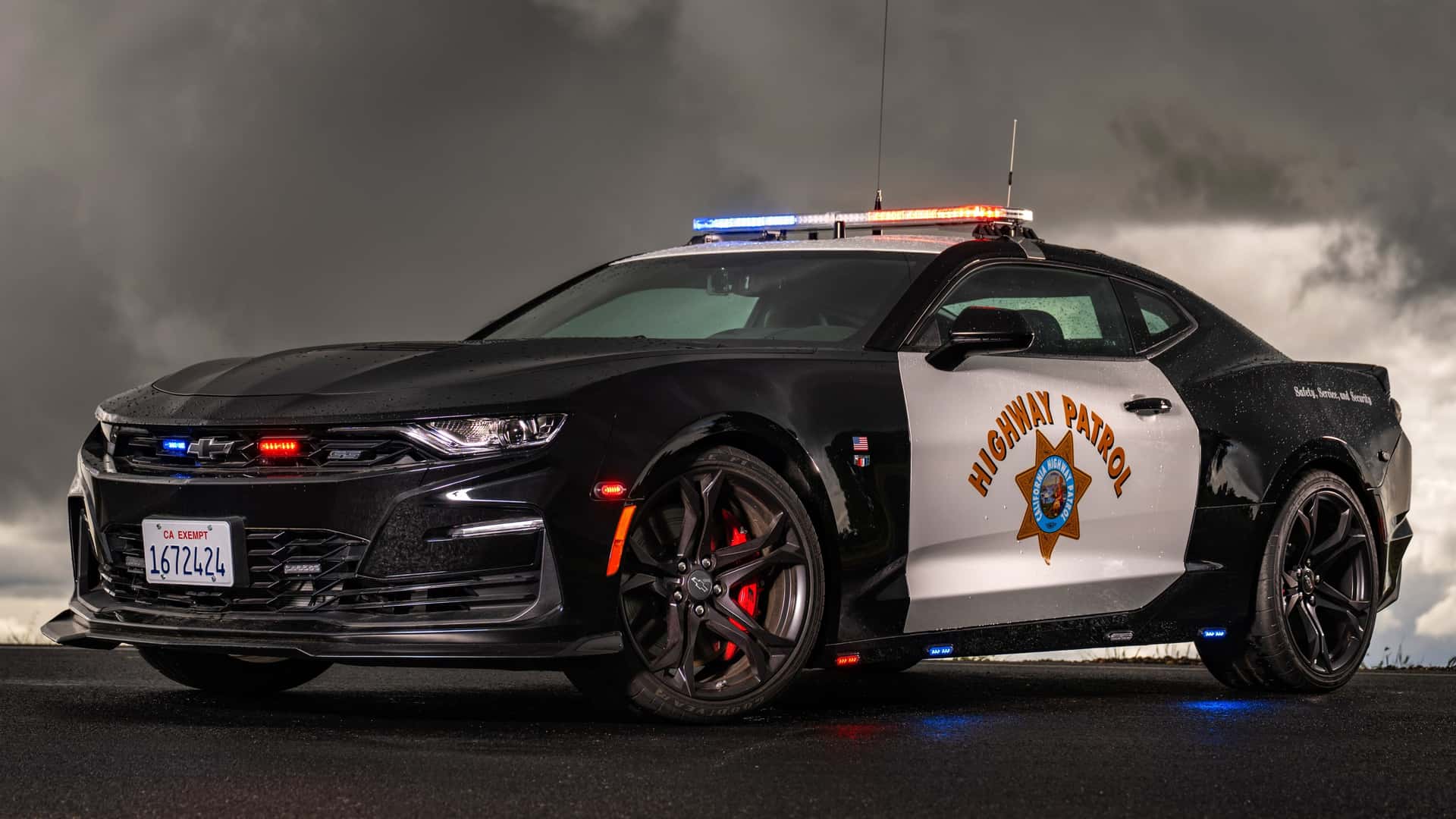
"This is the final CHP Camaro," an official statement from the agency noted, underscoring the finality of the move. The vehicle is expected to enter active patrol rotation next week. While the agency has not explicitly stated whether it intends to preserve the car as a museum piece after its service life concludes, its arrival marks the end of an era where "muscle car" and "law enforcement" were synonymous in California.
For Chevrolet, the silence regarding a successor is deafening. While there have been persistent rumors of a seventh-generation Camaro—or perhaps a reimagining of the nameplate as an electric or hybrid performance vehicle—nothing has been confirmed by General Motors. For now, the automaker’s V8 performance legacy continues through its involvement in NASCAR and other racing series, but the showroom and the police station are effectively moving on.
The Broader Implications for Law Enforcement Fleets
The departure of the Camaro from the CHP fleet is indicative of a broader shift in police logistics. For the past decade, the American automotive industry has seen a massive consolidation toward the SUV segment. The Ford Explorer (Police Interceptor Utility) has become the gold standard for most departments, offering all-wheel-drive capability, superior sightlines, and ample room for the ever-increasing amount of gear officers are required to carry.
The Camaro, by contrast, is a vehicle of compromise. It is difficult to enter and exit, offers limited rear-seat space for detainees, and provides minimal utility for modern police equipment. The fact that the CHP maintained the Camaro as long as they did speaks to the unique requirements of highway enforcement, where the priority is often the ability to catch a vehicle moving at high velocity across a vast distance.
As the Camaro exits, the gap is being filled by a combination of high-performance SUVs and specialized sedans from Dodge and Ford. However, none of these vehicles carry the same cultural cachet or the specific, raw mechanical identity of the Camaro. The loss of the Camaro represents the end of the "Interceptor" era in the traditional sense—where the police car was a purpose-built weapon of speed rather than a mobile office.
Looking Ahead: A Future Without the Pony Car
What happens when this last Camaro finally reaches its mileage limit and is decommissioned? It is likely to become a collector’s item. Police-spec Camaros from the 1980s and 90s are already highly sought after by collectors, and a "last of the line" unit from 2025 will undoubtedly be a prized piece of automotive history.
For the officers who will get to drive this car, the experience will be a unique one. It serves as a reminder of a time when the highway was a domain of performance, and the cars that patrolled it were designed to match the intensity of the road. While the industry pushes toward electrification and autonomous driving, the image of a black-and-white Camaro with its lights flashing on a sun-drenched California freeway will remain a powerful symbol of the highway patrol’s history.
The California Highway Patrol’s decision to commission this final unit is not just about having one more fast car on the road; it is a final, respectful nod to a legacy. As the last V8-powered, rear-wheel-drive pursuit vehicle of its kind enters service, it closes a chapter on a 45-year story that defined the look, the sound, and the speed of California law enforcement. The road ahead may belong to the SUVs and the crossovers, but for a little while longer, the spirit of the American muscle car will still be keeping the peace on the California coast.