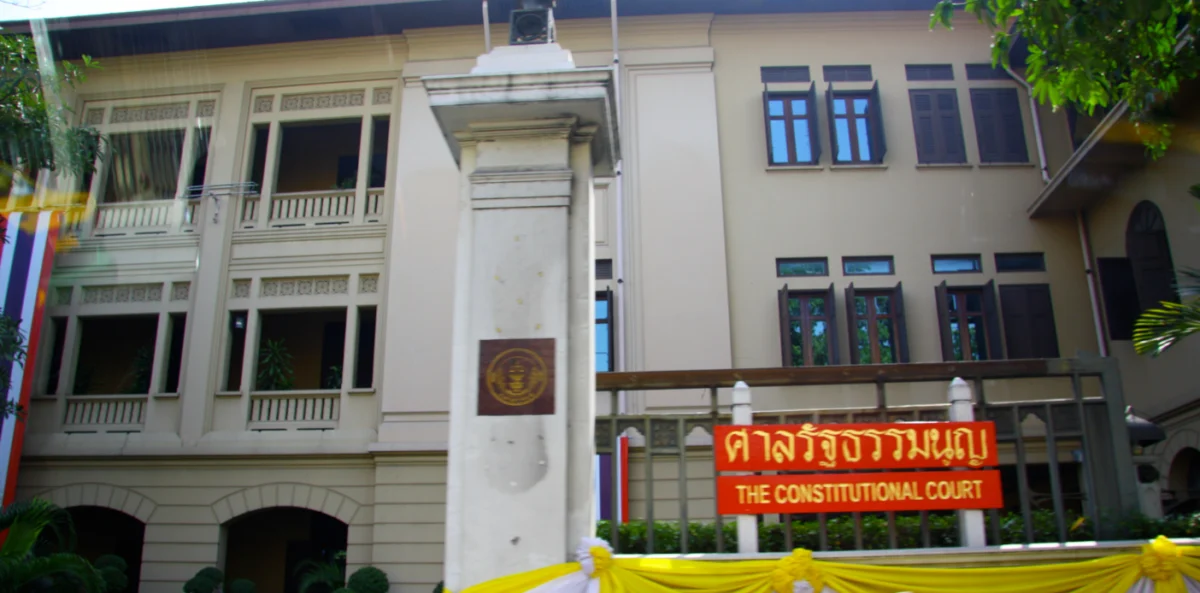
BANGKOK – In a landmark decision that provides long-awaited closure to months of political volatility, Thailand’s Constitutional Court issued a definitive ruling on Monday, dismissing a high-profile challenge to the integrity of the February 2026 general election. The court ruled that the inclusion of barcodes and QR codes on ballots—which had sparked intense public debate over the sanctity of the secret ballot—did not constitute a constitutional violation.
The verdict effectively solidifies the victory of Prime Minister Anutin Charnvirakul’s Bhumjaithai Party, ending speculation that the election results could be annulled. While the court upheld the legitimacy of the process, its ruling was accompanied by a pointed admonition to the Election Commission (EC), reflecting the deep-seated concerns regarding electoral transparency that have long characterized Thai democratic processes.
The Core Controversy: Technology vs. Constitutional Mandates
The legal dispute centered on the interpretation of Section 83 of Thailand’s 2017 Constitution, which explicitly mandates that members of the House of Representatives be elected by "direct and secret ballot."
During the 2026 general election, the Election Commission introduced barcodes on party-list ballots and QR codes on constituency ballots. The commission maintained that these measures were essential security protocols designed to prevent mass forgery and ensure the authenticity of each cast vote. However, the procedural reality of the voting process invited scrutiny: when a voter receives a ballot, it is torn from a stub that the voter is required to sign. This stub is then matched to the voter’s entry in the official registration list.
The Office of the Ombudsman, acting on behalf of concerned citizens and election monitors, petitioned the Constitutional Court under Section 213 of the Constitution. The core of their argument was that the technological markers created a "digital footprint" capable of tracing a specific ballot back to its corresponding stub. Theoretically, if the data were accessed, the anonymity of the voter could be compromised, effectively stripping the election of its "secret" status.
Chronology of a Constitutional Crisis
The path to Monday’s ruling was marked by months of institutional deliberation and public anxiety.
- February 2026: The general election takes place amidst high turnout. Almost immediately, opposition groups and civil society organizations raise questions regarding the QR codes and barcodes appearing on official ballots.
- March 2026: Following a surge of formal complaints, the Office of the Ombudsman petitions the Constitutional Court, requesting an investigation into whether the ballot design violates the fundamental constitutional right to a secret vote.
- August 2026: The Constitutional Court formally accepts the case for deliberation. In a rare move, the court conducts an on-site inspection of the secure facilities where ballots, stubs, and voter lists are stored. Two justices personally oversaw the inspection to verify the chain of custody and data security protocols.
- Late August – September 2026: The court hears testimony from digital security experts and Election Commission officials. The EC maintains that the ballots and stubs are stored in physically separate, high-security environments, making any correlation between the two impossible without a coordinated, multi-departmental conspiracy.
- September 28, 2026: The Constitutional Court delivers its final verdict, dismissing the challenge and upholding the validity of the election results.
Supporting Data and Judicial Findings
During the August inspection, the judiciary acknowledged a significant technical reality: in theory, a barcode could be traced back to a stub if the internal databases were combined. However, the court’s decision hinged on the distinction between potential risk and actual harm.
The court found that while the technology created a theoretical link, there was no evidence that such a link had ever been exploited. The Election Commission demonstrated that the voter registers and the ballot-counting systems are housed under different administrative jurisdictions with rigorous, multi-layered security.
Furthermore, the justices noted that the security benefits provided by the codes—specifically in preventing the introduction of fraudulent, pre-marked ballots—served a compelling state interest in ensuring the overall integrity of the democratic process. In the view of the court, the absence of any evidence of voter intimidation or the revelation of individual voting preferences meant that the fundamental spirit of the secret ballot had not been violated.
Official Responses: A Divided Political Landscape
The ruling has drawn varied responses from across the Thai political spectrum.
The Election Commission (EC):
An official spokesperson for the EC hailed the ruling as a "vindication of modern electoral technology." The Commission argued that the 2026 election was the most secure in Thai history, citing the near-zero rate of confirmed counterfeit ballots as proof that the technical measures were a resounding success.
The Bhumjaithai Party:
Prime Minister Anutin Charnvirakul’s administration welcomed the decision, characterizing it as a victory for stability. Supporters of the government argued that the challenge was a politically motivated attempt to derail a legitimate mandate and that the court’s decision allows the nation to focus on urgent economic and legislative priorities.
The Ombudsman and Opposition Groups:
While the Office of the Ombudsman acknowledged the court’s authority, representatives expressed disappointment. They argued that "the appearance of impropriety is just as damaging to democracy as actual impropriety." They maintained that the use of tracking codes creates a chilling effect on voters, who may fear that their political affiliations could be tracked by future administrations.
Historical Context: Thailand’s Fragile Electoral History
To understand the intensity of this challenge, one must look at Thailand’s tumultuous history with electoral annulments. The shadow of the 2006 and 2014 elections loomed large over the proceedings.
In 2006, the Constitutional Court annulled the general election in part due to concerns over ballot privacy and logistical failures that cast doubt on the results. In 2014, the court again threw out the results, citing procedural irregularities during early voting and the inaccessibility of polling stations. Given this history, many observers feared that the 2026 challenge would lead to a similar period of political limbo. By choosing to uphold the results, the court has signaled a shift in preference toward institutional stability over the strict, formalistic invalidation of election processes.
Implications: The Road Ahead for Thai Democracy
The Constitutional Court’s ruling is not merely a legal victory for the current government; it serves as a roadmap for future electoral reforms.
1. The Warning to the Election Commission
While the court dismissed the challenge, it did not grant the Election Commission a clean slate. In its written judgment, the court issued a stern warning, stating that the dispute had "undermined public confidence" in the EC. The court explicitly recommended that future ballots be stripped of any marks or codes that could potentially link a voter to their ballot, even if those marks serve a security function. This puts the EC under pressure to develop non-traceable, high-security ballot technologies before the next election cycle.
2. Strengthening Public Trust
The ruling highlights the fragility of democratic faith in Thailand. The fact that the court had to physically inspect storage facilities underscores how deeply suspicion is embedded in the electoral process. For the government, the immediate task is to rebuild the consensus that was fractured during the months of legal uncertainty.
3. Setting a Legal Precedent
This case clarifies the standard for future electoral challenges in Thailand. The court has effectively established that for an election to be voided, there must be tangible proof of interference or compromised secrecy, rather than just the existence of technologies that could pose a risk. This sets a higher bar for opposition parties looking to challenge future election results.
Conclusion
The decision to uphold the 2026 election results brings a definitive end to a period of intense institutional tension. While the Bhumjaithai Party remains firmly in power, the legacy of this case will be the enduring debate over the balance between electoral security and voter privacy. As Thailand moves forward, the pressure will be on the Election Commission to bridge the gap between necessary anti-fraud measures and the absolute, unquestionable secrecy of the individual vote. For now, the country has avoided a potential constitutional crisis, but the call for more transparent and intuitive voting systems remains louder than ever.