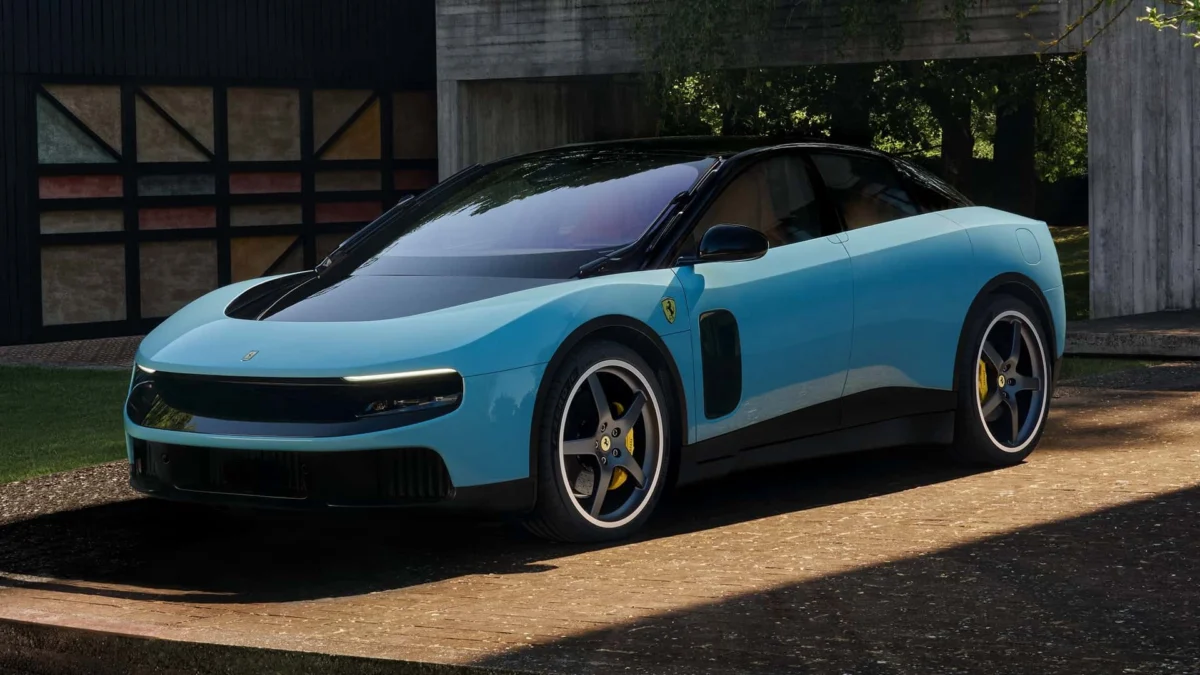
The automotive world is currently witnessing one of the most polarizing pivots in luxury manufacturing history. With the debut of the Ferrari Luce, the legendary Italian marque has officially crossed the Rubicon into the world of pure electric vehicles (EVs). However, this transition has been anything but smooth. Since its first reveal, the Luce has ignited a firestorm of debate, pitting the brand’s storied combustion-engine heritage against the inevitable, high-voltage future of performance motoring.
While critics have been quick to cast stones at the car’s non-traditional design and its lack of a V12 heartbeat, the commercial reality—particularly in the Chinese market—paints a far more complex picture. Is the Luce a betrayal of the Prancing Horse, or is it a masterclass in market adaptation?
The Genesis of Controversy: A Departure from Tradition
To understand the vitriol surrounding the Luce, one must look at the standard set by its predecessors. For decades, Ferrari has defined the supercar genre. The F40, with its raw, analog intensity, and the 458 Italia, often cited as the pinnacle of naturally aspirated mid-engine perfection, are the benchmarks against which all Ferraris are measured.
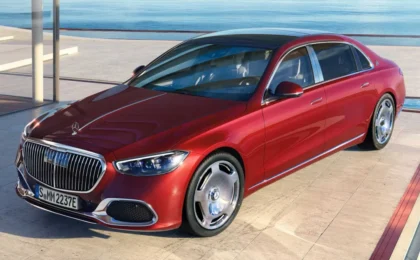
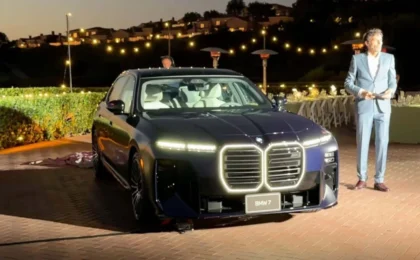
The Luce, by contrast, feels like a departure from this lineage. Its silhouette, aerodynamics, and interior ergonomics prioritize a "comfort-first" philosophy—a trait more commonly associated with grand tourers or luxury sedans than the track-focused weapons that built the brand’s reputation. Detractors argue that by stripping away the visceral experience of a high-revving engine, Ferrari has diluted the very essence of what makes a car a "Ferrari."
However, beneath the controversial exterior lies a technical powerhouse. The vehicle utilizes a sophisticated quad-motor setup, delivering a staggering 1,050 horsepower. While purists may call this "the most boring aspect" of the car due to the linear, predictable nature of electric torque, the raw performance figures suggest that the Luce will be capable of accelerating in ways that traditional internal combustion engines (ICE) could never hope to replicate.
Chronology of a High-Stakes Launch
The road to the Luce’s release has been a tightly controlled, yet high-pressure affair.
- Initial Teasers: Ferrari began dropping subtle hints about an "electrified performance" future nearly two years ago, testing the waters with the SF90 Stradale and the 296 GTB.
- The Global Reveal: When the Luce finally broke cover, the reception was immediate and bifurcated. Fans of technology lauded the engineering achievement, while purists lamented the "silencing" of the Maranello roar.
- The China Launch: This past weekend marked the official launch in the Asian market, a crucial region for Ferrari’s long-term growth strategy.
- The Sales Narrative: Early reports suggested that the entire initial allocation of 88 units for China had been snapped up in record time. However, this was later nuanced by reports from the Beijing Business Times, which indicated that while the initial tranche may be spoken for, Ferrari Beijing is continuing to process and accept new orders.
This discrepancy highlights the agility of Ferrari’s sales operations. Rather than hitting a hard ceiling, the company appears to be using the initial "sell-out" narrative to gauge demand, keeping the door open to increase production if the market appetite remains ravenous.
Market Performance and Consumer Data
The true success of the Luce will not be measured by online forums or social media commentary, but by the tangible data found in Ferrari’s order books. CEO Benedetto Vigna has been remarkably transparent, albeit guarded, regarding the "strong interest" the company has seen.
The strategy appears to be a careful balancing act. By limiting the initial supply, Ferrari is maintaining exclusivity—a hallmark of the brand’s business model. Yet, the fact that they are willing to expand that number indicates that the demand for an electric Ferrari is not just theoretical; it is a hard-money reality.
Supporting this, industry analysts note that the demographic for the Luce may not be the traditional "track-day enthusiast" who owns a 488 Pista. Instead, the Luce is attracting a new class of luxury consumer—one who values the badge and the status of Ferrari, but prefers the refined, quiet, and cutting-edge experience of an all-electric cabin.
Official Responses and Strategic Pivot
The internal response from Maranello has been one of calm confidence. In several briefings following the launch, Benedetto Vigna has defended the Luce, emphasizing that Ferrari is not merely building an EV; it is building a Ferrari that happens to be electric.
The focus, according to Vigna, remains on driving dynamics. Ferrari’s engineering team has spent years perfecting torque vectoring and battery cooling systems to ensure that the Luce feels "alive" on a winding road, despite the weight of its battery pack.
Furthermore, the recent appointment of a new marketing executive—a veteran from the automotive tech sector—signals a major shift in how the company intends to frame its identity. The message is clear: Ferrari is evolving. The brand is transitioning from a manufacturer of engines to a purveyor of "luxury performance experiences," a shift that necessitates leaving the combustion-only past behind.
The Implications for the Supercar Industry
The launch of the Luce is a litmus test for the entire ultra-luxury automotive sector. If the Luce succeeds, it effectively grants permission for other high-end manufacturers—such as Lamborghini, McLaren, and Koenigsegg—to accelerate their own electrification programs without fear of alienating their core client base.
1. The Death of the "Pure" Engine?
The Luce suggests that the era of the high-displacement internal combustion engine is effectively being relegated to the status of a "collector’s item." While Ferrari has stated they will continue to produce ICE models, the shift in R&D budgets is undeniably toward electricity.
2. Redefining Luxury
The "Mercedes-like" comfort mentioned in early reviews is a significant pivot. It suggests that Ferrari recognizes that the modern supercar buyer is spending more time in traffic or on city boulevards than on a closed circuit. If the cabin is a sanctuary, the car becomes more usable, potentially increasing the total addressable market for the brand.
3. The China Factor
China’s aggressive adoption of EV infrastructure makes it the perfect testing ground for the Luce. If the car can thrive there, it validates Ferrari’s decision to commit to this platform. The data gathered from the first 88 (or more) buyers in Beijing will undoubtedly dictate the software updates, chassis tuning, and feature sets for the European and American versions of the car.
Conclusion: The Road Ahead
As the dust settles on the initial launch, the automotive world remains fixated on the Luce. The "Motor1 Take" remains consistent: the noise on the internet is temporary, but the balance sheet is forever.
Ferrari is betting that its brand equity—the culmination of decades of racing glory and design excellence—is strong enough to transcend the powertrain. Whether you view the Luce as a blasphemy or a breakthrough, one thing is certain: it is a pivotal moment in automotive history.
In the coming months, as more units are delivered and independent testing begins, the true character of the Luce will be revealed. Will it be the car that saved Ferrari in the electric age, or will it be the model that the brand eventually looks back on as a "transitional" experiment?
For now, the orders keep coming in. And for the shareholders in Maranello, that is the only metric that truly matters. As the company continues to invite feedback through its outreach initiatives, it is clear that Ferrari is listening—but it is also clear that they have no intention of turning back. The electric era has arrived, and it bears the Prancing Horse.