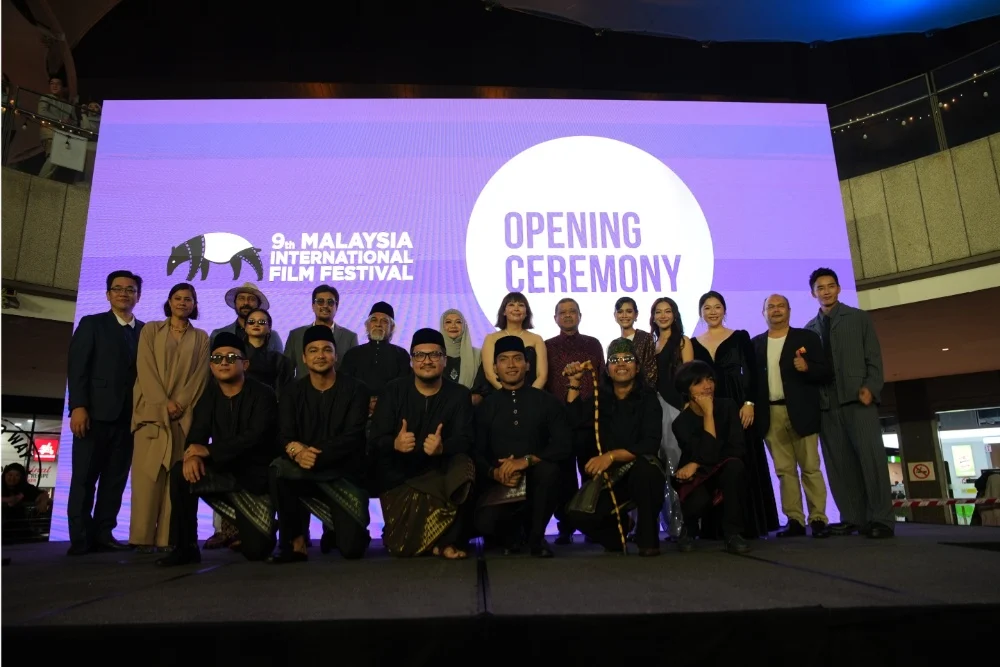
The cinematic landscape of Southeast Asia has officially shifted its focus to Kuala Lumpur as the ninth Malaysia International Film Festival (MIFFest) launched its ambitious eight-day showcase on July 18. Hosted at the vibrant MyTown Shopping Centre, the festival’s opening ceremony was a high-profile affair, blending the glamour of a red-carpet event with the gravity of a significant cultural milestone: the official certification of MIFFest by ASEAN Records.
As the festival continues through July 25, it serves as a testament to Malaysia’s growing influence in the global film circuit, bridging the gap between local narratives and international audiences.
The Opening Ceremony: A Night of Glitz and Governance
The evening commenced with an electric atmosphere as filmmakers, industry titans, and international stars graced the red carpet. The ceremony was not merely a celebration of entertainment but a demonstration of the synergy between creative vision and governmental support.
Joanne Goh, the indefatigable founder and president of MIFFest, led the proceedings. She was joined by the festival’s 2026 ambassadors—renowned actors Bront Palarae, Daiyan Trisha, and Jack Tan—each representing a facet of Malaysia’s diverse acting talent. The ceremony saw the presence of high-ranking officials, including Datuk Manoharan Periasamy, chair of Tourism Malaysia, and Datuk Bahria Mohd Tamil, deputy secretary general at the Ministry of Communications. Their attendance underscored the strategic importance of the festival in promoting Malaysia as a premier destination for cultural diplomacy and creative production.
The highlight of the evening, however, was the formal recognition of MIFFest by ASEAN Records. This accreditation honors the festival’s "ASEAN On Screen" platform and the Malaysia Golden Global Awards (MGGA), acknowledging them as vital pillars for the preservation and promotion of Southeast Asian cinema.
Theme Analysis: The Concept of ‘Resonance’
This year, the festival organizers anchored the program around the evocative theme of "Resonance." In her opening address, Joanne Goh provided a philosophical framework for the theme, explaining that it transcends the mere consumption of visual media.
"Resonance is the lasting echo of a story," Goh stated. "It is the emotion that remains long after the credits roll, the conversations that continue beyond the cinema, and the connections that film creates across cultures, generations, and borders."
This theme acts as the connective tissue for the festival’s diverse programming, which seeks to prioritize films that linger in the psyche of the audience. By choosing "Resonance," MIFFest is positioning itself as a festival that values the intellectual and emotional impact of storytelling over the commercial gloss that often dominates modern cinema.
ASEAN On Screen: A Permanent Cultural Hub
The recognition from ASEAN Records is a watershed moment for the festival. The "ASEAN On Screen" platform was initially conceptualized in 2025 during Malaysia’s ASEAN chairship. What began as a temporary initiative has since matured into a permanent, annual fixture of the festival.
"When we introduced ASEAN On Screen, our vision was to create a lasting platform where the stories of Southeast Asia could be celebrated, discovered, and shared with the world," Goh remarked upon accepting the certification.
This platform serves as a vital artery for regional storytelling. In an era where global streaming platforms have homogenized content, "ASEAN On Screen" ensures that the unique cultural, political, and social textures of Southeast Asian nations are given a dedicated stage. By providing this space, MIFFest is actively nurturing a regional identity that is both competitive on the international stage and deeply rooted in local tradition.
The Premiere: "Baga: Tomorrow Belongs To No One"
The gala opening was followed by the highly anticipated world premiere of Ariff Zulkarnain’s Baga: Tomorrow Belongs To No One. A gritty, deeply personal exploration of life on Malaysia’s East Coast, the film serves as a stark contrast to the glitz of the red carpet.
The narrative follows the lives of two young lovers, Jani and Melur, whose fragile dreams are shattered by the crushing realities of poverty, an unplanned pregnancy, and the encroachment of the local drug trade. Zulkarnain, who drew heavily from his own upbringing to craft the screenplay, has created a film that is as uncomfortable as it is necessary.
The film’s delegation—which included executive producer Shafiq Yusof, actor Syafiq Kyle, and Cambodian actress Sarita Reth—participated in a post-screening Q&A that delved into the complexities of regional filmmaking. The presence of international talent like Sarita Reth highlights the collaborative spirit of the festival, proving that the struggles depicted in Baga are not confined by national borders but resonate with youth across the globe.
A Global Mosaic: The 2026 Program
Beyond the opening film, the festival has curated a dense, multifaceted program designed to cater to both industry professionals and the general public.
Russian Film Week
One of the most notable strands is the Russian Film Week, presented in collaboration with the Ministry of Culture of the Russian Federation, Roskino, and Mosfilm. By offering free screenings of four distinct Russian films, MIFFest is facilitating a cultural exchange that bypasses the traditional barriers of distribution. This segment provides Malaysian audiences a rare glimpse into the contemporary Russian cinematic voice.
Specialized Strands and Forums
The festival’s diversity is reflected in its specialized segments:
- Hong Kong Cinema in Flux: An exploration of how one of Asia’s most prolific film industries is adapting to new socio-political and economic realities.
- New Rhythms of Indian Cinema: A showcase of the evolving aesthetics of the Indian film industry, moving beyond the traditional musical formats.
- Open Air Cinema: A public-facing initiative designed to bring the cinematic experience out of the dark, air-conditioned theaters and into the community.
- Masterclasses and Industry Forums: These sessions are the backbone of the festival, where established directors, producers, and screenwriters share technical insights, ensuring that the next generation of Malaysian filmmakers is well-equipped for the global market.
Institutional Support and Economic Implications
The support from institutions such as FINAS (National Film Development Corporation Malaysia) and Tourism Malaysia is indicative of a broader strategy to position Malaysia as a regional hub for the creative economy.
Datuk Azmir Saifuddin Mutalib, CEO of FINAS, has consistently highlighted the importance of festivals like MIFFest in developing the "creative ecosystem." By providing a platform for local films to compete alongside international titles, the festival forces a higher standard of production and storytelling among Malaysian filmmakers.
Furthermore, the economic implications of the festival are significant. By attracting international delegates, journalists, and film buyers, MIFFest injects capital into the local service industry while simultaneously enhancing the nation’s "soft power." Cultural diplomacy, as championed by the Ministry of Communications, relies on the ability of local artists to project their stories onto the global stage, a task that MIFFest has executed with increasing proficiency over its nine-year history.
Looking Ahead: The Future of MIFFest
As the festival progresses toward its closing on July 25, the focus will shift to the awards ceremony, where the preliminary selection committee and the international jury panels will announce the winners of the Malaysia Golden Global Awards.
The success of the ninth edition suggests that MIFFest has moved past its "growth phase" and is now a mature institution. The challenges ahead lie in sustainability and maintaining the balance between niche arthouse cinema and the demands of the modern, digital-first audience. However, if the current energy is any indication, the festival is well-positioned to expand its footprint.
In conclusion, the ninth Malaysia International Film Festival is more than a series of screenings; it is an assertion of identity. By weaving together the local stories of the East Coast with the global perspectives of Russia, India, and Hong Kong, MIFFest has successfully created a space where resonance is not just a theme—it is the very essence of the experience. As the echo of these stories continues to reverberate, it is clear that the future of Southeast Asian cinema is not only bright but profoundly connected to the global narrative.