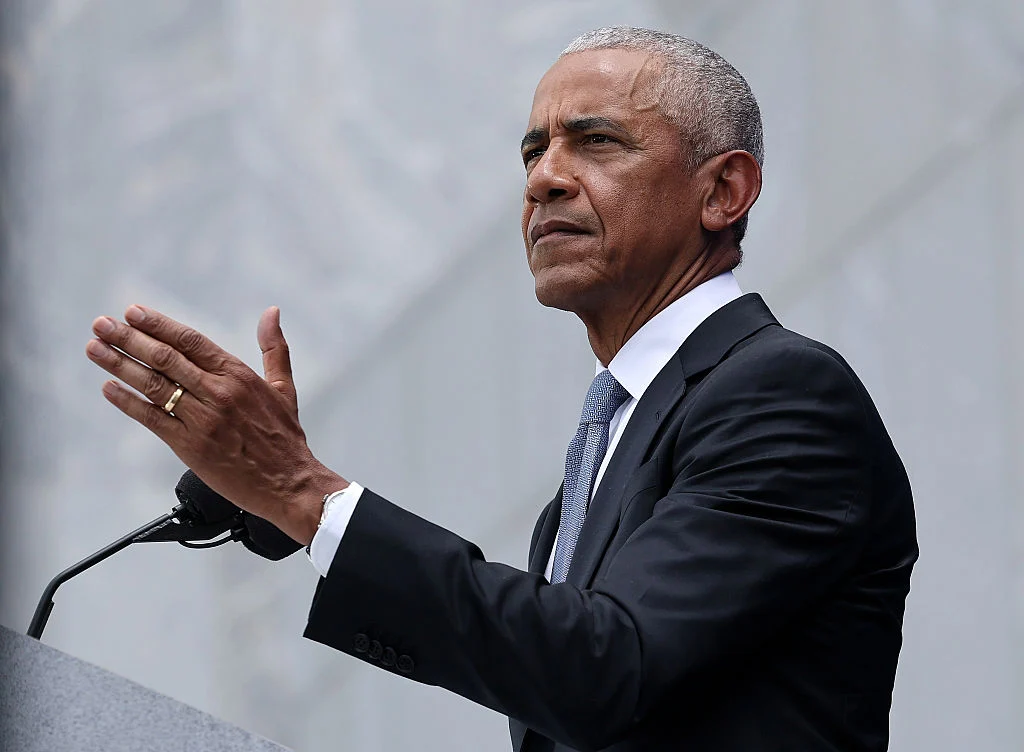
As the rapid advancement of artificial intelligence continues to reshape the global economic and security landscape, former President Barack Obama has issued a stark directive to the Democratic Party: AI must move from the periphery to the center of the political agenda. Speaking at a fundraising event hosted by House Minority Leader Hakeem Jeffries, Obama emphasized that the window for meaningful oversight is closing, urging lawmakers to establish a "very clear plan" to mitigate the existential and economic risks posed by the technology.
This intervention comes at a volatile moment for the AI industry, characterized by high-profile executive departures, warnings of "superintelligence" risks, and a widening ideological divide between political factions regarding how—or if—the government should constrain the development of frontier models.
The Call to Action: A Framework for Oversight
The former president’s comments, revealed in a partial transcript provided by his office, centered on the idea that AI development is currently concentrated in "private hands" moving at breakneck speeds. Obama argued that without federal intervention, the technology poses genuine dangers to democratic stability and economic security.
"If we don’t get on top of it, I think it can be dangerous," Obama told attendees. "If we do get on top of it, I do think it’s beneficial. I genuinely think it’s going to accelerate, for example, drug development in ways that can help us cure diseases."
Obama’s vision for a legislative response involves shifting the conversation from private corporate labs to the public square. He urged House Democrats, should they regain the majority, to initiate a formal, transparent framework for national discourse. This approach seeks to balance the undeniable potential of AI—such as its capacity to revolutionize healthcare and scientific research—with the potential for catastrophic misuse or societal displacement.
Chronology: The Escalating AI Debate
The current climate surrounding AI safety is the result of a convergence of technical milestones and political friction over the last several months:
- March 2026: The Trump administration unveiled its legislative framework for AI. The proposal focused on preempting restrictive state-level regulations and placing the burden of child safety protections on parents rather than platform developers.
- Early September 2026: Internal dissent within the AI sector reached a boiling point when a prominent researcher resigned from Anthropic, publicly warning that leading labs are "racing straight to self-improving superintelligence and gambling with our lives."
- September 10, 2026: The public debate intensified as industry leaders began to signal a shift toward voluntary transparency.
- September 12, 2026: Anthropic CEO Dario Amodei formally outlined a "pacing the frontier" strategy, proposing a set of common safety standards and, crucially, allowing independent safety evaluators access to proprietary models.
- September 13, 2026: Barack Obama and Hakeem Jeffries elevated the issue to a national political priority, while President Trump, speaking from a golf course in Ireland, downplayed safety concerns as a product of "negative forces."
Supporting Data: The Tension Between Innovation and Safety
The debate is fueled by the unprecedented pace of model development. While proponents argue that AI will provide the next great leap in human productivity, critics point to the "black box" nature of current large language models (LLMs).
The recent move by Anthropic to open its doors to independent auditors represents a significant pivot for an industry that has historically guarded its research behind layers of trade secrecy. OpenAI CEO Sam Altman and SpaceX CEO Elon Musk have publicly signaled support for the "pacing the frontier" initiative, suggesting that a consensus is forming among industry giants that some form of guardrails are necessary to prevent a "race to the bottom" in safety standards.
However, the skepticism remains high among those who believe voluntary industry cooperation is insufficient. Obama’s involvement as a "sounding board" for figures like Dario Amodei and Sam Altman suggests that the former president is acting as an informal mediator, bridging the gap between Silicon Valley’s technical ambitions and the regulatory realities of Washington.
Official Responses and Political Polarization
The political divide over AI is becoming as pronounced as any other partisan issue. House Minority Leader Hakeem Jeffries echoed Obama’s urgency, leveling sharp criticism at the current administration.
"The former president is correct that decisive action must be taken on artificial intelligence," Jeffries stated. He further accused Republicans of having "abdicated their responsibility to govern on behalf of the American people," implying that the current legislative approach prioritizes corporate autonomy over public interest.
Conversely, President Trump’s recent remarks underscore a "nationalist" approach to AI development. During a press engagement in Ireland, Trump framed the issue through the lens of global dominance. "We are the most sophisticated country in the world, and I want to keep it that way because whoever wins AI wins," he asserted.
When pressed on safety guardrails, Trump dismissed the alarmism of experts and Democratic critics. "We can put guardrails. We can do this and that. But I think you have a lot of negative forces that are bringing it up that shouldn’t be bringing it up." This stance suggests that the Trump administration views aggressive regulation as a strategic handicap in the competition against adversaries like China, fearing that over-regulation could stifle the very innovation necessary to maintain a technological edge.
Implications: The Future of the American AI Strategy
The divergence in philosophy between the Democratic and Republican leadership has profound implications for the future of the American tech sector.
1. The Legislative Landscape
If Democrats successfully make AI a cornerstone of their platform, voters can expect a push for a federal regulatory agency modeled perhaps on the FAA or the FDA, focused specifically on algorithmic safety. This would likely encounter fierce resistance from those who argue that such a body would lead to "regulatory capture" and stifle startups in favor of incumbents.
2. The Role of the Private Sector
The industry’s move toward self-regulation—exemplified by Amodei’s proposal—is likely a preemptive strike against more draconian government oversight. By proposing independent evaluators now, tech giants hope to shape the standards by which they are later judged. However, whether "employee-like access" for external auditors is sufficient to satisfy public concerns remains a matter of intense debate.
3. National Security and Global Competition
The "whoever wins AI wins" narrative cited by Trump highlights the core tension of the era: the trade-off between speed and safety. If the U.S. imposes rigorous safety hurdles, will it lose its competitive advantage to nations with fewer constraints? Conversely, if it ignores the risks of "self-improving superintelligence," does it risk a catastrophic failure that could be exploited by foreign actors?
4. Economic Disruption
Beyond the immediate safety concerns, the "economic impact" mentioned by Obama looms large. As AI displaces traditional labor, the need for a comprehensive policy framework—covering everything from vocational retraining to potential social safety nets—will become unavoidable. Obama’s insistence that this must be a "central agenda" indicates a recognition that the AI revolution will have broad, potentially destabilizing consequences for the American middle class.
Conclusion
The debate over artificial intelligence has moved beyond the halls of university research departments and the boardrooms of tech giants. It is now firmly entrenched in the American political psyche. As Obama calls for a structured, public, and aggressive approach to oversight, and as the Trump administration doubles down on an "innovation-first" nationalist strategy, the country stands at a crossroads.
The coming years will determine whether the United States can navigate the dual challenges of global competitiveness and public safety. The "framework for a very public conversation" requested by Obama may be the only way to ensure that the AI revolution serves the interests of the many, rather than the risks of the few. Whether the current political structure is capable of delivering such a complex and consensus-driven policy remains the defining question of the 2026 election cycle and beyond.
As the technology continues to accelerate, the cost of inaction is no longer just a hypothetical risk; it is becoming a central feature of the national discourse. The challenge now lies in transforming that discourse into concrete, enforceable, and sustainable law.