Drones have fundamentally altered the landscape of travel photography. What was once the exclusive domain of high-budget film crews—sweeping, cinematic aerial vistas—is now a standard inclusion in the travel vlogger’s kit. Yet, for all their utility, traditional drones come with significant overhead: the need for complex gimbal maintenance, the anxiety of manual framing, and the regulatory burden of heavy aircraft.
Enter the Antigravity A1. Released in late 2025, this device represents a seismic shift in consumer drone technology. By moving away from the forward-facing, gimbal-stabilized cameras that have defined the market for a decade, the A1 introduces a "fly now, frame later" paradigm that is as liberating for the casual traveler as it is for the professional filmmaker.
The Core Innovation: A New Perspective on Flight
At its heart, the Antigravity A1 is a dual-lens, 360-degree capture system. Unlike standard drones that require the pilot to constantly adjust the pitch and yaw of a gimbal to track a subject, the A1 records a spherical environment in its entirety.
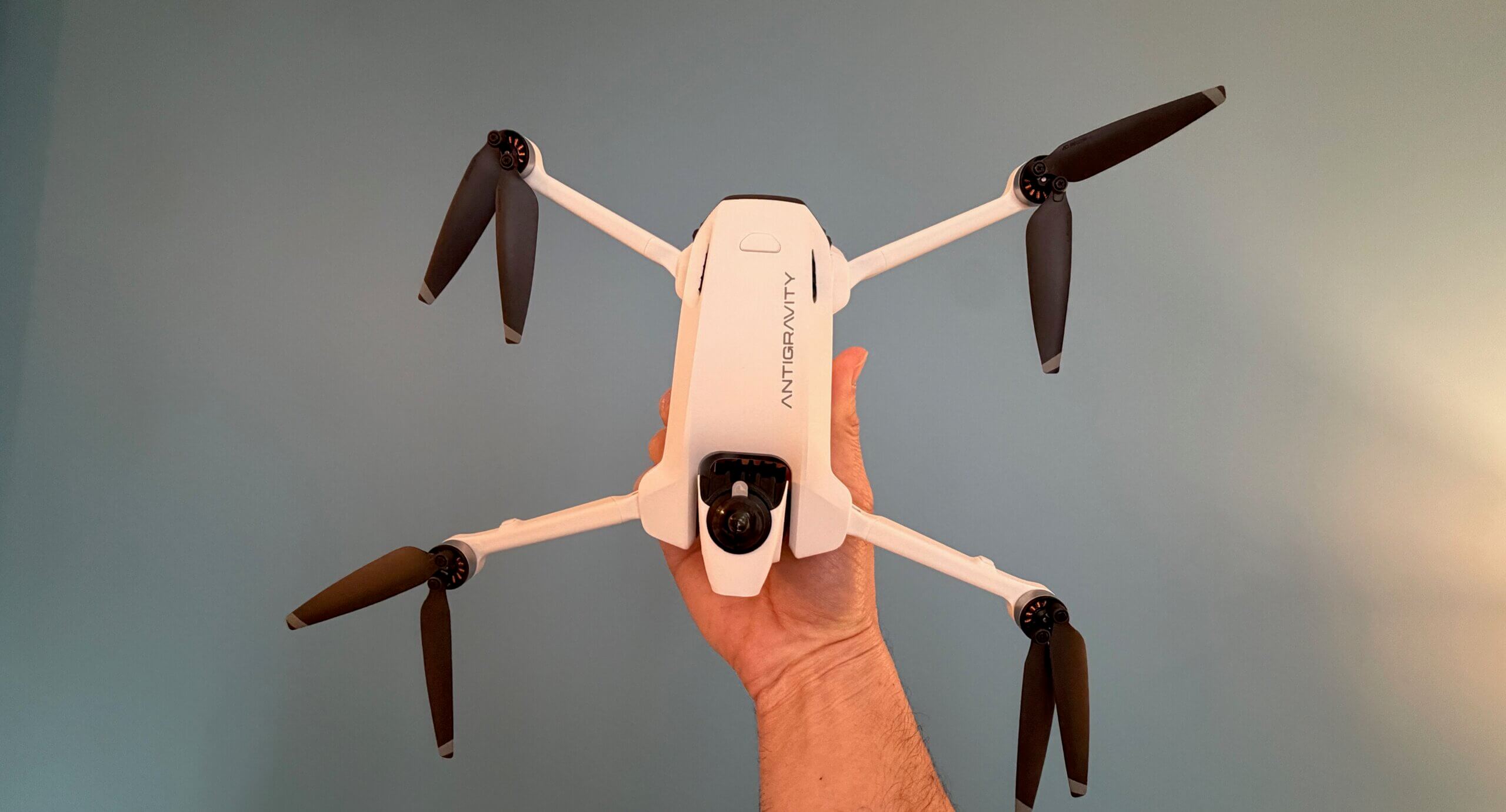
The engineering behind this is elegant. The central fuselage houses two ultra-wide-angle lenses, positioned at the top and bottom. Each lens captures a 200-degree field of view. When these two images are processed, they overlap to form a seamless, 360-degree sphere. In the final output, the drone’s frame is digitally erased, creating a surreal, "floating camera" aesthetic that appears to be suspended in mid-air with no physical support.
Technical Specifications and Durability
The A1 is equipped with 1/1.28-inch CMOS sensors. While purists might point to the 1-inch sensors found in top-tier "Pro" photography drones, the A1’s sensors are significantly larger than those found in standard 360-degree action cameras. This results in superior low-light performance and an expanded dynamic range, allowing the device to retain detail in the harsh shadows and bright highlights common in midday travel photography.
Durability is another hallmark of the A1. Constructed from high-grade, carbon-fiber-reinforced polymer, the drone achieves a strength-to-weight ratio superior to the ABS plastics common in entry-level models. Its folding mechanism is engineered for tactile precision, allowing the unit to collapse to the size of a large smartphone—a vital feature for backpackers and minimalist travelers.
Regulatory Advantage: The 249-Gram Threshold
Perhaps the most strategic decision made by the Antigravity design team was the weight of the aircraft. In many jurisdictions, drones weighing 250 grams or more are subject to stringent registration requirements, mandatory insurance, and restricted flight zones.
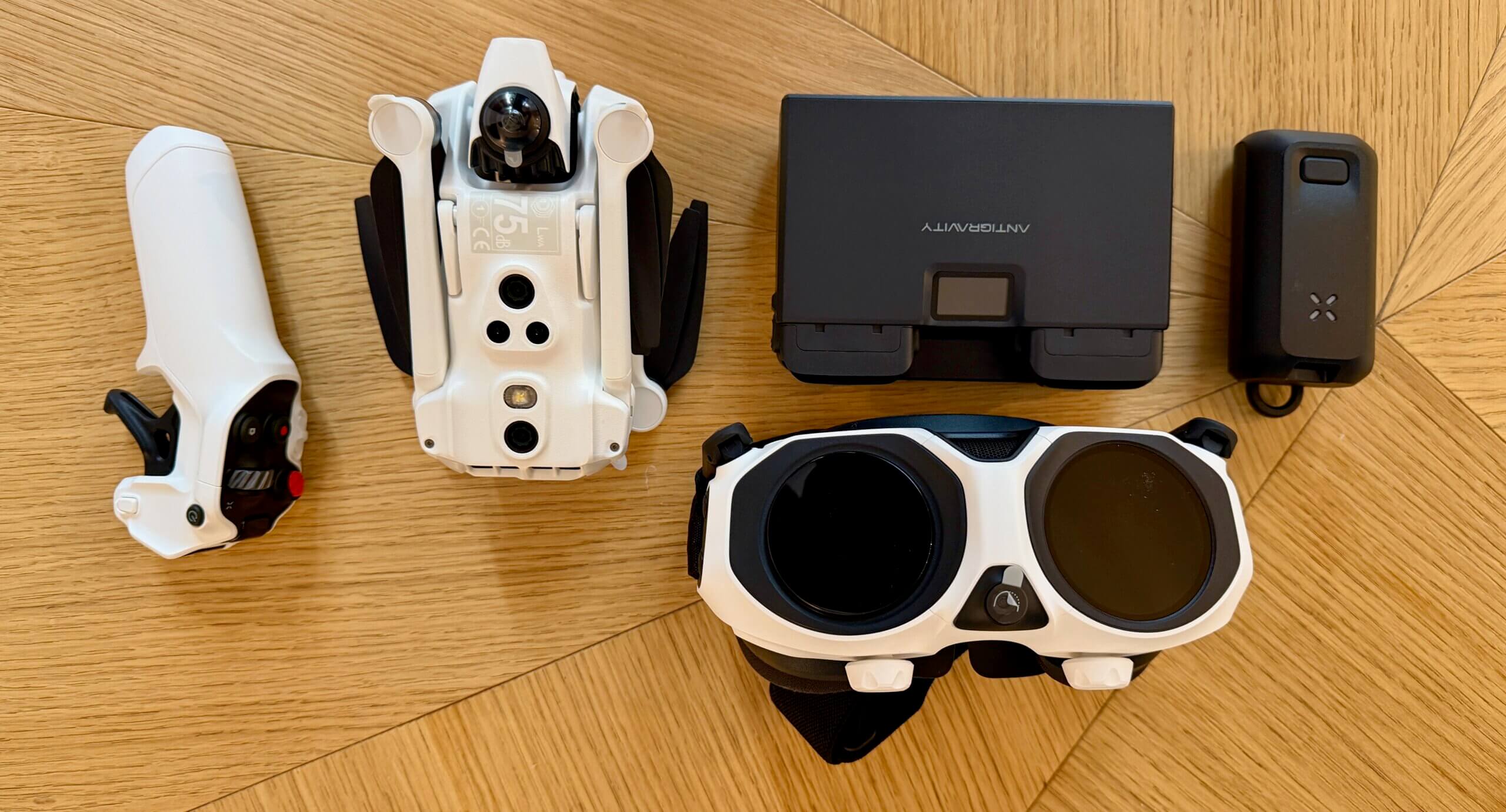
By hitting the scale at exactly 249 grams with its standard battery, the A1 bypasses these bureaucratic hurdles, making it a "sub-250g" drone. This classification is a massive advantage for international travelers who frequently navigate varying aviation laws. It ensures that the A1 remains a tool for exploration rather than a legal liability.
The Flight Experience: A Paradigm Shift
Flying the A1 is a departure from the traditional joystick-intensive experience.
The Vision Goggles
The primary interface for the A1 is the proprietary Vision Goggles. Featuring dual 4K micro-OLED displays with a 120Hz refresh rate, the goggles provide near-zero latency. The standout feature, however, is the integrated head tracking. Because the drone records in 360 degrees, the user’s field of view is not limited to a fixed camera angle. When a pilot turns their head, the video feed pans accordingly, offering a level of immersion that mimics the sensation of flight.
Motion Control vs. Manual Piloting
Antigravity has introduced a single-handed motion controller that makes flight feel intuitive. Pointing the controller dictates the flight path, while a trigger manages acceleration. Banking and climbing are handled by simple wrist movements. While the A1 does support traditional "Mode 2" stick controllers for FPV (First-Person View) enthusiasts who demand manual acrobatic control, the fluidity of the motion-based system is likely to become the new standard for the average creator.
Post-Production: The Power of "Reframing"
The "magic" of the A1 happens long after the drone has landed. The "Antigravity Studio" app allows users to download footage wirelessly at speeds of 80MB/s.
Once the 360-degree footage is imported, the user employs their phone’s gyroscope to "reframe" the video. This effectively turns the smartphone into a virtual camera, allowing the user to scrub through the timeline and move the camera angle in any direction. For solo travelers, the "Auto-Frame" feature is a game-changer; the AI identifies subjects and automatically generates a dynamic, cinematic cut, ensuring the creator stays in the center of the frame without the need for a second person to pilot the drone.
Implications for Travel Cinematography
The A1 has effectively bridged the gap between immersive VR experiences and traditional cinematic narrative.
Performance Metrics
- Stabilization: Using proprietary "FlowState" algorithms, the drone produces rock-steady footage even in 20mph winds, rendering the physical gimbal obsolete.
- Color Science: The inclusion of a 10-bit "Log" profile provides professional color-graders with the latitude needed to match A1 footage with high-end cinema cameras.
- Battery Life: The standard battery provides approximately 20 minutes of real-world flight time. While this may seem modest, the efficiency is tripled by the fact that a single flight covers all possible angles. A "Pro" battery is available for those needing 39 minutes of flight, though it pushes the drone into the over-250g regulatory category.
The "Cinewhoop" Philosophy
The A1 is built as a "cinewhoop"—a style of drone designed for stable, predictable flight rather than raw speed. While it tops out at 36 mph, it is nimble enough to navigate complex environments. A crucial safety feature is "Turtle Mode," which allows the drone to flip itself over if it lands upside down, preventing the "walk of shame" in difficult terrain.
Chronology of Development
The trajectory of the A1 began with the rise of 360-degree action cameras in 2023, which forced drone manufacturers to rethink the necessity of the gimbal. By 2024, early prototypes of "flying 360" rigs emerged, though they were often bulky and unreliable. The Antigravity A1, released in Q4 2025, was the first mass-market attempt to integrate these technologies into a chassis designed for the general traveler. Since its release, the community has seen a shift in content creation, with "virtual directing" becoming the preferred method for travel storytellers.
Official Responses and Market Impact
Industry analysts have noted that the A1’s release has pressured competitors to accelerate their own 360-degree integration. While traditional manufacturers have remained cautious about abandoning the gimbal, the "Antigravity Effect" has forced a dialogue regarding the future of aerial cinematography.
"The A1 is not just a drone; it’s a storytelling tool," says one industry expert. "By removing the technical barrier of manual framing, Antigravity has allowed creators to return to the fundamental purpose of photography: capturing the story, not just the technical settings."
Conclusion: The Future of Aerial Storytelling
The Antigravity 360 (A1) stands as the most significant development in consumer drone technology in recent years. It is not necessarily a replacement for a professional cinema drone, but for the vast majority of travelers, it represents a path to creative liberation.
While the lenses are delicate and the battery life remains a point of contention for long-form creators, the ability to "direct" a shot in post-production provides a level of flexibility that was previously unthinkable. For the solo traveler, the independent adventurer, and the aspiring filmmaker, the A1 is more than a gadget—it is an essential evolution in how we document our world.
As we look toward the future, the integration of AI-driven framing and 360-degree capture will undoubtedly continue to reshape the visual language of modern travel. Whether you are scaling a mountain or navigating a bustling city street, the Antigravity A1 ensures that you will never miss the perfect shot—because with the A1, you’ve already captured everything.