If the lights go out in your home, you call an electrician. If a pipe bursts, you call a plumber. Both roles are essential to the structural integrity and safety of the house. However, asking the plumber to inspect the electrical wiring does not make the house safer—it merely risks a botched repair and distracts the plumber from the vital task they were hired to perform.
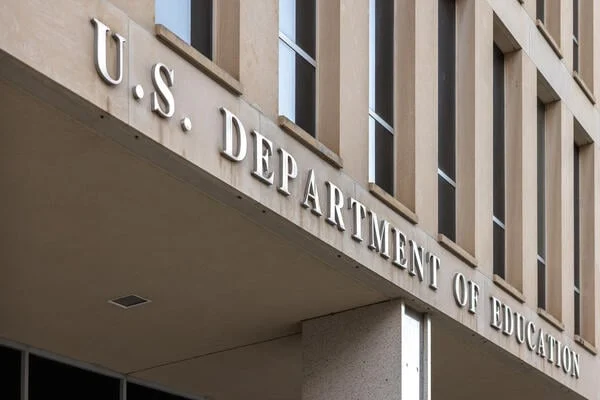
This analogy, while simple, strikes at the heart of a complex and contentious debate currently unfolding within the U.S. Department of Education. At issue are the proposed "Accreditation, Innovation and Modernization" (AIM) regulations, a set of rules intended to reshape how the federal government oversees the agencies that evaluate college quality. While the Department’s stated goals—greater accountability, enhanced student outcomes, and the fostering of innovation—are widely shared across the academic spectrum, the proposed methods of achieving them are raising alarms among those who oversee the nation’s higher education system.
The Triad of Oversight: A Historical Context
To understand the current friction, one must look at the "triad"—the long-standing regulatory framework that governs American higher education. Since the inception of federal involvement in student aid, Congress has deliberately balanced three distinct spheres of influence:
- The Federal Government: Charged with determining institutional eligibility for federal student aid programs and ensuring fiscal responsibility.
- State Governments: Responsible for the legal authorization of colleges and universities to operate within their borders.
- Independent Accreditors: Peer-review organizations tasked with the qualitative assessment of academic programs, faculty standards, and student learning outcomes.
For decades, these roles have functioned as a system of checks and balances. The system was designed to be modular; responsibilities overlap to ensure compliance, but they remain distinct. This separation of powers was a conscious choice by lawmakers to prevent the creation of a centralized, federalized system of academic control. By keeping the evaluation of "academic quality" in the hands of independent peers rather than government bureaucrats, the U.S. has maintained a diverse, competitive, and robust higher education landscape.
The AIM Regulations: A Shift in Philosophy
The Department of Education’s proposed AIM regulations, introduced to modernize the oversight process, represent a significant departure from this traditional division of labor. The Department argues that the current system is outdated, often failing to hold institutions accountable for poor student outcomes or rising costs.
However, critics, including the Council for Higher Education Accreditation (CHEA), argue that the proposal blurs the lines between these three spheres. By expanding the mandates of accreditors, the Department is effectively asking these organizations to become surrogate enforcement agencies for the federal government.
The Problem of "Scope Creep"
Under the proposed rules, accreditors could be held responsible for verifying an institution’s compliance with an expansive list of federal and state laws. While it is self-evident that universities must obey the law, the enforcement of those laws has historically been the purview of the Department of Education, the Department of Justice, and state attorneys general.
By mandating that accreditors serve as quasi-legal compliance officers, the government is fundamentally changing the nature of accreditation. An accreditor’s expertise lies in pedagogical standards, curriculum design, and institutional health—not in the adjudication of complex legal statutes. When an accreditor is forced to pivot toward legal compliance, the focus shifts away from educational quality, which is the primary value they provide to students and taxpayers.
Economic Oversight vs. Academic Mission
Perhaps the most contentious aspect of the AIM proposal is the requirement for accreditors to conduct what amounts to cost-benefit analyses of institutional spending. The proposal suggests that accreditors should judge how universities allocate their resources, specifically regarding faculty, facilities, and student services.
While accountability for financial stability is necessary, critics argue that placing this burden on accreditors oversteps the boundary between fiscal oversight and institutional autonomy. Universities are complex, mission-driven organizations. A small liberal arts college and a large research university have vastly different financial needs and resource allocation models. Forcing an accreditor to act as an auditor of these decisions interferes with the governing structures of individual institutions, which are best positioned to know how to balance their budgets in support of their specific educational missions.
Implications for Academic Freedom and Intellectual Diversity
Beyond the bureaucratic and financial concerns, there is a looming ideological question: Should Washington dictate the specific metrics for academic freedom and intellectual diversity?
The Department’s proposal hints at a more prescriptive role for the federal government in defining how accreditors measure "student achievement" and "academic life." While CHEA and other academic bodies support the goals of increased transparency and outcomes-based assessment, they argue that federal mandates on how to measure these concepts threaten the independence of the academic enterprise.
If the federal government dictates the criteria for accreditation, the risk of politicization becomes acute. Accreditation has traditionally been shielded from the shifting winds of partisan politics, precisely because it is an independent, peer-led process. If that independence is compromised by a top-down, government-driven checklist, the integrity of the entire system could be questioned.
Supporting Data and The Cost of Compliance
The practical implications of these regulations cannot be ignored. Every new requirement imposed on accreditors translates into tangible costs: more data collection, more documentation, more frequent reporting, and more staff hours dedicated to compliance rather than quality improvement.
According to institutional leaders, the higher education sector is already burdened by a high volume of administrative overhead. Critics of the AIM regulations argue that the Department has failed to provide a compelling justification that these new requirements will lead to a proportional increase in student protection or institutional quality. In the absence of such evidence, these regulations risk becoming a "compliance tax" that diverts resources away from the classroom and toward the boardroom.
Official Responses and the Path Forward
In response to the Department of Education’s public comment period, organizations like CHEA have submitted detailed critiques of the proposal. The consensus among many university leaders is that the current regulatory climate requires "smarter" accountability, not "more" accountability.
The argument is that reform should focus on the core competencies of accreditation:
- Outcome-focused assessments: Moving toward better data regarding student success post-graduation.
- Reduced burden: Streamlining existing processes to allow institutions to innovate.
- Transparency: Providing clearer, more accessible information for students and families to make informed choices.
However, the Department of Education maintains that the status quo is insufficient. In various public statements, officials have emphasized that the current system of accreditation has been too slow to respond to the changing needs of the workforce and the growing public concern over the "value proposition" of a college degree. They argue that if accreditation is to remain the gatekeeper for federal student aid, it must be held to a higher standard of public accountability.
Conclusion: A Question of Roles
As the debate over the AIM regulations continues, the fundamental question remains: What is the purpose of accreditation? If the answer is to serve as a comprehensive watchdog for every public policy objective in higher education, then the system is destined to fail. If the answer is to serve as a guardian of educational quality, then its scope must remain focused and independent.
The electrician and the plumber both serve a critical purpose in a safe house. But we should resist the temptation to hand them the same toolbox. By forcing accreditors to take on the roles of lawyers, financial auditors, and government regulators, we risk diluting their effectiveness in the one area where they are truly indispensable: ensuring that students receive a high-quality education.
As policymakers finalize these regulations, they would do well to remember that the strength of the American higher education system has always been its diversity and its autonomy. Smarter accountability will not come from more oversight, but from a clearer understanding of what each participant in the system is meant to do—and letting them do it well.