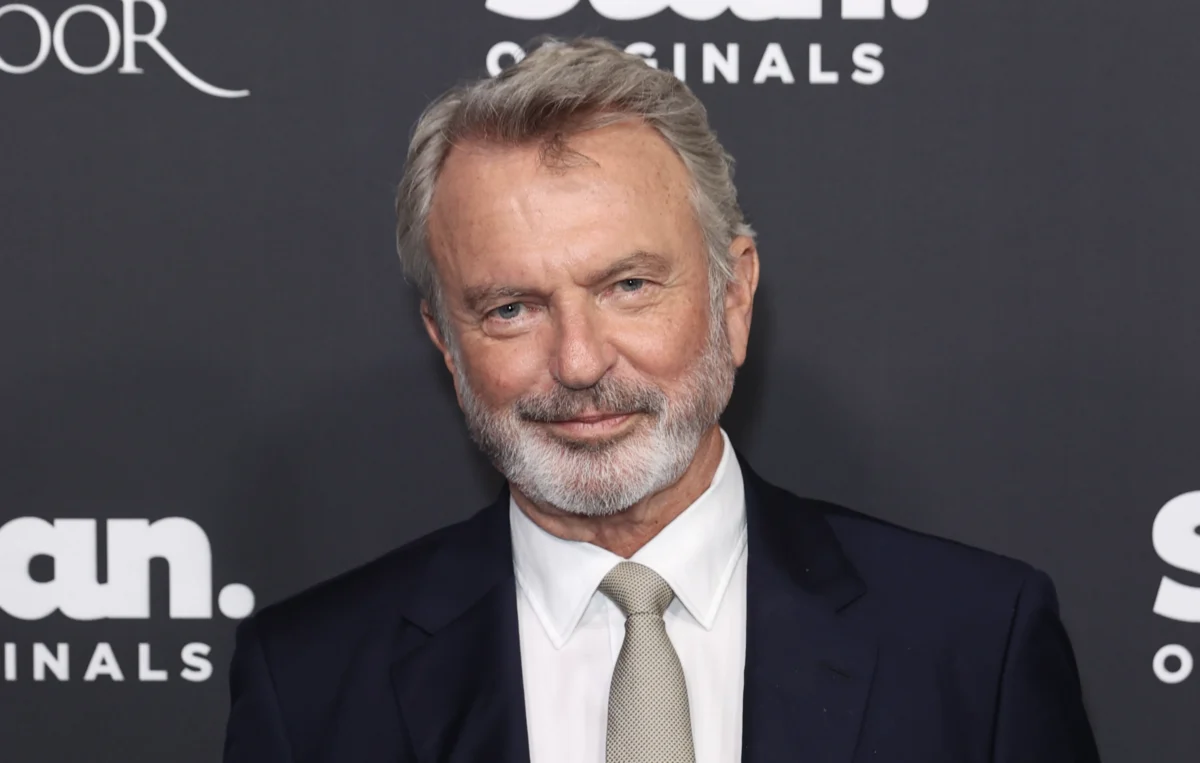
The global film community is in mourning following the passing of Sam Neill, the distinguished New Zealand actor whose career spanned more than five decades. Neill, whose work bridged the gap between gritty independent dramas and massive Hollywood blockbusters, died on July 13 in Sydney, Australia, at the age of 78.
Known for his effortless gravitas and a trademark wit that masked a profound intellectual approach to performance, Neill’s influence on cinema was as far-reaching as it was diverse. From the sun-drenched landscapes of the Australian New Wave to the high-stakes terror of Isla Nublar, Neill remained a constant, grounding presence in an industry defined by flux.
A Sudden Loss: The Final Curtain
The news of Neill’s passing was confirmed by his family in a poignant statement, which noted that his death was unexpected yet marked by the same dignity that defined his public and private life.
"It is with immense sadness that the whānau [family] of Sam Neill share the news of his passing on Monday, July 13, in Sydney, Australia," the family statement read. "Sam was surrounded by family and passed with the dignity that has characterized his whole life. The loss was sudden and unexpected but blessed by the fact that Sam remained cancer-free. They would like to express their deepest gratitude to the staff at St. Vincent’s Private Hospital for their incredible care."
The mention of his cancer-free status was particularly significant to fans, as Neill had been remarkably transparent about his arduous battle with stage-three angioimmunoblastic T-cell lymphoma. Following the press tour for Jurassic World Dominion in 2022, Neill revealed that he had been diagnosed with the blood cancer, noting that his treatment would require chemotherapy for the remainder of his life. In April of this year, he had shared the hopeful news that he was in remission, making the suddenness of his passing a jarring shock to his global fanbase.
The Formative Years: From Stutter to Stage
Born Nigel John Dermot Neill in Omagh, Northern Ireland, in 1947, the future icon’s journey to the silver screen was anything but conventional. At age seven, he emigrated with his family to Christchurch, New Zealand, where he adopted the name "Sam"—a moniker he chose to differentiate himself from the "Nigel" he felt didn’t suit his emerging identity.
Perhaps most remarkably, Neill did not initially envision himself as an actor. As a child and young man, he suffered from a severe stutter that rendered him deeply introverted. In a 2023 interview with the Sydney Morning Herald, Neill reflected on this challenge: "I was pretty silent as a child. I didn’t really want adults to talk to me because I wouldn’t be able to reply. And it wasn’t until I got to about the age of 14 or 15 that the stutter started to go away. And that coincided with getting some sort of confidence in my life as well."
That newfound confidence led him to the stage during his time at Canterbury University. Though he majored in English, the theater became his laboratory, providing the tools he needed to transform his reticence into the "wry, watchful" intensity that would eventually become his signature.
Chronology of a Storied Career
The Antipodean Breakthrough
Neill’s professional trajectory began in the burgeoning New Zealand film scene. His breakout performance came in Roger Donaldson’s 1977 action film Sleeping Dogs, which holds the distinction of being the first theatrical feature shot on 35mm film in New Zealand.
His international reputation was solidified shortly thereafter in Gillian Armstrong’s 1979 debut, My Brilliant Career. As the bewildered suitor to Judy Davis’s headstrong Sybylla, Neill displayed the romantic vulnerability that would make him a favorite of directors worldwide. By the early 1980s, he was already diversifying his portfolio, appearing in the supernatural horror Omen III: The Final Conflict and Andrzej Zulawski’s visceral, cult-classic body-horror film Possession.
The Hollywood Mainstream
The 1980s and 90s saw Neill transition into a reliable leading man for high-profile Hollywood projects. He narrowly missed out on the role of James Bond in 1987—a role that would have likely altered his career path entirely—but found his niche in sophisticated dramas and suspense thrillers.
His collaboration with Meryl Streep in Plenty (1985) and A Cry in the Dark (1988) cemented his status as an actor of high caliber, capable of holding his own against the industry’s greatest talents. This period also saw him star in the taut nautical thriller Dead Calm alongside Nicole Kidman, and the Tom Clancy adaptation The Hunt for Red October (1990), where he shone as a Russian submarine officer, proving his ability to anchor major studio tentpoles.
The Annus Mirabilis: 1993
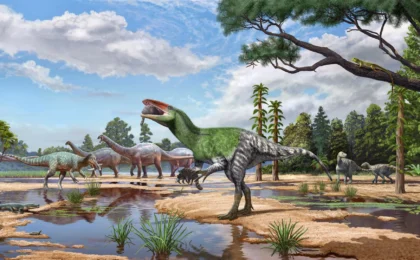
If there is a singular year that defines Sam Neill’s career, it is 1993. In a display of extreme range, he played the sadistic, repressive husband in Jane Campion’s period masterpiece The Piano, a role that showcased his capacity for menace. Simultaneously, he stepped into the role that would define his legacy: Dr. Alan Grant in Steven Spielberg’s Jurassic Park.
As the weary, pragmatic paleontologist, Neill provided the emotional heart of the franchise. He would go on to reprise the role in Jurassic Park III (2001) and Jurassic World Dominion (2022). In reflecting on the character, Neill famously told Forbes: "I always think Alan Grant is like an old comfortable pair of boots. They’ve seen better days, but they’re really comfortable… you put on the comfortable boots and the hat, and you’re back in it."
Supporting Data: An Actor’s Actor
Critic David Thomson, writing in The New Biographical Dictionary of Film, aptly summarized Neill’s enduring appeal: "There’s a Sam Neill who seems always there in large films, watching Meryl Streep or the dinosaur with the basic common sense that knows all stars are alike… Then look again, and see what a wry, watchful actor he is, [of] considerable intelligence."
Neill’s body of work is a testament to this versatility. Whether he was portraying the Arthurian wizard in the Emmy-nominated Merlin (1998), the foster uncle in Taika Waititi’s Hunt for the Wilderpeople (2016), or making whimsical cameos in the Marvel Cinematic Universe, Neill never allowed his celebrity to overshadow the character. He maintained a groundedness that kept him rooted in New Zealand, where he operated his Two Paddocks winery—a passion project that became an essential part of his public identity in his later years.
Implications: A Legacy Beyond the Screen
The passing of Sam Neill leaves a palpable void in the artistic landscape of the Southern Hemisphere. As a pioneer of the Australian and New Zealand film movements, his commitment to his craft provided a blueprint for generations of actors in the region to follow.
Beyond the accolades, the Golden Globe nominations, and the box-office records, Neill’s legacy is defined by his resilience. His decision to pen his memoir, Did I Ever Tell You This?, in the immediate wake of his cancer diagnosis, offered fans a rare, intimate look at a man who approached his mortality with the same inquisitive, calm intelligence he brought to his greatest roles.
He is survived by his two children: Tim, from his marriage to actress Lisa Harrow, and Elena, from his marriage to makeup artist Noriko Watanabe. As the world reflects on the life of this "patient, loyal servant" of the arts, his body of work stands as an enduring record of a life well-lived—a career that, much like his performance as Dr. Alan Grant, remained a comfortable, steadying presence for audiences for over half a century.
While the industry will surely honor his memory in the coming months, perhaps the most fitting tribute is to return to the films themselves—to witness, once again, the watchful, intelligent, and deeply human actor who taught us that even in the face of dinosaurs, madness, or the unknown, there is always a place for common sense and courage.