RIYADH / TEHRAN / GAZA CITY – The Middle East faced a volatile 24-hour period as a series of military escalations, judicial executions, and maritime blockades signaled a deepening of the regional crisis. From the first emergency alerts in the Saudi capital of Riyadh in months to the execution of an alleged Israeli spy in Iran and continued fatalities in the Gaza Strip, the geopolitical landscape remains precariously balanced on the edge of a wider conflict.
Main Facts: A Region Under Siege
The primary development overnight centered on Saudi Arabia, where the Ministry of Defense issued a series of urgent warnings regarding a "hostile aerial threat." For the first time since the most recent escalation of the conflict with Iran-backed Houthi rebels in Yemen, air defense sirens and emergency mobile alerts were activated in the capital, Riyadh. While no casualties were reported, the psychological impact of the alerts on the Saudi populace underscores the fragile nature of the regional security architecture.
Simultaneously, the "shadow war" between Israel and Iran reached a grim milestone with the execution of Hossein Pedram, an Iranian national convicted of espionage for the Israeli intelligence agency, Mossad. The execution comes amid a broader surge in capital punishment within the Islamic Republic, drawing sharp condemnation from international human rights organizations.
On the humanitarian and military fronts in the Levant, Israeli airstrikes in Gaza killed three individuals, including the son of a high-ranking health official, while the Israeli Defense Forces (IDF) conducted retaliatory strikes against Hezbollah positions in southern Lebanon. These events coincide with a dire report from UNRWA regarding the collapse of the educational infrastructure in Gaza, where nearly 300,000 children are attempting to resume schooling in the ruins of their former lives.
Chronology of Events
The timeline of the past 24 hours illustrates a rapid succession of events across several sovereign borders:
- Friday Evening: Saudi air defense systems identify unidentified aerial objects crossing into the Kingdom’s airspace. Emergency alerts are triggered across multiple provinces, including Riyadh.
- Late Friday Night: Reports emerge from the Syrian province of Deir el-Zour of a massive explosion at a military arms depot in the village of Ayash. Eleven Syrian soldiers are confirmed dead.
- Saturday Morning (Tehran): Iranian state media announces the execution of Hossein Pedram. The report links his alleged espionage to military sites targeted during a previous 12-day conflict involving the U.S. and Israel.
- Saturday Morning (Gaza/Lebanon): Israeli strikes hit the Shijaiyah neighborhood and Jabaliya refugee camp. In southern Lebanon, an IED targets an Israeli military vehicle, prompting immediate airstrikes on Nabatiyeh al-Fawqa.
- Saturday Afternoon: U.S. Central Command (CENTCOM) releases data regarding the Strait of Hormuz, claiming a successful maritime blockade against Iranian oil exports while ensuring the flow of global energy supplies.
- Saturday Afternoon (Diplomatic): Pakistani Foreign Minister Ishaq Dar initiates a high-level call with his Iranian counterpart to discuss the safety of commercial shipping and the stabilization of energy prices.
Supporting Data: Energy Markets and Human Costs
The scale of the current crisis is best understood through the lens of recent data provided by international monitors and military officials.
The Maritime Chokepoint
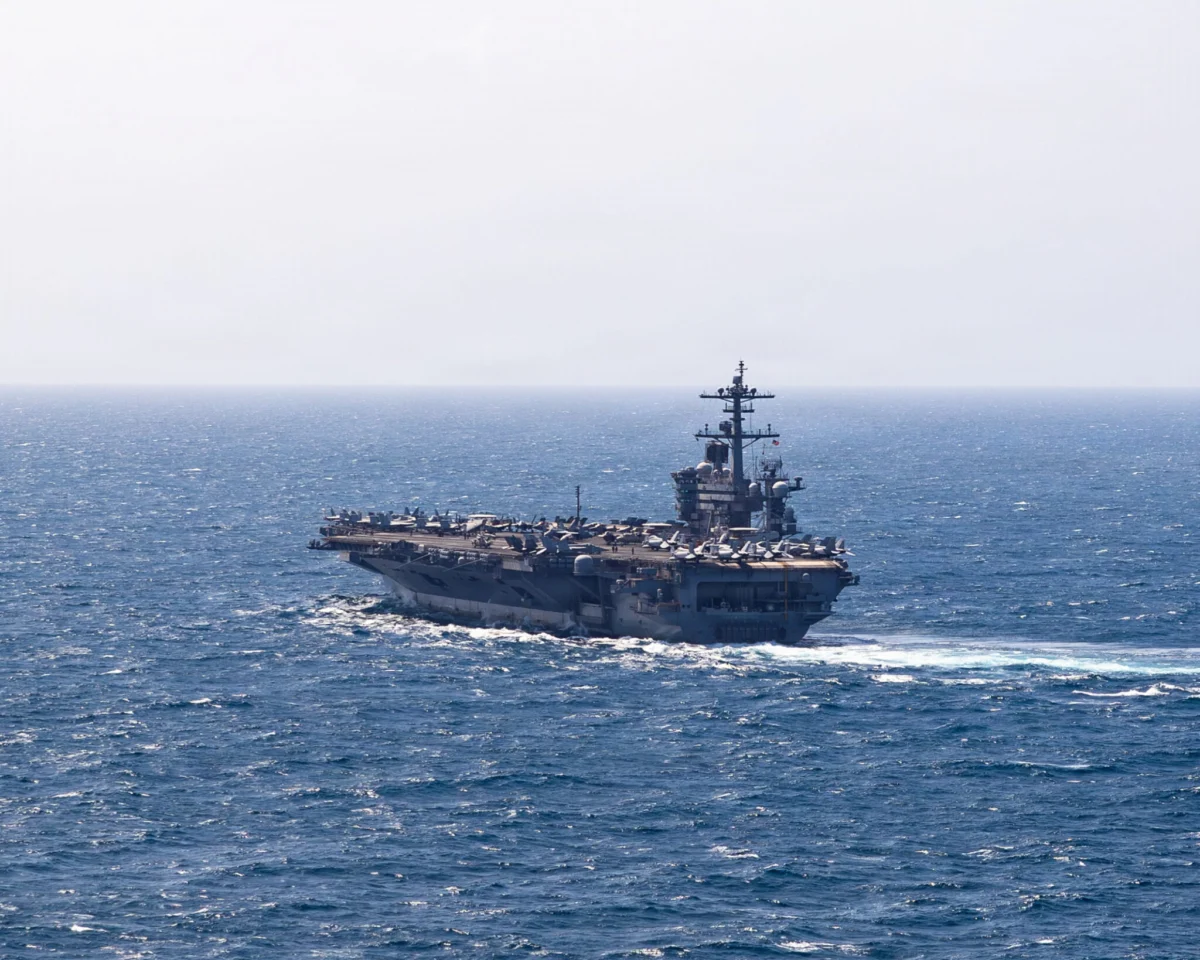
According to Admiral Brad Cooper, head of U.S. Central Command, the U.S. military has overseen the transit of approximately 1 billion barrels of oil through the Strait of Hormuz over the last two months. This period has been characterized by an aggressive U.S. naval presence intended to counter Iranian influence. Adm. Cooper asserted that Iran has "exported zero barrels" during this window due to the efficacy of the U.S. blockade.
However, independent maritime monitors suggest a more nuanced reality. While shipping volumes for oil and natural gas have hit a six-month high in the last two weeks, overall traffic remains significantly below pre-war levels. The Strait of Hormuz remains the world’s most important energy chokepoint, through which roughly 20% of the world’s traded oil and gas flowed prior to the current hostilities.
The Educational Vacuum in Gaza
The United Nations Relief and Works Agency (UNRWA) provided a staggering update on the state of education in the Gaza Strip.
- Current Students: 280,000 children are currently enrolled in makeshift programs.
- Infrastructure Loss: Out of 182 fully equipped schools operated by UNRWA three years ago, 95% have been destroyed or rendered unusable.
- Conditions: Classes are being held in tents or "charred shells" of buildings, often without desks or basic supplies, forcing children to sit on blankets on the floor.
Casualties and Judicial Trends
In Iran, the execution of Pedram is part of a "surge" noted by rights groups. In Gaza, the Ministry of Health reports that despite the subsidence of full-scale "high-intensity" warfare since the October ceasefire, Israeli fire has claimed the lives of over 13,780 Palestinians.
Official Responses
Saudi Arabia and the Houthi Threat
The Saudi government has remained relatively tight-lipped about the specifics of the "hostile aerial threat." While authorities did not explicitly name the Houthi rebels in the immediate aftermath of the Riyadh alerts, the Ministry of Defense noted that they have a "proven track record of intercepting Houthi-launched drones and ballistic missiles." The activation of the capital’s defense perimeter suggests a heightened level of concern regarding the rebels’ reach.
Iran’s Judicial and Social Stance
The Tehran prosecutor’s office has taken a hardline stance on both national security and social order. Regarding the execution of Pedram, state TV emphasized that "no mercy will be shown to those who compromise the security of our sensitive military sites."
Domestically, the regime is also doubling down on Sharia law. Charges were filed today against the organizers of a 10-kilometer race in Tehran after roughly 5% of female participants were filmed running without headscarves. Habib Sotoudehnejad, head of Tehran’s sports department, stated that "legal and Islamic Sharia must be observed in all public spheres," signaling that the government will not relax its enforcement of modesty laws despite previous civil unrest.
The United States and Regional Security
CENTCOM’s Admiral Cooper framed the U.S. naval mission as a success in maintaining global economic stability. By clearing mines from primary transit lanes and enforcing a blockade on Iranian exports, the U.S. aims to decouple the Iranian economy from the global energy market while protecting allied shipments.
Pakistan’s Economic Anxiety
In Islamabad, Foreign Minister Ishaq Dar expressed "grave concern" over the potential for shipping disruptions. Pakistan is currently facing internal political instability; Prime Minister Shehbaz Sharif is under pressure from Islamist parties threatening to march on the capital if fuel prices are not lowered. Dar’s call to Iran was a strategic move to ensure that regional volatility does not further cripple Pakistan’s struggling economy.
Implications: A Fragile Future
The events of this Saturday suggest several critical implications for the coming weeks:
- Escalation of the Proxy War: The alerts in Riyadh indicate that the Houthi rebels remain a potent threat to the Saudi heartland. If the rebels successfully strike a high-value target in the capital, it could force Saudi Arabia back into a full-scale military intervention in Yemen, ending the current fragile peace process.
- The Shadow War Goes Public: The execution in Iran and the Israeli strikes in Lebanon and Gaza show that the "rules of engagement" are shifting. Both Israel and Iran are increasingly willing to take actions that were previously reserved for covert operations, bringing the two nations closer to direct kinetic confrontation.
- The Persistence of the Humanitarian Crisis: The UNRWA report highlights a "lost generation" in Gaza. Without a functional education system and with infrastructure largely decimated, the long-term socio-economic recovery of the region is moving from "difficult" to "near-impossible."
- Global Energy Volatility: While the U.S. claims to have the Strait of Hormuz under control, the discrepancy between military reports and independent monitors suggests that the global oil supply remains vulnerable. Any miscalculation in the waterway could lead to a sudden spike in global energy prices, with devastating effects on developing economies like Pakistan.
As night falls over the Middle East, the region remains a patchwork of active conflict zones and simmering tensions. The "hostile aerial threats" over Riyadh and the charred remains of vehicles in Gaza City serve as a stark reminder that despite diplomatic efforts, the momentum of the conflict continues to outpace the efforts for peace.