For decades, Emily Watson has been the gold standard of dramatic intensity. From her haunting, Academy Award-nominated turn in Lars von Trier’s Breaking the Waves to the sharp, ensemble-driven wit of Robert Altman’s Gosford Park, Watson has built a career defined by nuanced, independent cinema. However, the veteran actress is currently navigating a significant career pivot: stepping into the sprawling, high-stakes, and CGI-heavy expanse of HBO’s Dune: Prophecy.
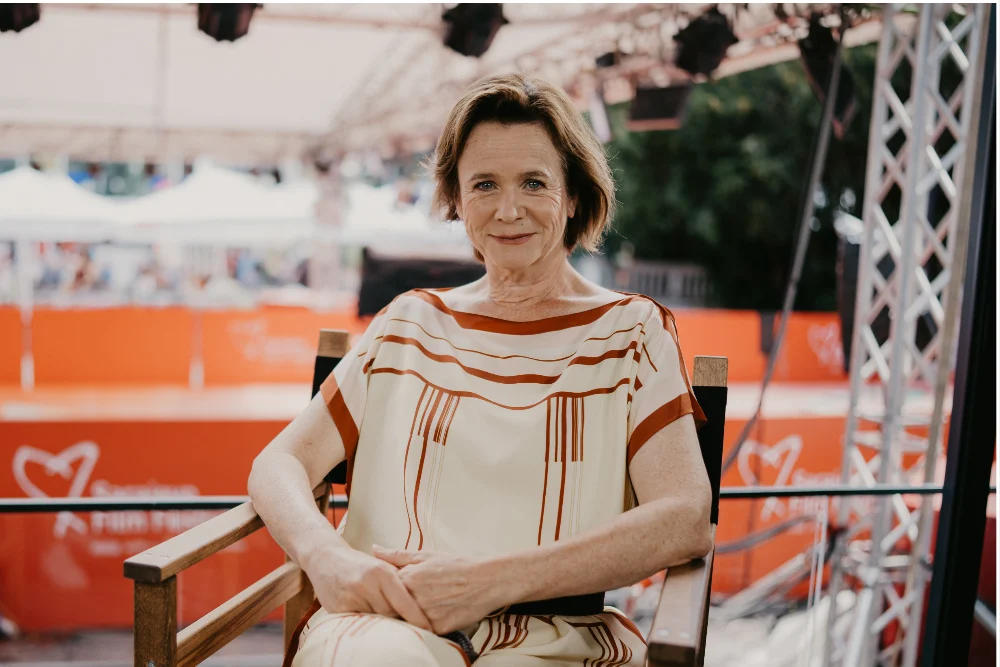
Speaking at the Variety Lounge, presented by the Sarajevo Film Festival and BH Telecom, Watson reflected on this professional transformation, her role as Valya Harkonnen, and the philosophy of mentorship that continues to ground her work even in the most gargantuan of studio environments.
The Shift: Embracing the "Prophecy"
Transitioning from the intimate, raw environments of European arthouse film to the massive, soundstage-dominated production of a global sci-fi franchise is no small feat. For Watson, the adjustment was both challenging and surprisingly liberating.
“It was a true departure for me to be in a spaceship,” Watson admitted with a laugh. “You know, it’s actually really good fun.”
In Dune: Prophecy, Watson stars as Valya Harkonnen, a character that places her at the heart of the complex political and religious machinations that define Frank Herbert’s universe. While the series has already filmed its second season—a testament to the confidence HBO has in the project—the release remains shrouded in mystery. Watson, known for her professional discretion, offered only a tantalizing hint of what’s to come.
“There are a lot of new elements, really interesting and intriguing things… I think my head will blow off if I mention any of them,” she quipped, maintaining the intense secrecy that has become a hallmark of the Dune brand.
Chronology: A Career of Constant Reinvention
Watson’s trajectory from the 1990s to the present day serves as a blueprint for the modern character actor.
- 1996: Watson achieves international acclaim for her role as Bess McNeill in Breaking the Waves, a film that cemented her reputation for emotionally raw, uncompromising performances.
- 2001: She demonstrates her range by joining the sprawling ensemble cast of Robert Altman’s Gosford Park, proving her ability to excel in intricate, dialogue-heavy period dramas.
- 2005: Watson makes her first visit to the Sarajevo Film Festival, serving as a curator for the Katrin Cartlidge Foundation—an organization honoring her late Breaking the Waves co-star, who passed away in 2002.
- 2024: Watson returns to Sarajevo as the Jury President and recipient of the Heart of Sarajevo Award, marking a full-circle moment in her career.
- Current Era: Watson bridges the gap between prestige independent film and massive intellectual properties like Dune: Prophecy and her recent work on Mira Nair’s historical drama, AMRI.
Supporting Data: The Mentorship Philosophy
While Dune: Prophecy is fueled by "a lot of money" and corporate ambition, Watson insists that the human element remains the most vital component of any production, regardless of its budget. She noted that the Dune set was populated by a large ensemble of young, relatively inexperienced performers—a dynamic she actively leaned into.
“I always give people advice to nurture a relationship with somebody less experienced,” she stated. “Interconnectedness is how we all survive. Surviving in the world of independent film is hard. There are so many things that fall by the wayside, get destroyed and steamrolled. If we are all together, we are stronger.”
For Watson, mentorship is not merely a charitable act; it is a survival strategy for the industry. By fostering bonds between veteran performers and newcomers, the stability of the production increases. This philosophy reflects her long-standing commitment to the filmmaking community, particularly in regions like Bosnia, where she has seen firsthand how "culture is resistance."
Official Responses and Industry Outlook
When asked about the wider Dune franchise, particularly Denis Villeneuve’s highly anticipated Dune: Part Three, Watson’s enthusiasm was palpable. Despite being a major player in the Dune universe herself, she remains a spectator at heart.
“I mean, I can’t wait to see that movie,” she said. “I’m a huge fan of him, obviously, and it’s stuffed full of incredible actors that I love.”
Her appreciation for Villeneuve’s work underscores a respect for the craft that transcends her own participation in the series. It is this level of humility and passion that has allowed her to transition seamlessly into the world of blockbusters without losing the artistic integrity that defined her early career.
Implications: A Global Perspective
Watson’s recent work, particularly her collaboration with director Mira Nair on AMRI, further highlights her global perspective. The film chronicles the life of Hungarian-Indian painter Amrita Sher-Gil, with Watson portraying the artist’s mother.
The production process—which saw Watson moving from Budapest to India—was, in her own words, "the most amazing adventure." The experience of being surrounded by a non-Western crew and a visionary like Nair has clearly left an impression on the actress.
“She is one of those people who kind of gathers an energy and a force,” Watson said of Nair. “It was amazing.”
The implications of Watson’s recent career choices are clear: she is no longer bound by genre or scale. Whether she is navigating the treacherous political waters of the Harkonnen family or portraying a historical figure in a multi-continental production, Watson is driven by the strength of the story and the quality of the collaborators.
Conclusion: The Pure Form of Cinema
Returning to Sarajevo this year was a deeply emotional experience for the actress. Revisiting Breaking the Waves—a film so inextricably linked to her late friend and colleague Katrin Cartlidge—reminded her of the core purpose of cinema.
“This festival feels like the pure form of what a festival should be,” she noted. “It embodies the idea that culture is resistance.”
As Watson looks toward the future, her schedule remains packed with ambitious projects. While fans wait for the release of Dune: Prophecy Season 2 and the eventual debut of AMRI, the industry continues to look to her as a rare bridge between the high-octane world of streaming giants and the soul-searching depths of independent filmmaking.
In an era where franchises often swallow the identities of their actors, Emily Watson remains a force of nature, using her platform to mentor the next generation and continuing to seek out the "adventures" that keep her craft, and her spirit, alive.