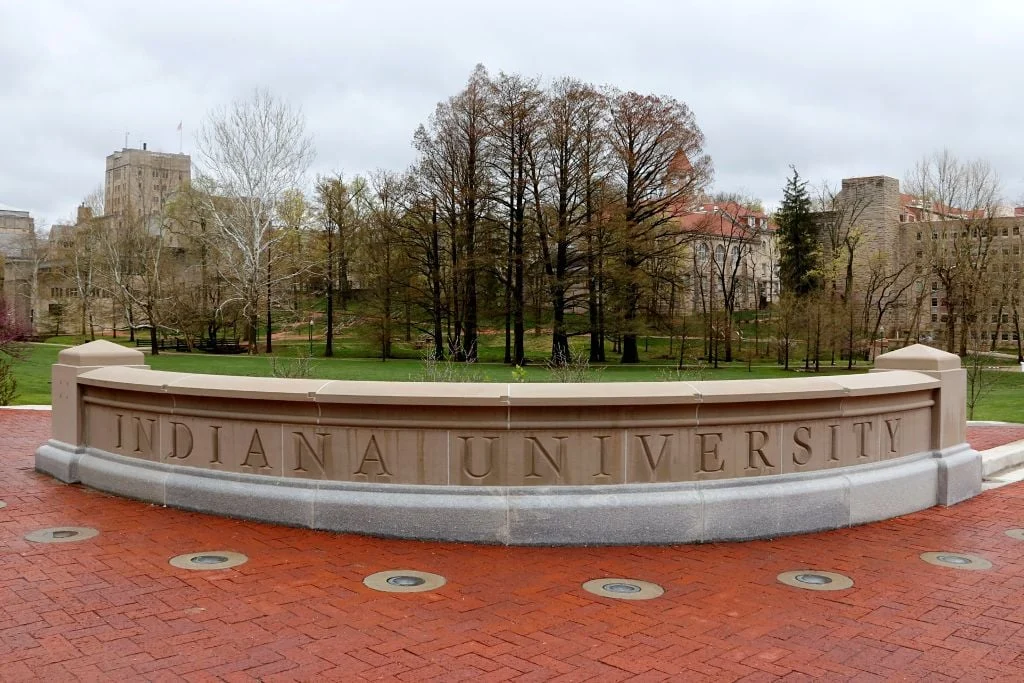
Introduction: A Campus in Conflict
The landscape of higher education in Indiana has become an increasingly volatile battleground where the intersection of pedagogical autonomy and legislative mandate is being tested. This week, the tension reached a critical inflection point as Jessica Adams, a lecturer at Indiana University (IU), learned that her contract would not be renewed for the upcoming academic year. Her departure follows a protracted and highly publicized investigation into her classroom materials, specifically a graphic detailing the spectrum of white supremacy.
The decision to deny Adams’s reappointment has ignited a firestorm of debate, drawing in students, faculty advocacy groups, and legal observers. At the heart of the controversy is a 2024 state law requiring faculty to demonstrate "intellectual diversity" in their instruction—a mandate that critics argue has morphed into a tool for ideological policing. As the university remains largely silent, citing personnel confidentiality, the academic community is left to grapple with the broader implications of what many perceive as a chilling effect on free inquiry.
The Catalyst: A Graphic and an Anonymous Complaint
The sequence of events that led to Adams’s termination began in her course, Diversity, Human Rights and Social Justice. During a lecture, Adams utilized an educational resource created by the Safehouse Progressive Alliance for Nonviolence (SPAN). The document, designed to foster discussion, categorizes various societal behaviors into "overt" and "covert" forms of white supremacy.
While such materials are common in sociology and social justice curricula, the reaction from one of Adams’s students was swift and decisive. The student filed an anonymous complaint, alleging that the inclusion of the graphic violated the state’s 2024 intellectual diversity legislation. This law, championed by proponents as a safeguard against "indoctrination" in public classrooms, requires professors to present a broad range of viewpoints, particularly on sensitive sociopolitical topics.
The university’s response was immediate. Adams was removed from her classroom duties mid-semester while an investigation was launched to determine if her teaching materials fostered a hostile environment or failed to meet the statutory requirement for balanced discourse.
Chronology of a Professional Crisis
The timeline of Adams’s tenure at Indiana University reveals a steady escalation from academic scrutiny to administrative severance:
- Pre-2024: Adams serves as a lecturer in the department, teaching courses focused on human rights and social justice.
- Early 2024: Indiana passes legislation regarding "intellectual diversity" in higher education, empowering students to report faculty who they believe are failing to present diverse perspectives.
- Late 2025: A student in Adams’s course files an anonymous complaint regarding the SPAN graphic on white supremacy.
- November 2025: Following the complaint, the university administration formally removes Adams from her teaching duties, citing an ongoing investigation into her compliance with the 2024 law.
- Winter 2025–2026: Adams undergoes a formal review process. She is subsequently sanctioned by the university. Despite the sanction, Adams reportedly expressed a sense of security, telling media outlets that she did not believe her employment status was fundamentally at risk.
- June 2026: The university informs Adams that her contract will not be renewed for the upcoming academic year.
The "Intellectual Diversity" Mandate: A Legal Context
To understand the gravity of Adams’s situation, one must examine the legal environment in Indiana. The 2024 legislation was enacted under the premise of protecting students from ideological bias. Supporters of the law argue that higher education institutions have become monolithic, failing to expose students to conservative or traditional viewpoints.
However, legal scholars and faculty unions argue that the law is dangerously vague. "Intellectual diversity" is not defined with enough precision to provide a safe harbor for instructors, they contend. When a professor is subject to an anonymous investigation for a single graphic, it creates a "surveillance culture" within the classroom. Students may feel emboldened to act as ideological monitors, and professors may resort to self-censorship to avoid being the target of a similar, career-ending inquiry.
Official Responses and Institutional Silence
Indiana University has maintained a rigid posture of non-disclosure. When reached for comment regarding the specifics of Adams’s case, a university spokesperson stated, "The university does not comment on individual personnel matters." This lack of transparency has fueled speculation and deepened the divide between the administration and the faculty body.

Conversely, the University Alliance for Racial Justice (UARJ) has been vocal in its condemnation. In a recent press release, the organization described the non-reappointment of Adams as a failure of institutional due process. The group noted that the university did not provide sufficient notice to the lecturer, violating standard protocols for contract non-renewal.
"This is not an isolated incident," the UARJ stated. "This is part of a larger pattern of institutional overcompliance and political pressure affecting higher education in Indiana. By bowing to external political mandates, the university is actively dismantling the very freedom of thought that it is supposed to cultivate."
Implications for Higher Education
The case of Jessica Adams serves as a litmus test for the future of academic freedom in public universities. Several key implications arise from this situation:
1. The Chilling Effect on Pedagogy
When professors fear that an anonymous complaint can trigger a months-long investigation and lead to the loss of their livelihood, they are less likely to engage with challenging, contemporary, or controversial topics. This effectively narrows the scope of the university experience, potentially leaving students ill-equipped to engage with the complexities of the modern world.
2. The Erosion of Faculty Autonomy
Academic freedom is traditionally predicated on the idea that experts in their fields have the right to curate their own curricula. The intervention of state law into the content of a specific lecture—and the subsequent administrative sanctions—suggests a shift in power dynamics where the classroom is now subject to the oversight of the state and the subjective satisfaction of the individual student.
3. The Burden of "Overcompliance"
The UARJ’s mention of "institutional overcompliance" is particularly telling. Many observers argue that universities, fearing loss of state funding or political backlash, are preemptively disciplining faculty to appease legislators. This institutional risk-aversion, while perhaps protecting the university’s budget, comes at the direct expense of its academic mission.
Conclusion: A Uncertain Future
The non-reappointment of Jessica Adams is more than a labor dispute; it is a signal of the changing nature of the American university. As public institutions navigate the pressure to align with evolving political mandates, the traditional role of the lecturer as an independent voice is being squeezed.
For Indiana University, the challenge lies in reconciling its commitment to intellectual diversity with its duty to uphold academic freedom. If the current trajectory continues—where anonymous reporting and legislative mandates dictate curriculum—the university risks becoming a place where safety is prioritized over inquiry, and consensus is favored over critical thinking.
As of this week, Adams is moving on, and the discourse surrounding her exit continues to reverberate through the halls of Indiana University. Whether this case serves as a warning or a harbinger of a new era in higher education remains to be seen. For now, the academic community in Indiana remains deeply divided, watching closely to see who might be next to face the scrutiny of a changing pedagogical landscape.