In the high-stakes world of manufacturing and logistics, the difference between market leadership and obsolescence often boils down to a single metric: the velocity of decision-making. For years, the gold standard for rapid, iterative operations was set by Tesla, particularly during the grueling "production hell" of the 2018 Model 3 ramp-up. Today, the architects of that operational intensity are bringing those same principles to the broader enterprise market through Atomic, a supply chain AI startup that has just secured $12.5 million in Series A funding.
Atomic, a Boston-based startup that emerged from stealth last year, is fundamentally changing how global companies manage inventory. By leveraging agentic AI to simulate infinite scenarios and execute autonomous decisions, the company is moving supply chain management out of the static, error-prone realm of spreadsheets and into a dynamic, real-time operating system.
The Genesis: Solving for "Production Hell"
The conceptual origins of Atomic trace back to the most volatile period in Tesla’s recent history. As the company struggled to scale the Model 3, its internal teams faced a bottleneck that plagues nearly every large-scale manufacturer: the speed at which planning data could be updated, analyzed, and acted upon. Traditional spreadsheet-based modeling simply could not keep pace with the hyper-accelerated cadence of Tesla’s production environment.
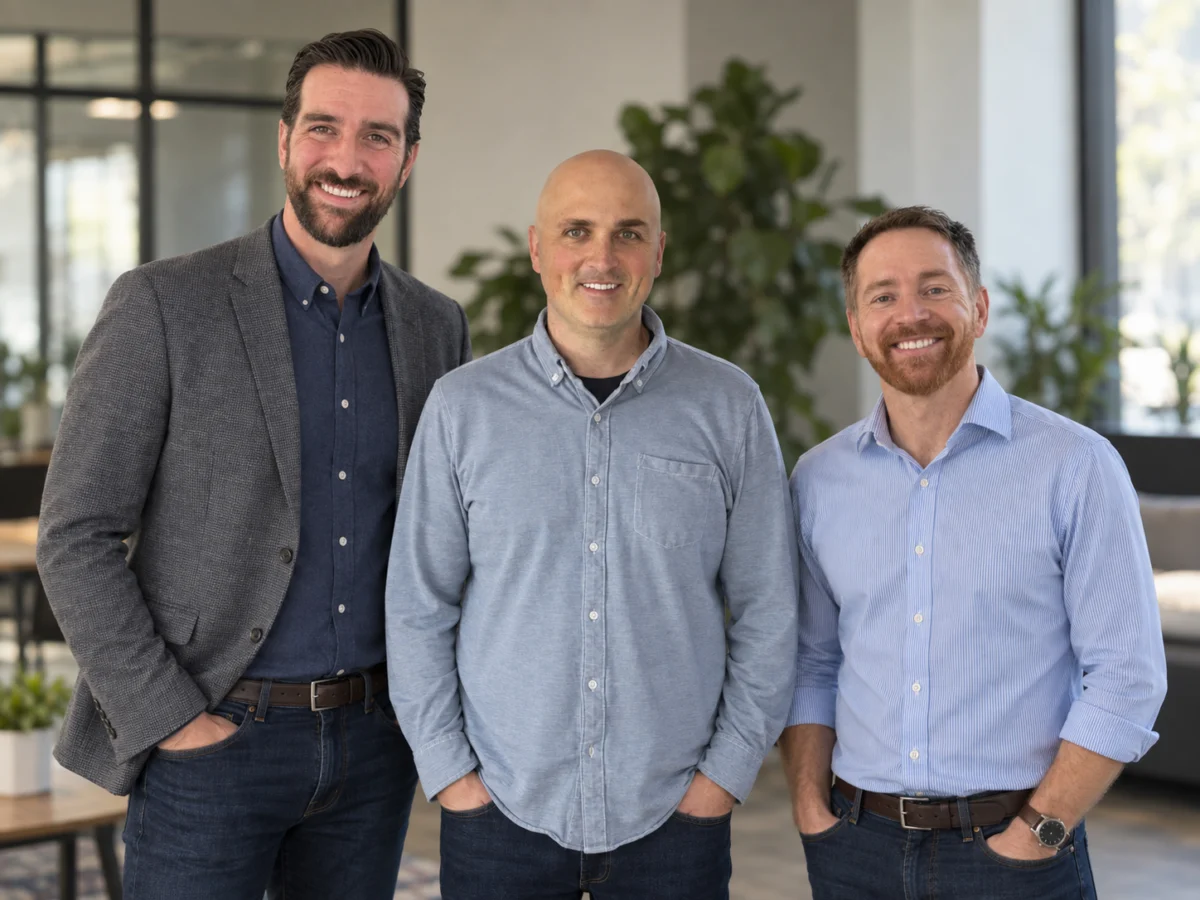
Founders Michael Rossiter and Neal Suidan, both former Tesla supply chain leaders, recognized that the traditional approach to inventory management—characterized by manual data entry and reactive adjustments—was fundamentally incompatible with the needs of modern, agile enterprises. They began developing an internal system designed to simulate complex supply chain variables and recommend—or, as the platform evolved, execute—optimal logistics decisions.
This "Tesla-born" logic serves as the backbone of Atomic. By treating the supply chain not as a static linear process but as an "infinite search space" of potential outcomes, the platform uses AI to navigate the "forest" of logistical variables, identifying the most efficient paths to procurement, distribution, and inventory balancing.
Financial Momentum and Strategic Expansion
Atomic’s value proposition has resonated deeply with the market, resulting in a rapid acceleration of its business. Since the beginning of this year, the company’s annual recurring revenue (ARR) has quintupled, a testament to the platform’s transition from theoretical pilot programs to large-scale enterprise integration.
This growth trajectory caught the attention of major venture capital firms, culminating in a $12.5 million Series A funding round. The round was led by growth equity firm Klass Capital and Seattle-based Madrona Venture Group. With this latest infusion, Atomic’s total funding has surpassed $15 million.
The capital injection coincides with a significant expansion of the company’s leadership team. Jeff Goodrich, a veteran of Tesla’s planning division, has joined as the company’s third co-founder and CTO, signaling a strategic intent to double down on the technical rigor that defined the founders’ work at the EV giant.
The Shift Toward Agentic Autonomy
The most striking evolution of Atomic’s platform lies in its move from an advisory role to an executive one. Early iterations of the software functioned as an optimization engine, providing human operators with recommendations. However, the current iteration has achieved a level of "agentic" capability where the software acts on its own authority.
Jon McNeill, a former Tesla president and the founder of DVx Ventures—the incubator where Atomic was born—noted that the platform’s efficacy is currently being tested and proven at a massive scale.
"The product has evolved from being an optimization platform that gives recommendations to a platform that not only gives recommendations but it makes decisions," McNeill said. "It’s fully autonomous in that sense. DoorDash is running, I think, 90% of its purchasing across hundreds of sites [using Atomic]."
For a company like DoorDash, the implications of this autonomy are tangible. By delegating purchasing decisions to an AI that can ingest data across hundreds of locations simultaneously, the company significantly reduces waste and spoilage. The AI accounts for demand fluctuations, shelf-life constraints, and logistical costs, performing calculations in milliseconds that would take human teams days to reconcile.
Adapting to Diverse Industrial Verticals
While the platform’s roots are in automotive manufacturing, Rossiter emphasizes that Atomic’s model is "industry-agnostic." The fundamental challenge of a supply chain—balancing supply and demand under uncertainty—remains constant, whether one is dealing with consumer packaged goods (CPG), mobility, or high-end manufacturing.
"The cool thing about Atomic is it’s a general model of how you think about supply chains and operating models," Rossiter explained. "No matter what that system looks like, our AI can adapt to it and tailor-fit it. We’re working with CPG, we’re going deep with mobility and manufacturing clients right now as well, and working that space, kind of going back to our Tesla roots."
The ability to adapt quickly to new client environments has been a cornerstone of Atomic’s onboarding strategy. Under the direction of Chief Product Officer Neal Suidan, the company has prioritized "zero-event" onboarding—making it seamless for customers to integrate the platform into existing systems. The AI is sophisticated enough to map out a customer’s existing "decision rules," even those that exist only as tribal knowledge within a company’s workforce and have never been formally documented.
The Competitive Advantage: Decision Speed
The overarching philosophy driving Atomic is the concept of "decision speed as a competitive advantage." This principle, which Rossiter and his team witnessed firsthand under Elon Musk, suggests that companies capable of making informed decisions faster than their competitors gain a compounding advantage over time.
"Decision speed is an advantage in any business," McNeill observed. "This was one of our first principles at Tesla. [Musk] said the thing that will separate us from all of our competitors is decision speed, because decision speed compounds. I make a decision today, I build on that decision tomorrow, et cetera, and it takes one of our competitors, like Ford or Toyota, 30 days to make the first decision."
By automating the mundane, data-heavy aspects of supply chain management, Atomic frees up human talent to focus on high-level strategy and innovation. The software acts as a force multiplier, allowing executives to pivot operations in response to market shifts with a level of agility that was previously impossible in large, legacy organizations.
Implications for the Future of Operations
The broader implication of Atomic’s rise is the shift in how enterprises value operational data. Historically, finance departments have enjoyed the lion’s share of technological investment, with sophisticated ERPs and analytics suites dedicated to the bottom line. Conversely, operating data has often been relegated to siloed, secondary systems.
Rossiter believes this is a fundamental imbalance. "Finance data always gets the priority," he noted. "Operating data doesn’t always get that." Atomic is effectively challenging this paradigm, treating operational data as the lifeblood of the organization.
As the industry looks toward a future defined by AI-driven enterprise resource planning, the success of companies like Atomic suggests that the next generation of industrial leaders will not be defined solely by their product quality, but by the speed and intelligence of the software stack that powers their supply chain.
By successfully bridging the gap between the high-octane environment of Tesla and the diverse requirements of the global market, Atomic has positioned itself as a critical player in the emerging era of agentic, autonomous operations. With a fresh round of funding and a proven track record among marquee clients, the company is no longer just a startup with a promising idea; it is an engine of efficiency, actively rewriting the rules of industrial planning.