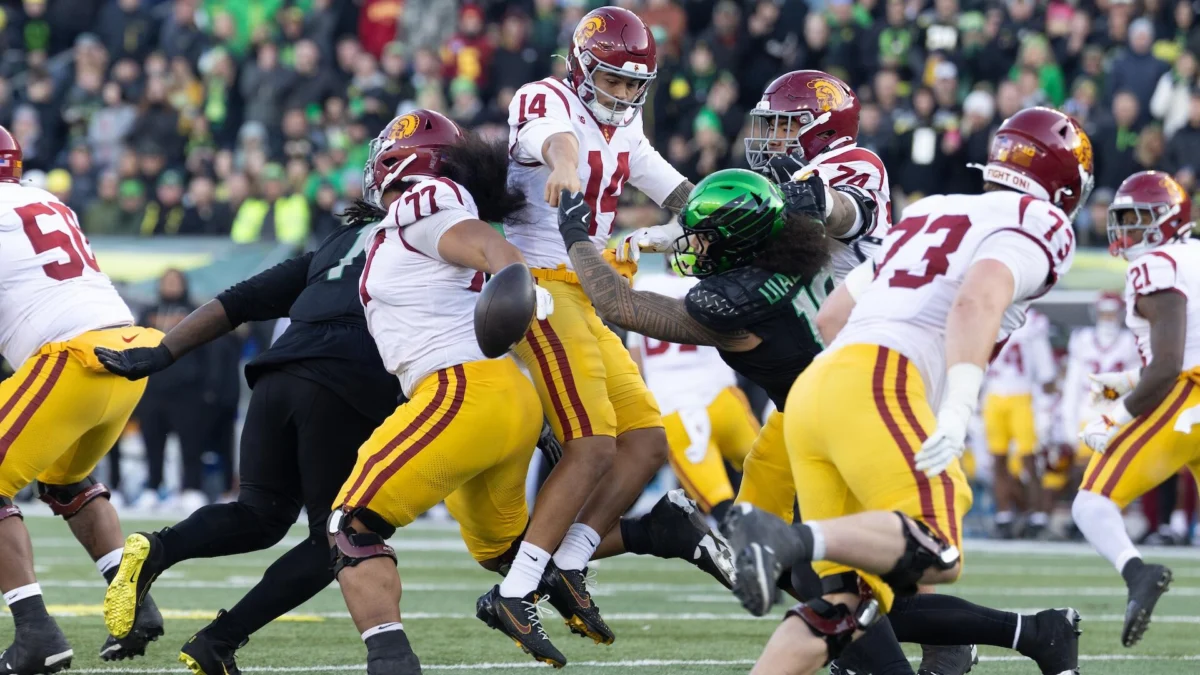
The atmosphere in Los Angeles this week is thick with the kind of tension usually reserved for postseason play. On Saturday night, the No. 12 USC Trojans (4-0) will host the No. 20 Oregon Ducks (2-1) at the historic Los Angeles Memorial Coliseum in a game that serves as a pivotal litmus test for both programs. For Lincoln Riley’s Trojans, it is a chance to prove that their undefeated start is a sign of long-term legitimacy. For the Ducks, it is a high-stakes rescue mission to save their season and maintain their grip on a series they have dominated for the better part of a decade.
The Stakes: A Defining Moment for the 2026 Season
The College Football Playoff (CFP) discourse has hit a fever pitch in Southern California. USC’s 4-0 start has energized a fanbase eager to see the Trojans finally translate their offensive talent into a championship-caliber campaign. However, standing in their way is a familiar nemesis.
Oregon enters the Coliseum with a sense of urgency. Having dropped an early game to Oklahoma State, the Ducks find themselves in a precarious position. After back-to-back playoff appearances in 2024 and 2025, a second loss this early in the season would jeopardize their national title aspirations. This matchup, which also serves as the Big Ten opener for the Ducks, represents the most significant hurdle they have faced this autumn.
A Historical Shift: The Changing Tide of the Rivalry
To understand the weight of Saturday’s game, one must look at the recent history of the series. For decades, the Coliseum was a fortress for the Trojans. Prior to 2010, USC held a commanding 24-5-1 advantage against the Ducks on their home turf. It was a lopsided series that often felt like a formality for USC.
However, the tide has turned dramatically. In the last decade, Oregon has emerged as the clear antagonist to USC’s regional dominance. The Ducks have secured victory in eight of the last ten meetings overall and have won four of the last five clashes in Los Angeles. Last year’s 42-27 result in Eugene serves as the most recent data point, a victory that extended Oregon’s current winning streak over USC to four games. For the Trojans, Saturday is not just about rankings; it is about exorcising a persistent, decade-long demon.
The "Maiava Effect": A Catalyst for the Trojans
At the center of USC’s offensive explosion is quarterback Jayden Maiava. Since taking the reins at the end of the 2024 season, Maiava has transformed into one of the most efficient signal-callers in the country. He currently leads the FBS with 12 passing touchdowns, having thrown only one interception through four games.
What makes Maiava a nightmare for defenses—and a security blanket for Lincoln Riley—is his undeniable comfort in the Coliseum. His splits are staggering: in 12 career home starts, Maiava has posted a 32-to-6 touchdown-to-interception ratio, guiding the Trojans to an 11-1 record in that span. By contrast, his road performance has been inconsistent, with a 15:11 ratio. As USC looks to snap their losing streak, the "home-field advantage" provided by their quarterback’s poise will be their most potent weapon.
Oregon’s Backs Against the Wall: Streaks on the Line
While the Ducks are ranked No. 20, they remain a dangerous, battle-tested squad. However, they are currently facing a "perfect storm" of pressure. The program is currently defending several prestigious streaks that define their status as a modern powerhouse:
- Conference Road Dominance: Oregon currently holds the longest active winning streak in the FBS for conference road games, standing at 11 consecutive wins.
- Conference Openers: The Ducks have not tasted defeat in a conference opener since 2018.
- Early Season Reliability: A loss on Saturday would drop the Ducks to 2-2, marking their worst start to a season since 2016.
For a team that expected to contend for a national title, these streaks aren’t just statistics—they are the bedrock of their program’s identity. The coaching staff has emphasized throughout the week that the goal remains the same: a return to the playoff. However, the path to that goal is now narrow, and a loss in Los Angeles would effectively remove the margin for error for the remainder of the season.
Tactical Analysis: USC’s Defensive Evolution
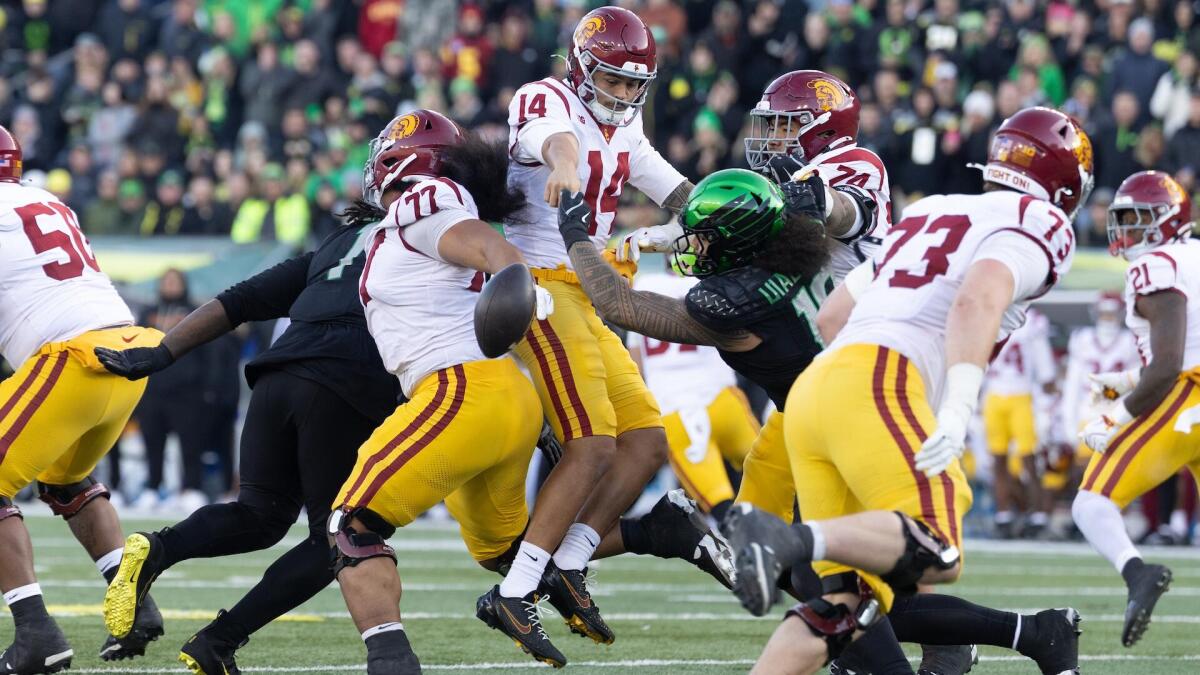
Perhaps the most scrutinized aspect of this matchup is the state of the USC defense under new coordinator Gary Patterson. Following a lackluster defensive performance in 2025, the hire of the former TCU head coach was met with high expectations.
The results, thus far, have been a study in contrasts. The Trojans began the season with a dominant 39-0 shutout of Fresno State, signaling a new, aggressive identity. Yet, subsequent weeks have seen them surrender 25+ points in three of their four games. While the average of 22.8 points allowed is skewed by late-game touchdowns in non-competitive moments, the vulnerability shown against teams like Rutgers—which required a pick-six to seal the victory—suggests that the defense is still a work in progress.
Against an Oregon offense that boasts future NFL draft talent and averages nearly 50 points per game, Patterson’s unit will face its ultimate examination. The ability of the Trojans to generate pressure without sacrificing their secondary will determine whether this game becomes a defensive slugfest or a high-scoring shootout.
Implications for the Big Ten and the CFP
The Big Ten landscape is undergoing a significant shift in 2026, and the outcome of this game will reverberate through the conference standings. USC currently sits at the top of the table, but they have yet to face an opponent of Oregon’s caliber in league play.
A win for USC would vault them into the top 10 and cement their status as the team to beat in the conference. It would also serve as a definitive statement that the Lincoln Riley era has truly arrived at its peak. Conversely, an Oregon victory would create a chaotic three-way tie at the top of the conference, effectively throwing the Big Ten title race wide open and forcing the CFP selection committee to re-evaluate the hierarchy of the conference.
Final Projections: A High-Scoring Affair
The betting markets have responded to the offensive firepower on display, setting a high over-under total. History supports the expectation of a shootout; these two teams combined for 69 points in their 2025 meeting and 63 points in 2023.
While the oddsmakers lean toward a high-scoring environment, the underlying metrics suggest the "Over" remains the most viable play. With both quarterbacks capable of pushing the ball downfield and both defenses showing signs of vulnerability, the scoreboard operator at the Coliseum should prepare for a busy night.
As the clock ticks down to 7:30 p.m. ET on Saturday, all eyes will be on the Coliseum. It is more than just a game; it is a collision of two programs at different stages of their respective journeys. For USC, it is the quest for validation. For Oregon, it is the fight for survival. In the volatile world of modern college football, there is no bigger stage than this.