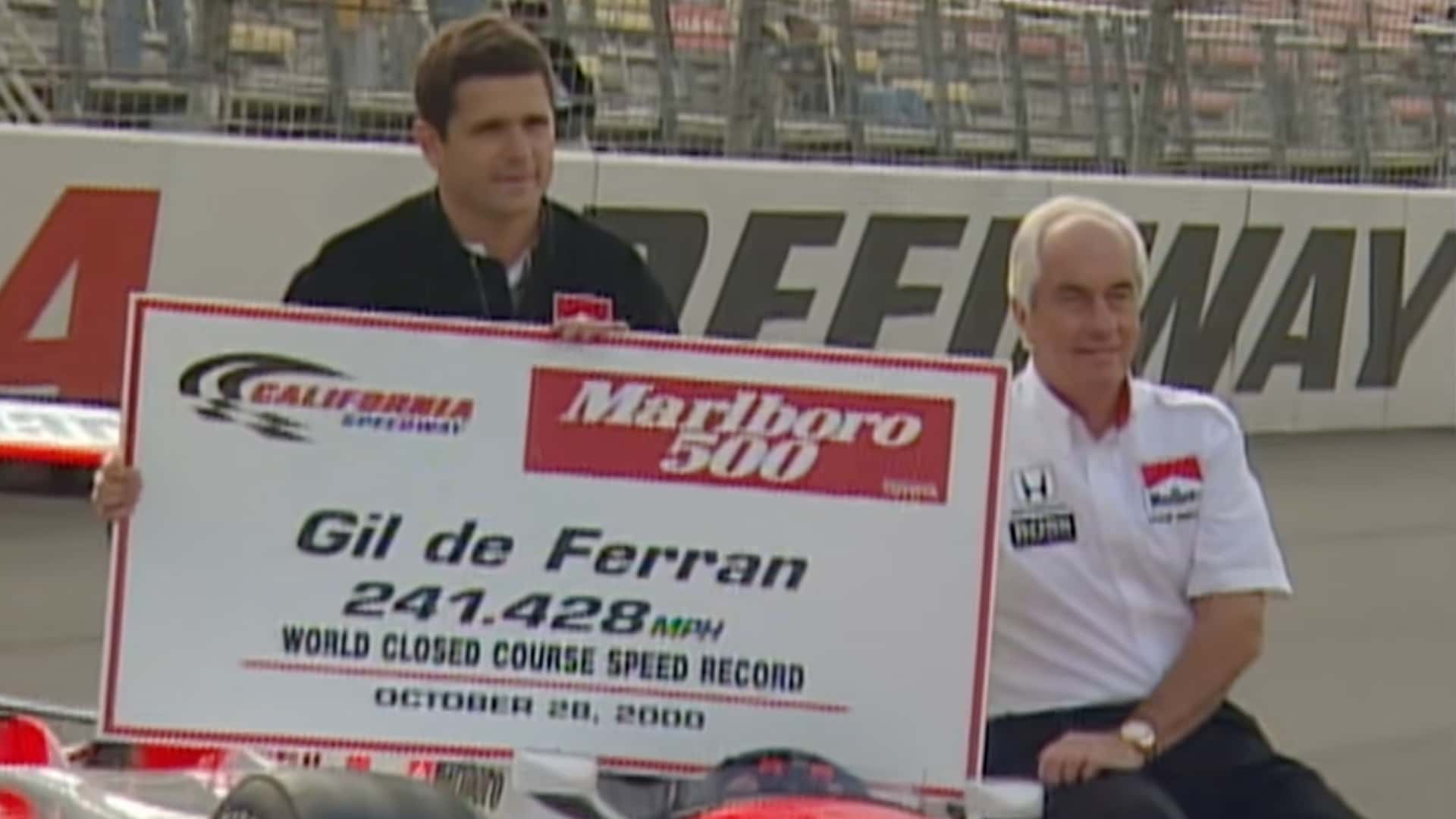
In the annals of motorsport, certain numbers achieve a mythic status. For the world of closed-course racing, that number is 241.428. It represents a threshold of human and mechanical achievement that has remained untouched for nearly 26 years—a testament to a specific, fleeting era of engineering excess and a tribute to the man who stared down the physics of the California Speedway and emerged with the fastest lap ever recorded by a race car on a closed circuit.
Honda Racing has officially immortalized this feat with the release of a compelling new four-part docuseries titled "241.428." The project serves not only as a technical deep dive into how such a speed was achieved, but as a poignant, retrospective homage to the late Gil de Ferran, the two-time CART Series champion and Indianapolis 500 winner who passed away in 2023.
A Legacy Beyond the Cockpit: The Genesis of the Docuseries
The docuseries, which premiered this week on the HRC US YouTube channel, transcends the typical promotional material associated with motorsports media. Instead, it functions as an oral history, featuring an elite roster of industry titans—including Roger Penske, Zak Brown, Rick Mears, Helio Castroneves, Dario Franchitti, and Tony Kanaan. Their collective involvement underscores the profound respect de Ferran commanded within the global racing community.
Kelvin Fu, president of HRC US, characterizes the docuseries as a deeply personal endeavor for the brand. "Gil de Ferran was a big part of the Honda racing family," Fu noted. "He holds a special place in our hearts beyond his major championships and race victories, but 241.428 was an extraordinary achievement that stands as a pillar of our history."
The centerpiece of the production is the actual 2001 Team Penske Reynard-Honda CART chassis that de Ferran campaigned. Now under the stewardship of Zak Brown, the vehicle was meticulously restored by the Honda Heritage Racing Program—a division launched during the 2024 Monterey Car Week to ensure that the brand’s most iconic machines are preserved as functional, working history rather than static museum artifacts.
Chronology of a Record-Breaking Lap
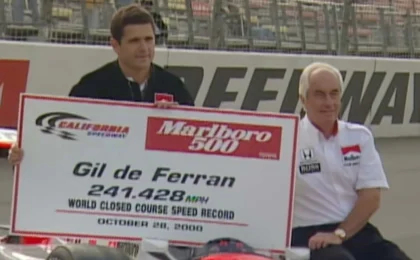
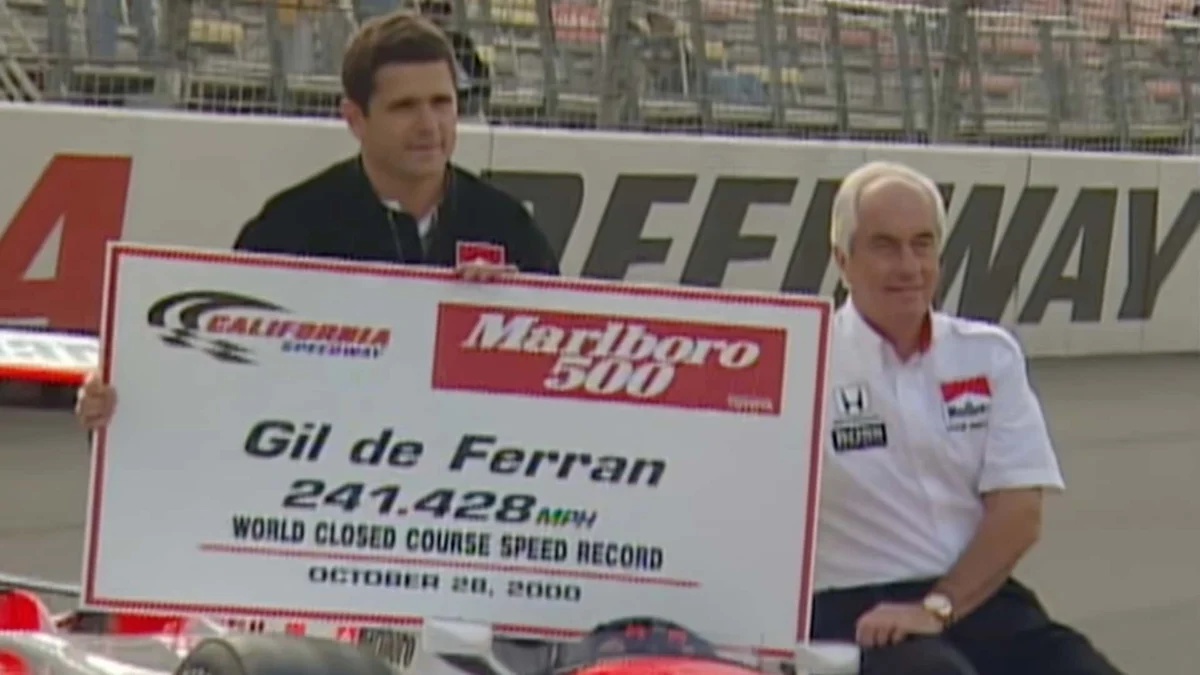
To understand the weight of 241.428 mph, one must return to October 2000 at the California Speedway in Fontana. During a qualifying session, de Ferran piloted his Reynard-Honda to a staggering average speed of 241.428 miles per hour.
The Context of the 2000s CART Era
The late 90s and early 2000s in the CART (Championship Auto Racing Teams) series represented a "wild west" of open-wheel development. It was a period defined by massive turbocharged engines, sophisticated ground-effect aerodynamics, and tire technology that was pushed to the absolute edge of failure.
The Physics of the Closed-Course Run
Unlike straight-line speed records set at locations like the Bonneville Salt Flats, a closed-course record is fundamentally different. It requires a driver to maintain maximum velocity through corners where lateral G-forces threaten to scrub off speed or induce a catastrophic loss of traction. De Ferran’s lap required a perfect synthesis of courage, car setup, and atmospheric conditions—a "Goldilocks" moment where the machine was pushed to its mechanical limit without crossing the threshold into disaster.
The Technical Landscape: Why the Record Still Stands
Nearly 26 years later, the record remains unbroken across Formula 1, IndyCar, and NASCAR. Skeptics often ask: With the rapid advancement of computational fluid dynamics (CFD), materials science, and hybrid powertrains, why hasn’t this number been eclipsed? The answer lies in the evolution of motorsport regulations.
Regulatory Constraints
Modern racing series have prioritized safety and competitive parity over raw, unbridled speed. Key factors that have effectively "locked" the record include:
- Downforce Limitations: Modern cars are designed to create massive amounts of downforce, which increases cornering grip but creates significant drag that hinders top-end speed on large ovals.
- Turbo Boost Regulations: The massive horsepower outputs of the early 2000s CART turbochargers have been reined in to ensure engine longevity and cost control.
- Tire Operating Windows: Modern tires are engineered for consistency and degradation management, rather than the "qualifying special" compounds that offered immense grip for a single, blistering lap in 2000.
In essence, the regulatory bodies of the sport have systematically closed the windows of performance that allowed for such a record to exist. Honda’s docuseries highlights that while we are "faster" in many respects today, we are operating within a much tighter, more restricted performance envelope.
Honda’s Commitment to Heritage and Innovation
The restoration of the Reynard-Honda chassis is more than a sentimental gesture; it is a manifestation of Honda’s broader corporate philosophy. The company has long maintained that its IndyCar program serves as a laboratory for its production vehicle engineering. The transfer of knowledge—from high-RPM internal combustion efficiency to complex aerodynamic management—has consistently trickled down into the consumer-facing products seen in showrooms today.
A Year of Milestones
The 241.428 series comes during a banner year for Honda’s safety and performance divisions. In 2024, the company became the first automotive manufacturer to achieve the highest three-star rating in the FIA Road Safety Index. This alignment of racing prestige and safety innovation highlights a brand that is looking both backward at its foundational successes and forward toward the future of mobility.
Implications for Future Generations
The 241.428 docuseries serves as a cautionary tale for modern racing enthusiasts: do not assume that progress is always linear. There are moments in engineering history where the alignment of technology, regulations, and human audacity creates an outlier—a record that serves as a monument to a specific point in time.
For the younger generation of drivers and engineers, the series offers a window into a time when cars were arguably more "raw." It also provides a vital look at the mental fortitude of Gil de Ferran. To hold a steering wheel at 240+ mph on a banked oval is a task that requires a specific, unflappable temperament.
The Verdict on "241.428"
The docuseries is essential viewing for anyone with a pulse for motorsports. It manages to balance the technical "gearhead" requirements of the audience with the emotional weight of a loss that is still felt deeply throughout the paddock.
As we look toward the future of racing—defined by electrification, AI-assisted telemetry, and sustainable fuels—we must appreciate the relics of the past. Honda has done the sport a great service by taking the time to explain not just how the record was set, but why it remains an impossible target for the modern era.
Conclusion: The Moving Goalposts
The most poignant takeaway from the 241.428 project is the realization that the goalposts of motorsport are always moving. We often measure success by current lap times or the latest technology, but the history of the sport is written in these singular, record-shattering moments.
By freezing that moment in 2000 and documenting it with such care, Honda has ensured that Gil de Ferran’s legacy—and his incredible, terrifying, and beautiful lap—will not be lost to the passage of time. As the racing world continues to innovate, the 241.428 mph mark remains a North Star, a reminder of what happens when a driver and a machine enter a perfect, singular harmony.
The series is currently streaming on the HRC US YouTube channel, and for those who value the intersection of history, engineering, and human bravery, it is arguably the most important watch of the year. Whether you are a fan of the CART era or a newcomer to the sport, the story of how 241.428 was achieved is a masterclass in the pursuit of perfection.