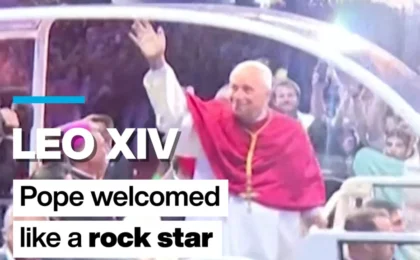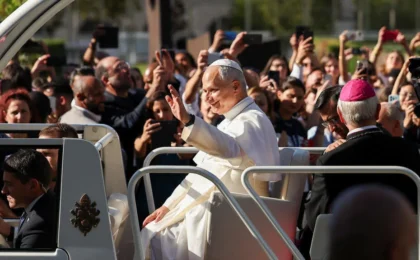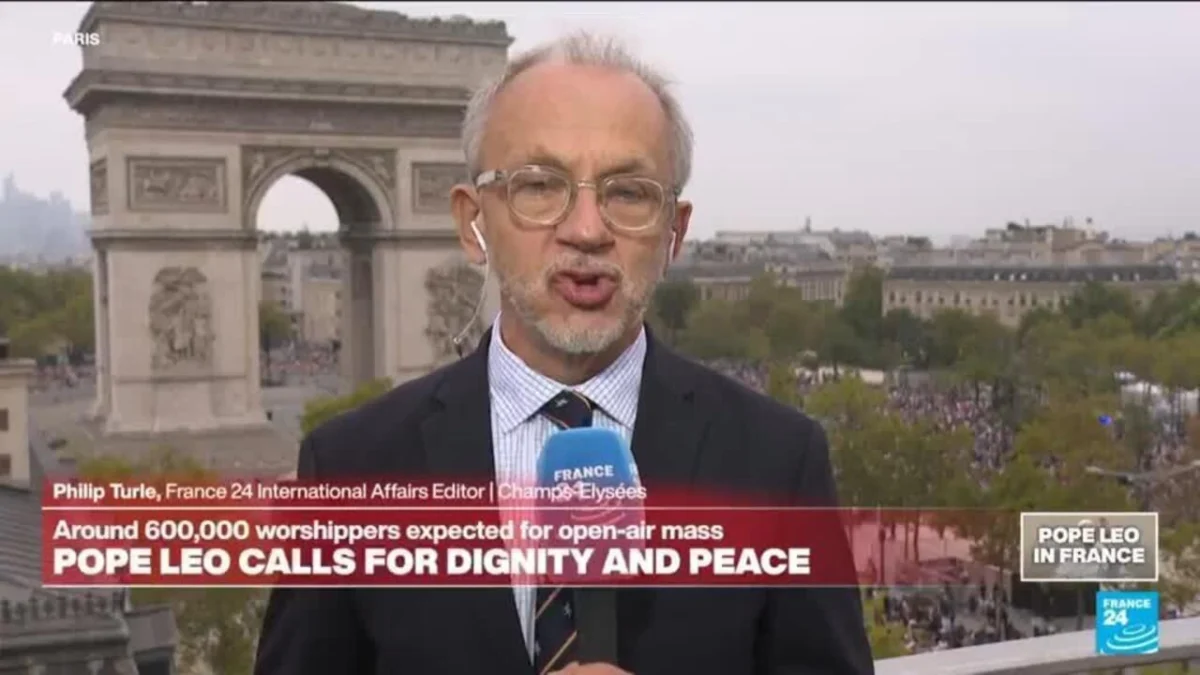
PARIS – The streets of the French capital were transformed into a sea of devotion this week as Pope Leo arrived for the centerpiece of his highly anticipated pastoral visit to France. Thousands of faithful, undeterred by the logistics of modern urban travel and the sweltering late-September heat, descended upon Paris to witness the pontiff, marking what is being described by Vatican officials and local authorities as the most significant religious event in the country in decades.
The visit comes at a pivotal time for France, a nation that has historically navigated a complex relationship with the Roman Catholic Church. As the city prepares for one of the largest open-air Masses in modern history, the atmosphere remains a blend of solemnity, civic pride, and intense security.
Main Facts: A Pontiff in the City of Light
Pope Leo’s visit to France is far more than a ceremonial tour. It serves as an attempt to bridge the gap between traditional European Catholicism and a secularized modern society. The primary event, an expansive liturgical celebration held at the heart of Paris, has drawn pilgrims from across Europe, Africa, and the Middle East.
The scale of the gathering is unprecedented in recent years. Municipal authorities in Paris have cordoned off vast sections of the city center to accommodate the influx of worshippers. Security forces, including the CRS (Compagnies Républicaines de Sécurité) and local police, have been deployed in record numbers to ensure the safety of the pontiff and the masses.
The central themes of the Pope’s discourse during this trip have focused on the "renewal of the European soul," emphasizing social justice, the protection of migrants, and the urgent need for interfaith dialogue in an increasingly fractured continent.
Chronology of the Apostolic Visit
The itinerary for Pope Leo’s French tour was meticulously planned to balance high-level diplomatic engagements with the humble grassroots connection he is known for.
- September 24: The Pontiff arrived at Charles de Gaulle Airport, where he was greeted by high-ranking French government officials, including the Prime Minister. His initial address centered on the historical roots of the Franco-Vatican relationship.
- September 25: A series of private meetings with political leaders at the Élysée Palace focused on European stability and the ongoing humanitarian crises in the Mediterranean. This was followed by a visit to a shelter for the unhoused in central Paris.
- September 26: The morning began with a private session with French bishops, where the conversation turned to the challenges of declining church attendance and the future of the clergy in Western Europe.
- September 26 (Midday): The main event—the massive open-air Mass—commenced, drawing crowds that spanned from the historic plazas to the banks of the Seine.
- September 27: The Pope is scheduled to depart for the Vatican after a final ecumenical meeting with leaders of the Muslim and Jewish communities in Paris, signaling his commitment to peace and coexistence.
Supporting Data: The Logistics of a Mega-Event
Organizing an event of this magnitude requires a logistical operation of military precision. According to data provided by the Paris Prefecture of Police, the crowd size for the Friday event was estimated to exceed 450,000, creating an extraordinary strain on the city’s public transit network.
- Public Transit: RATP (Régie Autonome des Transports Parisiens) reported a 300% increase in traffic at key stations near the event venue. Over 1,200 additional staff members were deployed to manage the flow of commuters.
- Infrastructure: The Vatican and local organizers utilized over 400 giant screens to ensure that those in the outer reaches of the crowd could participate in the Mass.
- Environmental Impact: Recognizing the city’s focus on sustainability, the Vatican coordinated with the Paris Mayor’s office to ensure that all liturgical materials were biodegradable, and waste management services were scaled up by 40% for the duration of the weekend.
- Security Deployment: Approximately 8,000 police and military personnel were tasked with the "Operation Saint-Pierre," a massive security perimeter encompassing the city’s historic district.
Official Responses and Diplomatic Undertones
The reaction from the French political establishment has been largely positive, though not without nuance. President Emmanuel Macron noted in a press briefing that "the visit of the Holy Father is a testament to the enduring dialogue between the universal values of our Republic and the moral leadership of the Holy See."
However, the secularist wing of French politics—the laïcité movement—has voiced concerns regarding the level of public funding dedicated to the event. Critics argue that the state’s role should be strictly neutral, and that the massive police deployment represents an unnecessary burden on the taxpayer.

In response, Vatican Secretary of State, Cardinal Pietro Parolin, addressed the media, stating: "The Church does not seek to impose its will on the state, but rather to act as a conscience for the people. Our presence here is one of service, charity, and dialogue, not political maneuvering."
Local religious leaders have lauded the visit as a "shot in the arm" for the French Church, which has seen a steady decline in influence since the late 20th century. Archbishop of Paris, Laurent Ulrich, described the crowds as a "rejuvenation of the faith," noting that the diversity of the attendees reflects the changing demographic landscape of France.
Implications: The Future of Franco-Vatican Relations
What does this massive gathering mean for the future? The implications are three-fold:
1. The Revitalization of the French Catholic Church
For years, the French Church has struggled with an aging population and a dwindling number of priests. The sheer volume of young people present at this weekend’s events suggests that while traditional institutional membership may be down, the cultural appetite for spiritual engagement remains potent. The Church is likely to leverage this momentum to initiate new youth outreach programs across the country.
2. A New European Political Tone
Pope Leo’s messaging during this trip has been overtly political in a humanitarian sense. By consistently linking religious duty to the care of refugees and the poor, he has challenged the rising tide of nationalism across Europe. This visit will likely force center-right and center-left parties in France to reconcile their policies with the humanitarian ethics espoused by the Vatican, particularly as the European Union faces continued pressure regarding immigration and social welfare.
3. Strengthening Inter-religious Bonds
The final day of the visit, dedicated to interfaith meetings, is perhaps the most significant in the long term. In a country that has been periodically shaken by religious extremism, the image of the Pope standing alongside local imams and rabbis serves as a powerful symbol. It sets a precedent for localized, sustained cooperation that goes beyond mere diplomatic gestures.
Conclusion: A City Transformed
As the sun sets over the Seine, the echoes of the hymns from today’s Mass continue to resonate through the streets of Paris. Whether or not the long-term impact on the secular fabric of France will be as profound as the immediate visual spectacle suggests, one thing is clear: the visit of Pope Leo has reminded a global audience that Paris is not just a city of fashion, finance, and food, but a city that remains deeply anchored in the complexities of the human spirit.
The crowds will eventually disperse, the security barriers will be dismantled, and the streets will return to their normal rhythm. But for the hundreds of thousands who gathered in the heart of France, this weekend will be remembered as a rare intersection of the divine and the urban—a moment where the ancient traditions of the Church were successfully integrated into the modern, bustling reality of the 21st century.
As the Pontiff prepares for his departure, the legacy of his trip will be measured not by the number of attendees, but by the ongoing conversations about values, solidarity, and identity that have been sparked in the cafes, legislative halls, and living rooms across the nation. France, a country defined by its intellectual rigor and secular identity, has opened its doors wide to the leader of the world’s largest religious institution, and in doing so, has opened a new chapter in its own complex and storied history.