As the football world turns its collective gaze toward October 26, the air is thick with the kind of suspense that has been notably absent from the Ballon d’Or conversation for years. The 2026 eligibility period, which officially closed following the conclusion of the World Cup and the crowning of Spain as world champions, has left voters with a puzzle that lacks a clear, singular solution.
Unlike the 2025 cycle, where the narrative coalesced with almost gravitational inevitability around Ousmane Dembele—a talent finally synthesized into the engine of the world’s best club side—the current field is fragmented. There is no unassailable candidate. There were many excellent individual campaigns, but remarkably few that could be described as generational.
The Context: A Season Defined by Nuance
To understand the current malaise in the voting process, one must look at the landscape of the 2025-26 European season. Bayern Munich and Barcelona dominated their domestic landscapes, but their titles were met with a shrug, viewed more as bureaucratic formalities than crowning achievements. Arsenal’s Premier League title was a masterclass in resilience and squad depth, a victory that arguably defied the very individualist premise of the Ballon d’Or. Meanwhile, Paris Saint-Germain completed a league and Champions League double, yet the narrative was hampered by the stark reality that their strongest XI was rarely fully assembled or fully engaged outside of the biggest European nights.
The World Cup, the sport’s ultimate arbiter, served only to complicate the math. While the tournament rewarded collective brilliance—specifically the Spanish juggernaut—it failed to produce a singular superstar who stood head and shoulders above the rest. The result is a race defined by swing voters, lobbyists, and a deep-seated debate over the weighting of club success versus international glory.
Chronology of a Disjointed Campaign
The 2025-26 season was marked by a series of interruptions. From Lamine Yamal’s nagging groin injuries to Rodri’s slow, calculated return from an ACL tear, the game’s best players were often spectators during the most grueling stretches of the winter months.
- Autumn 2025: The period was characterized by the dominance of domestic league grinders. While Harry Kane put up staggering numbers for Bayern, the narrative was consistently punctuated by injury reports concerning Yamal and the tactical rotation policies at PSG.
- Winter 2025-26: The EFL Cup and domestic cup runs provided moments of individual brilliance, notably from Bruno Fernandes, who dragged a struggling Manchester United into the upper echelons of the Premier League table.
- Spring 2026: The Champions League knockout stages saw the rise of Michael Olise as the "assist king," creating a statistical profile that made him the most efficient attacker in Europe.
- Summer 2026: The World Cup acted as the final filter. For some, like Kylian Mbappe, it was a showcase of individual scoring records. For others, like the members of the Spanish national team, it was a testament to the fact that the sum is often greater than its parts.
Supporting Data: By the Numbers
The debate over this year’s winner is ultimately a tug-of-war between "output" and "impact."
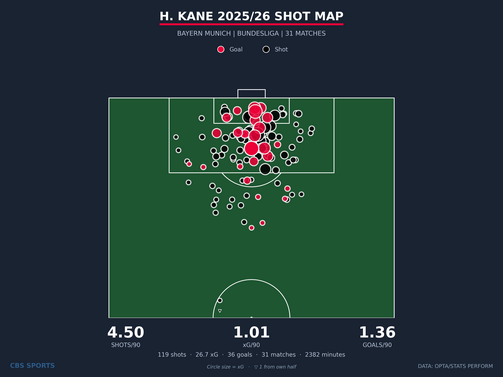
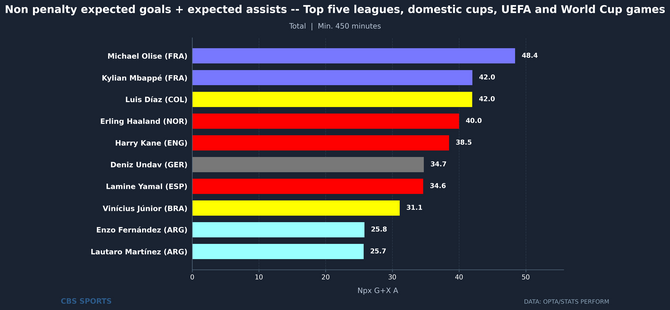
Harry Kane’s 73 goals for club and country stand as an outlier—a figure reminiscent of Lionel Messi’s prime years. Yet, critics point to the lack of a "clutch" moment in the biggest semifinals as a reason to hesitate. Conversely, Michael Olise finished the season with 10 more assists than any other player across all competitions, a metric that highlights his role as the primary architect of Bayern’s attacking fluidity.
Defensively, the case for Arsenal’s Gabriel Magalhaes offers a fascinating, albeit statistically uphill, battle. In a game that fetishizes goals, Gabriel’s ability to neutralize 13.2% of shots through blocks alone provided the foundation for Arsenal’s title run. It is a rare instance where a defender’s individual impact is as quantifiable as a striker’s goals.

The Top Ten: A Ranking of "Least Wrong"
In a year without a "right" answer, the following rankings reflect a balance of individual output, team importance, and the specific demands of the 2026 season.
1. Harry Kane (Bayern Munich, England)
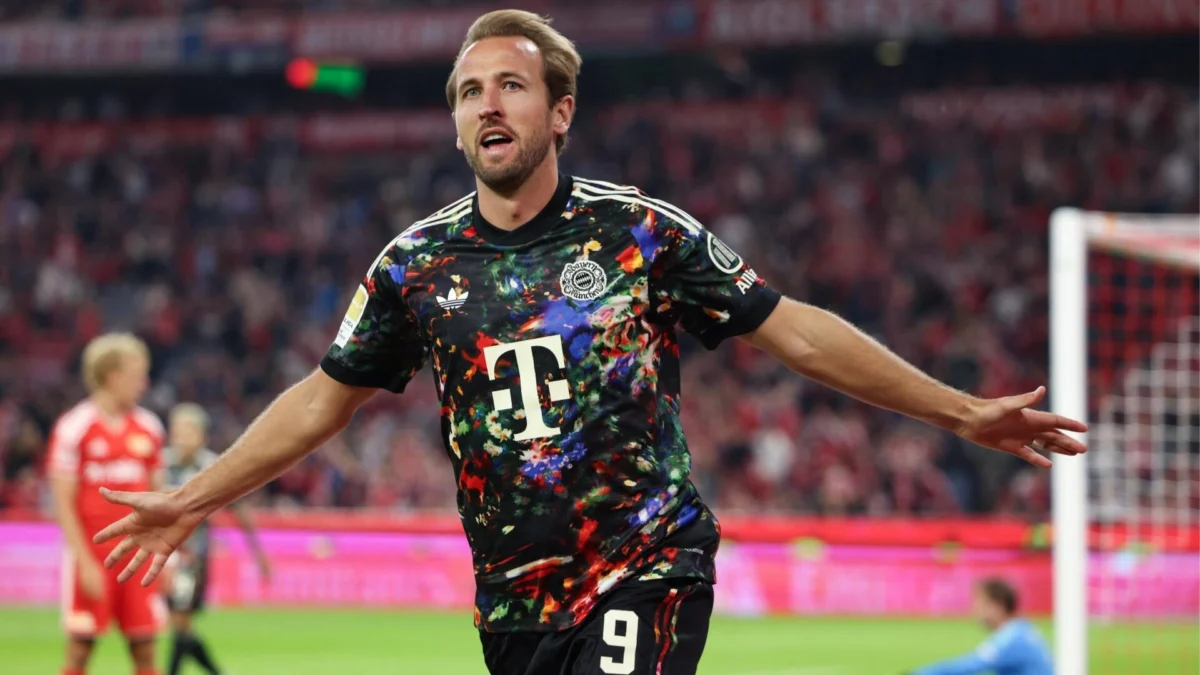
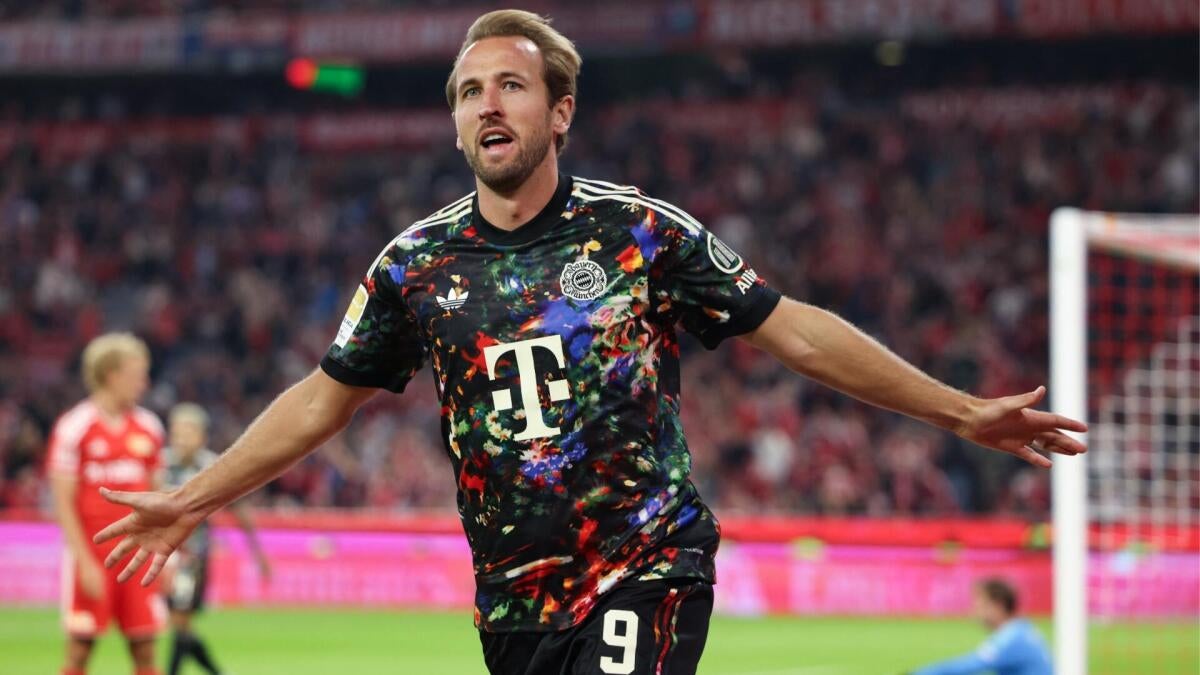
With 36 goals in 31 league matches, Kane has entered the realm of Gerd Müller. While his lack of a major trophy this season remains the primary argument against him, his sheer, relentless volume of production is impossible to ignore.
2. Vitinha (Paris Saint-Germain, Portugal)
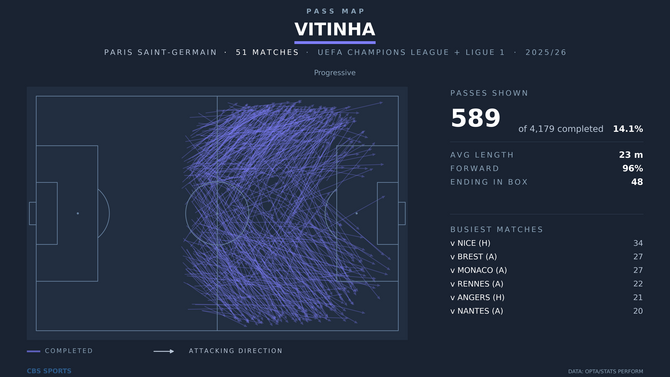
The engine of the best side in Europe. Vitinha played nearly 4,000 minutes of high-intensity football, leading Europe’s top five leagues in progressive carries and passes. He is the definition of a tempo-setter who also delivers in the final third.
3. Michael Olise (Bayern Munich, France)
The undisputed assist king. Olise’s ability to transition from a creative force in Munich to a lead attacker in the summer makes him the most versatile offensive weapon of the season.
4. Lamine Yamal (Barcelona, Spain)
A victim of his own physical maturity. While his 37 goals and assists are impressive, his recurring injury issues throughout the year prevented him from fully dominating the World Cup stage.
5. Kylian Mbappe (Real Madrid, France)
The "Russell Westbrook" dilemma. Mbappe’s numbers are undeniable, but when you play for Real Madrid and France, the criteria for success shifts from personal stats to silverware. The lack of a major trophy this summer hurts his candidacy significantly.
6. Gabriel Magalhaes (Arsenal, Brazil)
The defensive anchor. While defenders rarely win the Ballon d’Or, Gabriel’s role in Arsenal’s Premier League triumph was as pivotal as any striker’s contributions. He represents the "heart" of the 2026 tactical shift toward defensive solidity.
7. Luis Diaz (Bayern Munich, Colombia)
A player who elevated his teammates. His 39 combined goals and assists, paired with his self-effacing support of Kane, highlight a season where he was a constant, dangerous presence in every phase of play.
8. Bruno Fernandes (Manchester United, Portugal)
The architect of a turnaround. Fernandes’s 21 Premier League assists and his league-leading 99 open-play chances created prove that his individual brilliance was the only thing keeping his club relevant.
9. Lionel Messi (Inter Miami, Argentina)
A legacy candidate. While his performance at the World Cup at age 39 was nothing short of miraculous, the domestic level at which he played for the majority of the season cannot be equated with the intensity of the Champions League or the top European leagues.
10. Rodri (Manchester City, Spain)
A player whose brilliance was truncated by injury. Like Messi, his performance at the World Cup reminded the world why he is the best holding midfielder on the planet, but a season hampered by ACL recovery makes a top-three finish impossible.
Implications for the Future of the Award
The 2026 voting process underscores a growing tension in football governance. As the gap between domestic league quality and international tournament prestige widens, voters are finding it increasingly difficult to reconcile "league dominance" with "tournament performance."
Furthermore, the rise of specialized metrics—such as shot-blocking percentages and progressive passing distance—is beginning to challenge the traditional "goals-and-assists" model of the Ballon d’Or. If this trend continues, we may see a future where the award moves away from being a "Best Striker" trophy and becomes a more holistic recognition of tactical and structural influence.
As the October 26 announcement approaches, the football community remains divided. Some argue for the raw statistical dominance of Kane, while others advocate for the systemic importance of players like Vitinha or Gabriel. Regardless of the outcome, the 2026 Ballon d’Or will be remembered as the year that forced the world to ask: What, exactly, makes a player the "best" in the world?
The answer, as it turns out, is as complex as the game itself.